

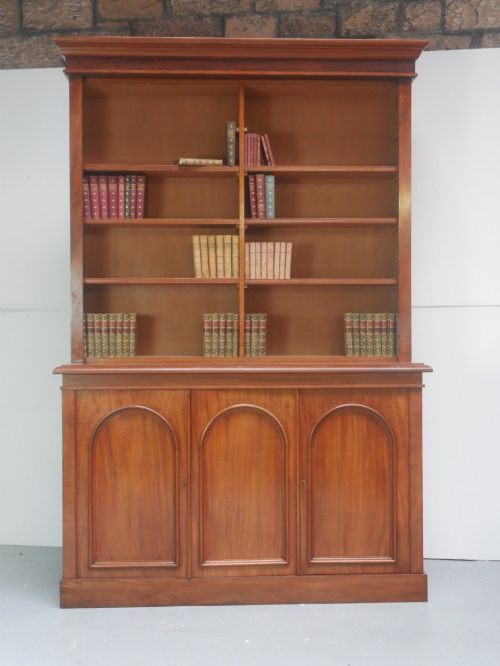
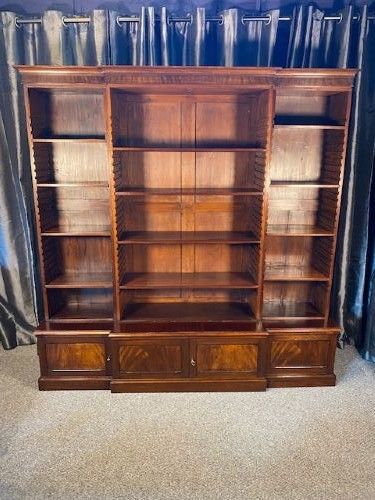
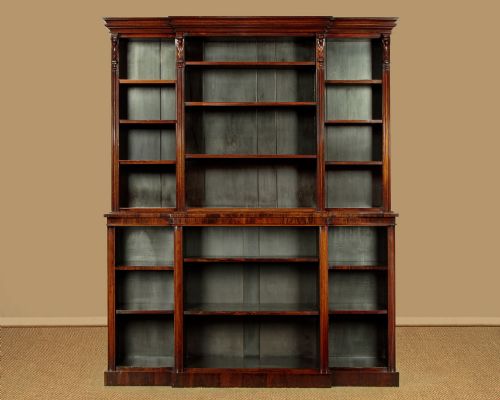
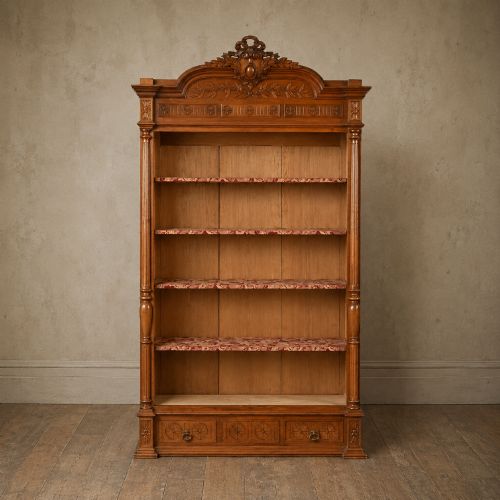
Large Library Shelves
These large library shelves bring order to heavy volumes through substantial proportions and timber construction.
Large Library Shelves
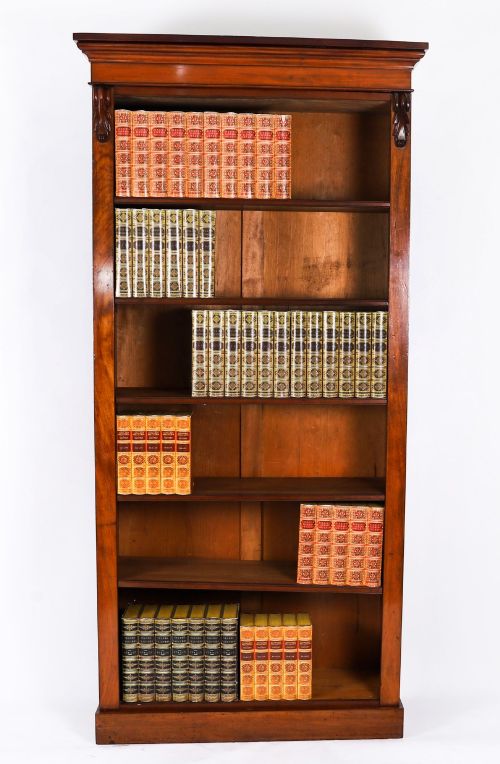
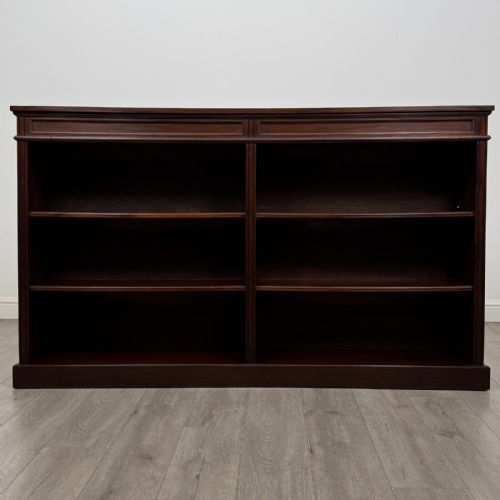
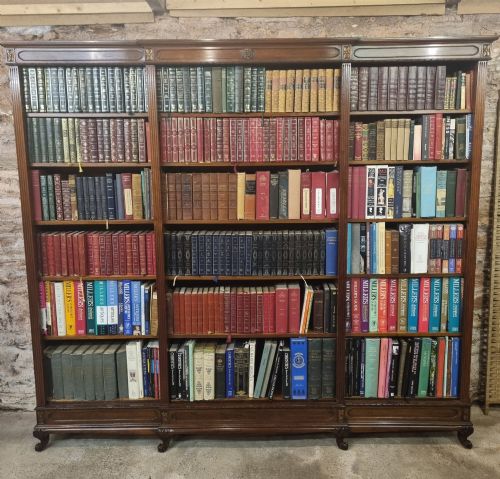
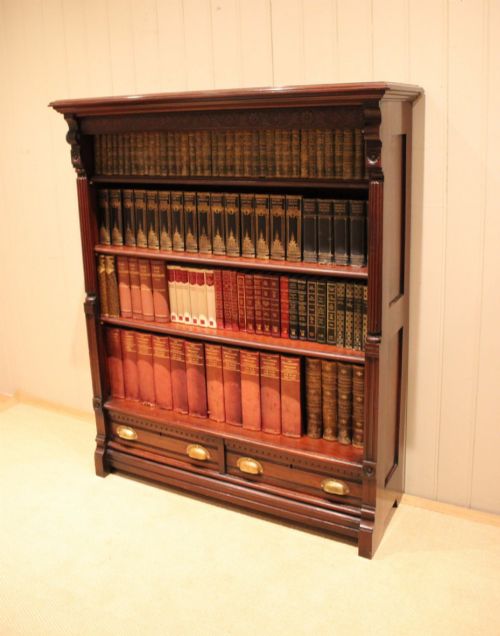
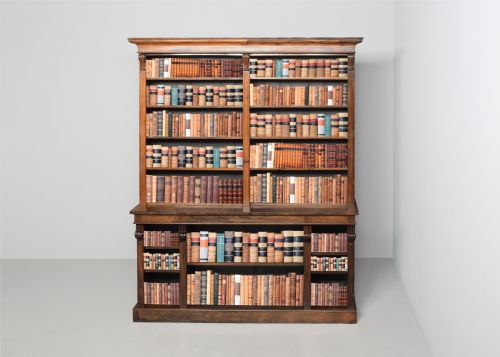
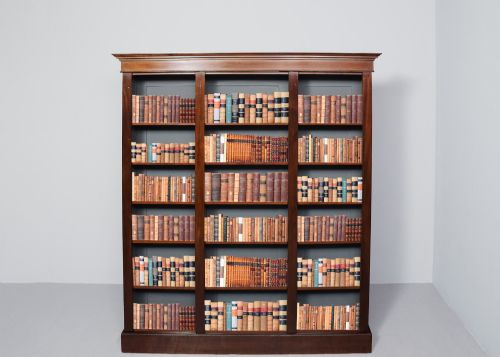
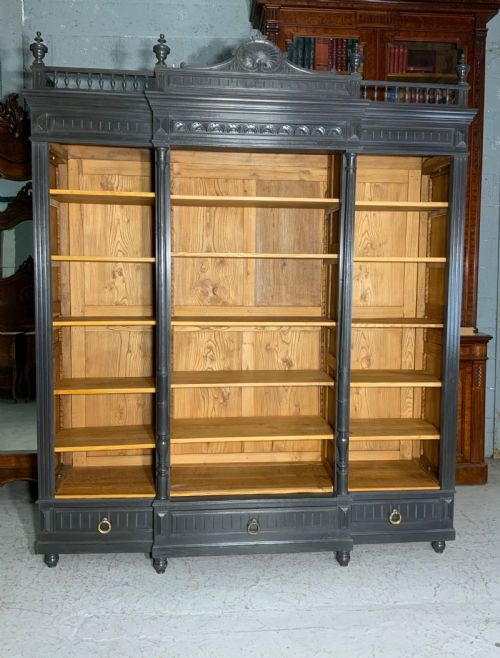
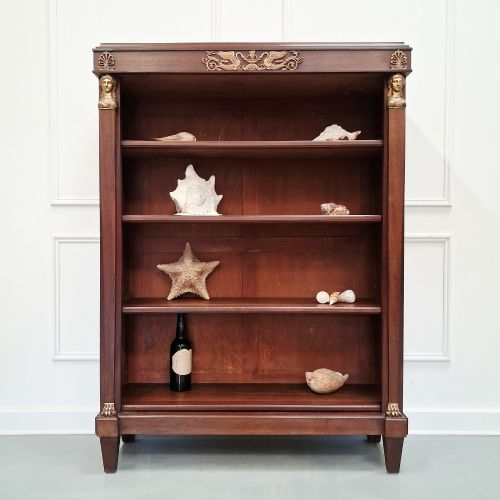
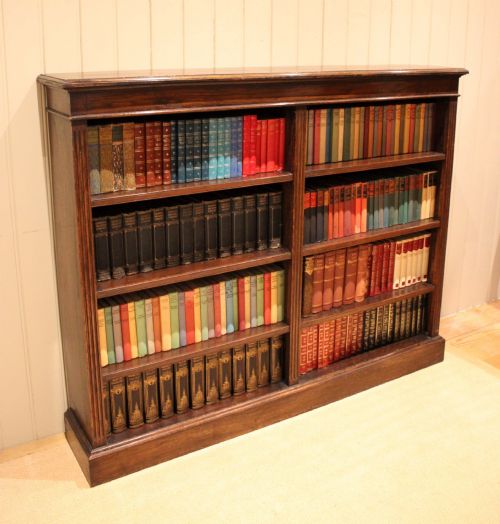
Large library shelves form the backbone of a serious study, providing long expanses of open timber storage designed to hold extensive collections of books. When you search for large library shelves, you encounter substantial pieces primarily originating from the nineteenth and early twentieth centuries, spanning Victorian, Edwardian, and William IV eras.
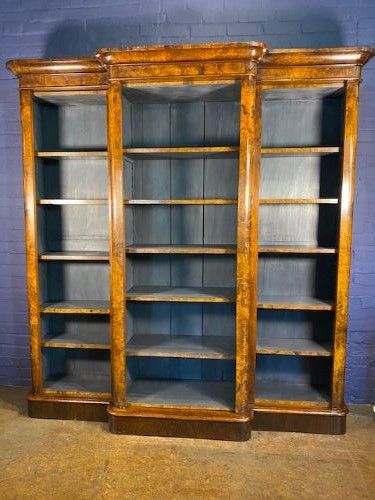
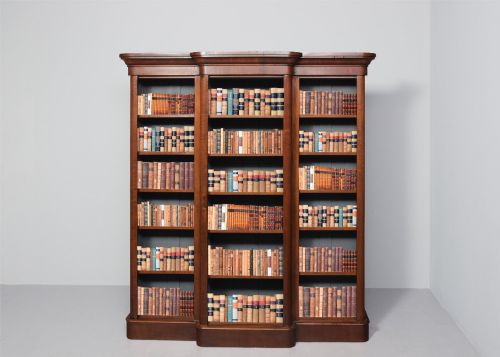
The pieces on this page lean heavily towards breakfront forms and open bookcase designs rather than enclosed cabinets. Mahogany, oak, and walnut dominate the selection, often appearing in multi-section formats designed for institutional or grand residential spaces.
How they were made
Cabinet makers utilised dense hardwoods like mahogany, oak, walnut, and rosewood to support the significant weight of heavy book collections without sagging. Solid wood construction frequently paired with burr walnut or flame mahogany veneers on principal display surfaces, while pine served for structural backing.
Joinery methods focused on stability and adaptability, incorporating adjustable shelving systems supported by wooden racks or brass pins. Decorative elements such as ormolu mounts, boxwood inlay, and carved plinth bases appeared across Victorian and Edwardian examples to elevate the visual weight of the timber.
Large Library Shelves Retail Price Guide 2026
Typical asking prices for large library shelves among the pieces listed under this phrase on Sellingantiques today, from the lower quarter to the upper quarter. They describe what is for sale here now, not the wider market.
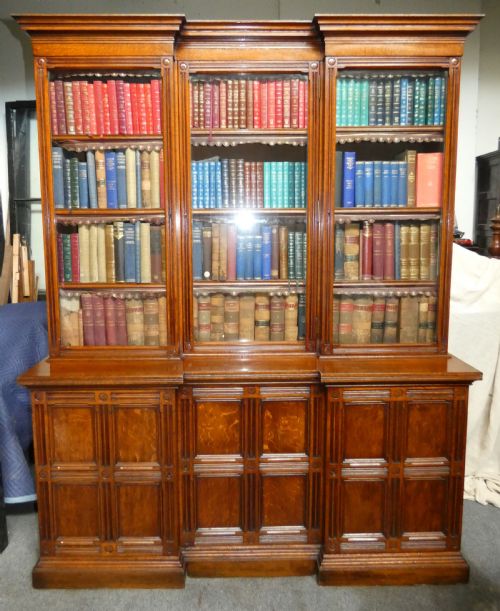
One exceptional Victorian oak bookcase carries the historical provenance of Miskin Manor, tethering the sturdy timber directly to nineteenth-century domestic grandeur.
What varies in quality
The division between standard workshop production and superior cabinet work rests upon the selection of timber veneers and the intricacy of the architectural detailing. Pieces featuring matched flame mahogany or figured burr walnut across three-section breakfronts represent a higher tier of craftsmanship than plain single-section pine or oak iterations.
Refinement in proportion and functional adaptability also separate exceptional pieces from utilitarian furniture. The presence of cleanly integrated adjustable shelving mechanisms, crisp Sheraton-style inlay, and substantial plinth or carved cornices indicates a greater initial investment in design and execution.
The Large Library Shelves Glossary
- Breakfront
- A cabinet or bookcase whose central section projects forward from the flanking outer sections. This architectural arrangement creates depth and visual rhythm across large library walls.
- Plinth base
- A heavy solid timber foundation block upon which the main body of the bookcase rests. It provides visual ground stability for tall library furniture.
- Adjustable shelves
- Shelving supported by movable pins or rack strips that allows the interior height to change. This feature accommodates books of varying vertical formats.
- Ormolu
- Gilded bronze mounts applied as decorative ornaments to furniture surfaces. It appears on select walnut and mahogany pieces to accent the woodwork.
- Sheraton Revival
- A late nineteenth and early twentieth century design style reviving the lighter neoclassical furniture forms of the eighteenth century. It frequently incorporates fine stringing and floral inlay on mahogany.
Large Library Shelves: Frequently Asked Questions
How do I measure for large library shelves?
Measure both your floor space and ceiling height carefully, allowing clearance for decorative cornices and breakfront projections. Remember to account for skirting boards and architectural quirks that might prevent the piece from sitting flush against the wall.
Consider the depth of your volumes as well as the room's circulation space. Large library shelves demand substantial clearance in front so you can comfortably browse and pull heavy books from the lower tiers.
Are these shelves suitable for modern books?
Most historical library shelves offer generous depth and height configurations that easily accommodate modern hardbacks and oversized art folios. The inclusion of adjustable shelving across many Victorian and Edwardian examples lets you tailor the vertical spacing to your specific collection.
Heavier modern editions benefit from the robust timber construction typical of nineteenth-century mahogany and oak carcases. Solid wood uprights prevent the long-term sagging often seen in cheaper contemporary flat-pack alternatives.
How do I distinguish Edwardian from Victorian pieces?
Victorian library furniture generally displays heavier proportions, darker finishes, and robust architectural detailing such as Gothic revival carving or heavy breakfront cornices. Oak and dark mahogany dominate this period, often paired with substantial plinth bases.
Edwardian pieces often embrace lighter golden oak or inlaid Sheraton Revival mahogany with a more restrained aesthetic. The timbers tend to show brighter natural tones, reflecting a shift towards brighter domestic interiors at the turn of the twentieth century.