
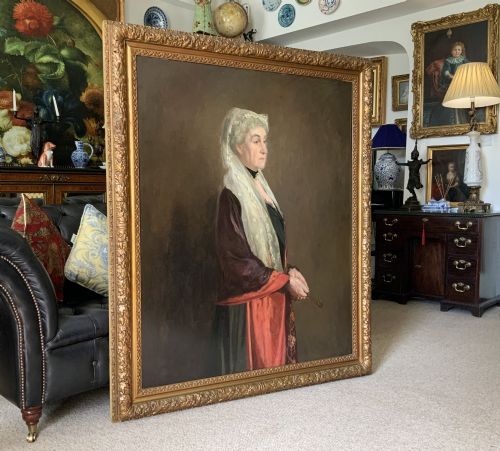




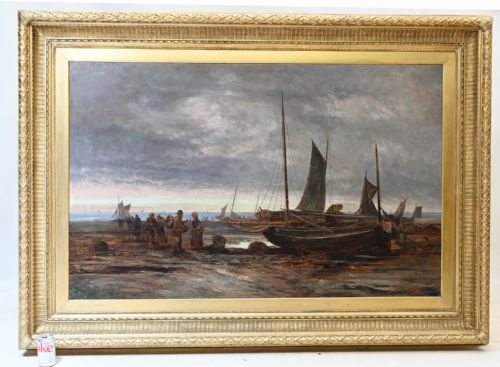


Large Giltwood Framed Artwork
Large giltwood framed artwork brings together substantial canvases and prints enclosed within ornate, gilded wooden surrounds from the eighteenth and nineteenth centuries.
Large Giltwood Framed Artwork
When you search for large giltwood framed artwork, you encounter substantial oil paintings, portraits, landscapes, and framed prints from periods including the eighteenth and nineteenth centuries, alongside the Edwardian era. These works frequently span significant dimensions, sometimes reaching massive proportions or forming matching pairs that demand considerable wall space.
The subjects depicted within these heavy frames vary widely, ranging from maritime scenes and Highland landscapes to animal portraits and classical depictions. Many pieces originate from British and French schools, capturing Victorian realism and Georgian revival styles through oil on canvas, paper, or glass.
You are most likely to meet Victorian oil paintings and nineteenth century portraits enclosed in moulded, gilded surrounds on this page. These works reflect the aesthetic preferences of their periods, combining expansive artistic subjects with decorative framing.
How they were made
The physical construction of these pieces relies heavily upon carved wood finished with gesso and gold leaf to create the characteristic giltwood appearance. Artisans built robust wooden frames, often applying intricate moulded ornament before gilding the surface to achieve a brilliant metallic sheen.
The artworks themselves utilise traditional painterly techniques, primarily oil on canvas, alongside oil on canvas variants, paper, and glazed glass elements for prints. Canvases were stretched across sturdy wooden frames and secured within the heavy outer mouldings.
Makers combined structural carpentry with fine artistic execution, mounting heavy oil paintings securely into deep rebate profiles of the ornate wooden surrounds.
What varies in quality
The depth and intricacy of the carving within the gilded wooden frame separates standard production from superior examples. Finely modelled gesso work and crisp leaf application demonstrate a higher degree of craftsmanship than simpler, flat mouldings.
The fidelity of the brushwork and the anatomical or perspective accuracy of the painted subject dictate the artistic tier of the piece. Masterful handling of light in maritime scenes or portraits elevates an oil painting above standard decorative works.
The preservation of the original gilt surface and the stability of the primary canvas influence the overall integrity of the object. Works that retain their untouched nineteenth century gilding and original stretched fabric hold greater historical coherence.
Robert Cleminson·Thomas Sidney Cooper·George Morland·Joseph Farquharson·Tom Seymour·Sidney Yates Johnson·George Henry Knight·Harry Pennell·Robert Edward Morrison
The Large Giltwood Framed Artwork Glossary
- Giltwood
- Wood that has been coated with thin gold leaf or powder. This finish provides the bright, reflective surface characteristic of these traditional frames.
- Gesso
- A plaster mix applied to wood frames to create a smooth surface for gilding. Artisans carved intricate decorative motifs directly into this dried compound.
- Oil on canvas
- Pigment mixed with drying oil applied to a stretched fabric support. This combination formed the primary medium for monumental nineteenth century paintings.
- French Baroque
- An ornate artistic style originating in France emphasising drama and rich ornamentation. It heavily influenced later revival frames and decorative arts.
- Maritime art
- Depictions of ships, coastal views, and marine environments. These subjects frequently appeared in large scale nineteenth century British oil paintings.
Large Giltwood Framed Artwork: Frequently Asked Questions
How do I hang a heavy frame safely?
Substantial frames require robust wall fixings anchored directly into structural masonry or heavy timber studs rather than standard plasterboard hooks. Due to the combined weight of the thick wood and canvas, professional mirror or picture hanging hardware rated for heavy loads is essential.
Position the centre of the artwork at eye level, ensuring the weight is distributed evenly across two separate fixing points to prevent the frame from leaning forward over time.
How do I clean giltwood frames?
Dust giltwood frames gently using a very soft, dry brush or a clean microfibre cloth without applying downward pressure. Avoid all liquid cleaners, commercial polishes, or damp cloths, as moisture and chemicals can dissolve the delicate gesso and lift the gold leaf.
Regular, gentle dusting prevents particulate accumulation from adhering to the textured surface of the gilding, preserving the metallic finish for decades to come.
How do I identify nineteenth century frames?
Nineteenth century frames typically feature dense pine or hardwood foundations coated in thick gesso layers that carry hand-carved or moulded plaster ornament. Examining the reverse reveals older corner joinery, hand-cut nails, and aged timber patination indicative of the Victorian period.
Makers' stamps, framers' paper labels, or handwritten inscriptions pasted onto the wooden backing boards frequently provide clues to the workshop of origin.
Can I re-gild a damaged frame?
Professional conservators can repair missing sections of gesso and apply gold leaf to match the surrounding historic surface. However, complete re-gilding should be approached with caution, as it removes the original patina and historical character accumulated over the centuries.
Minor touch-ups to bare wooden spots are best left to specialists who understand traditional water gilding and oil gilding techniques.