
Large French Dining Table
A large french dining table brings generous proportions and enduring timber character to a room, offering plenty of space for family gatherings.
Large French Dining Table
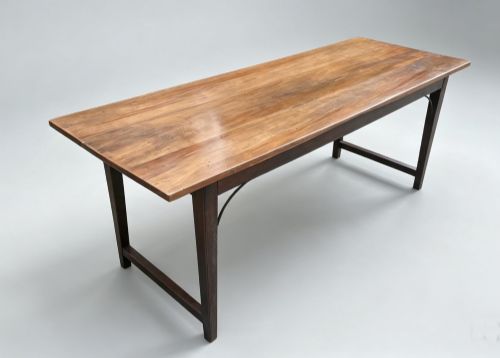
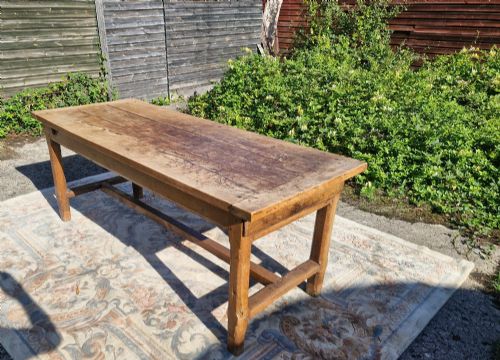
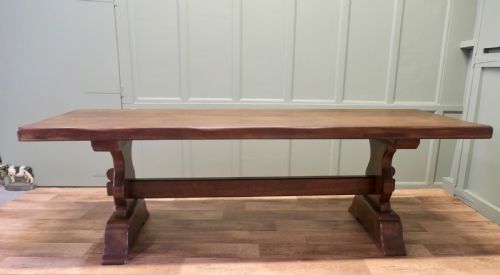
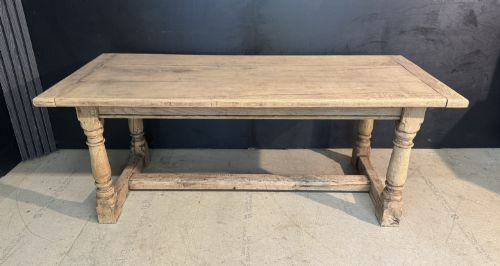
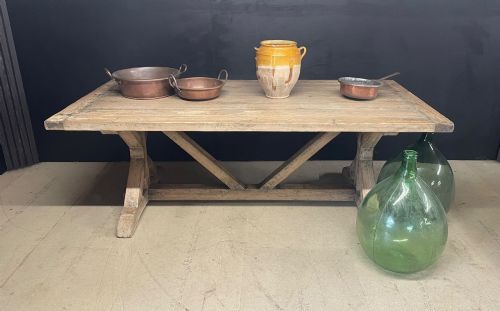
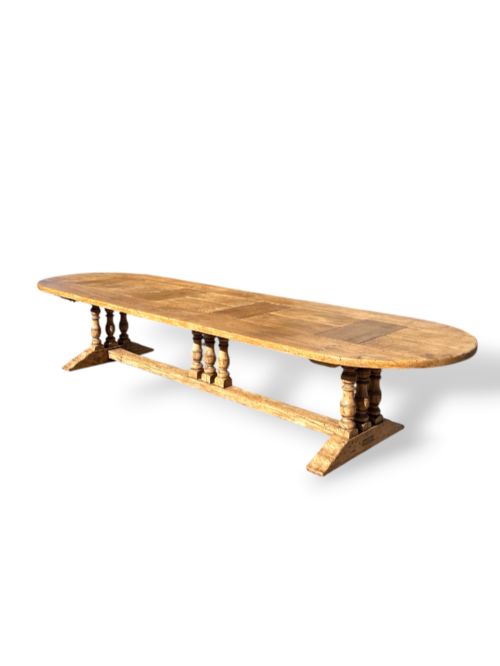
A large french dining table represents substantial timber furniture designed to seat many people comfortably for daily meals and gatherings. These pieces span from the nineteenth century into the twentieth century, carrying distinct regional styles such as provincial, rustic farmhouse and refectory forms.
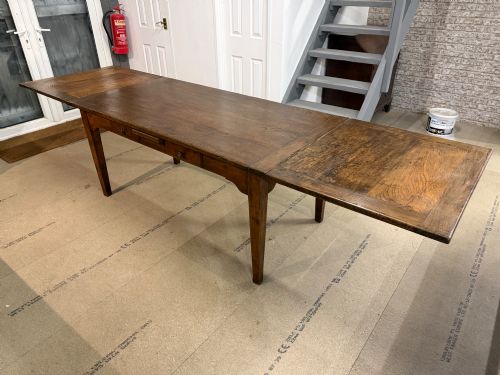
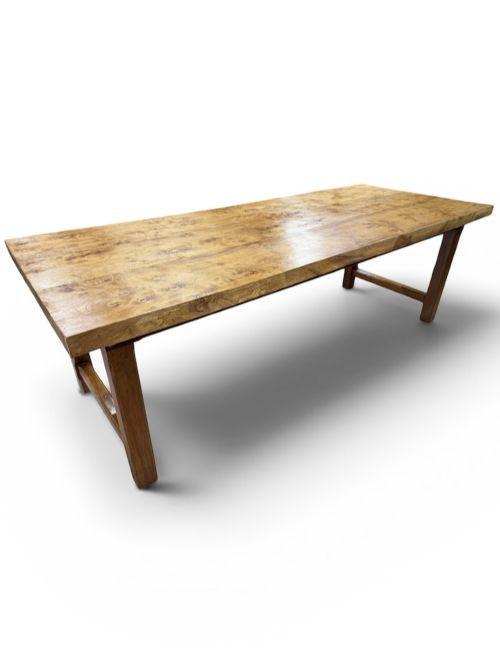
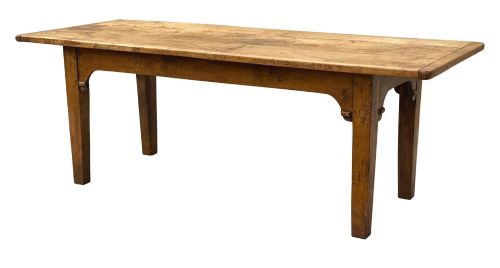
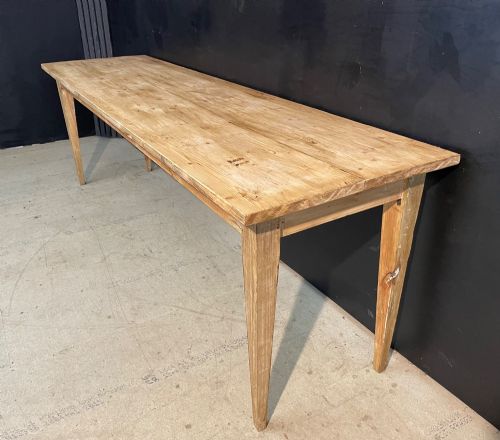
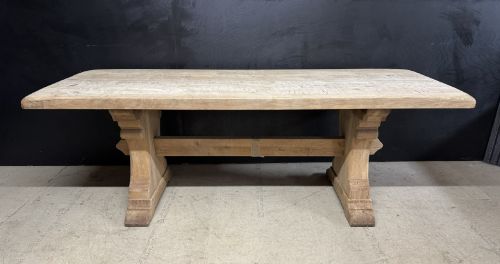
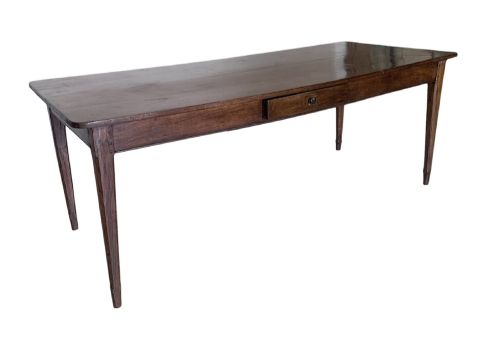
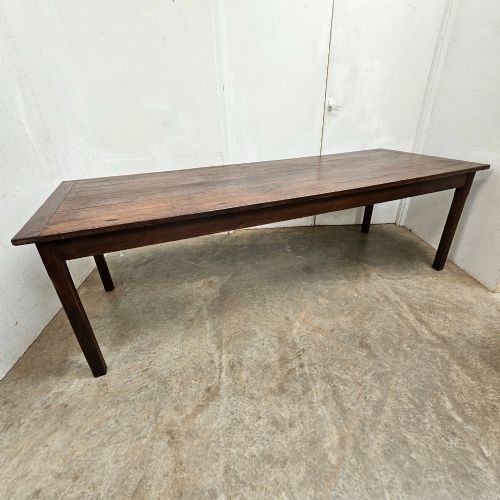
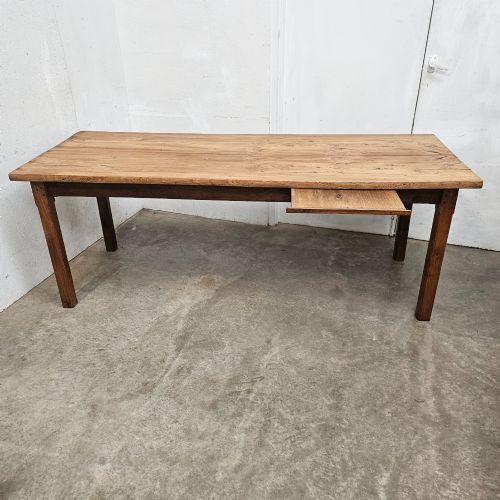
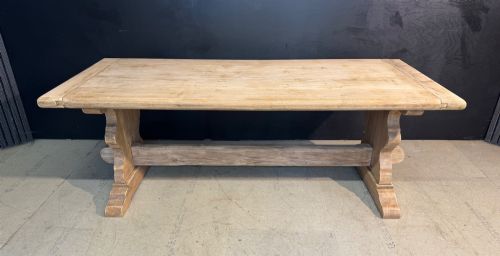
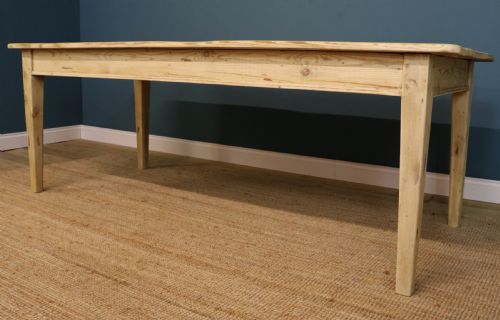
The version most commonly met on this page is the nineteenth century oak or bleached oak farmhouse table. These pieces frequently display long plank tops, sturdy legs and sometimes integrated drawers or extending mechanisms.
Beyond oak, the selection includes cherrywood, elm, pine and fruitwood examples shaped by French country traditions. Buyers encounter everything from monastic refectory formats to classic double extending variants.
How They Were Made
Makers built these tables using solid regional timbers such as oak, cherrywood, elm and pine, often selecting thick boards for the top. Construction relied on sturdy joinery methods to support heavy daily use in kitchens and dining halls.
Surface treatments range from natural waxed finishes to intentional bleaching of the oak. Some pieces incorporate functional elements like drawers built into the frieze or draw leaf and double extending mechanisms to expand the surface area.
Some hardworking tables arrive with up to eight built-in drawers, perfect for hiding away stray cutlery.
What Varies in Quality
Quality rests upon the choice of timber and the integrity of the board construction, particularly in the thickness and selection of the wood used for the top. Tables fashioned from dense solid oak or well-figured cherrywood demonstrate superior material substance compared to lighter pine alternatives.
The refinement of the joinery and any decorative details, such as carved elements or ormolu mounts on revival pieces, distinguish standard utilitarian tables from finer examples. Proportion, stability and the preservation of the original timber surface ultimately define the standing of each piece.
The Large French Dining Table Glossary
- Refectory table
- A long, narrow dining table traditionally used in monastic dining halls. These pieces feature sturdy legs connected by central stretchers for added stability.
- Vendange table
- A type of table associated with the grape harvest in France. They often utilise robust timber construction suitable for working farm environments.
- Draw leaf table
- A table equipped with pull-out leaves stored beneath the main top. This mechanism allows the surface length to increase easily.
- Bleached oak
- Oak timber treated to achieve a lighter, softened tone. This finish appears frequently on twentieth century French farmhouse examples.
- Frieze
- The horizontal band running beneath the table top. In many farmhouse tables, this section houses one or more storage drawers.
Large French Dining Table: Frequently Asked Questions
What periods do these dining tables come from?
The pieces span the nineteenth century and early twentieth century, encompassing Georgian and Edwardian examples alongside specific dated items.
Craftsmen built these tables using traditional methods that reflected the regional styles of the era.
What types of wood were used?
Makers utilised a variety of solid timbers including oak, bleached oak, cherrywood, pine, elm and fruitwood. Oak and cherry appear most frequently among the larger formats.
Each wood species brings distinct grain patterns and colour variations to the finished table.
Do these tables extend for guests?
Several examples feature extending mechanisms or draw leaf designs built into the framework. These systems allow the user to increase the surface length when hosting larger gatherings.
Non-extending refectory and farmhouse tables provide a fixed, generous length instead.
How do I care for a wooden dining surface?
Maintaining the timber involves using appropriate wax or polish to preserve the finish against daily wear and moisture. Regular cleaning with a soft cloth keeps the antique wood nourished.
Placing the table away from direct heat sources prevents the solid boards from drying out or splitting.