
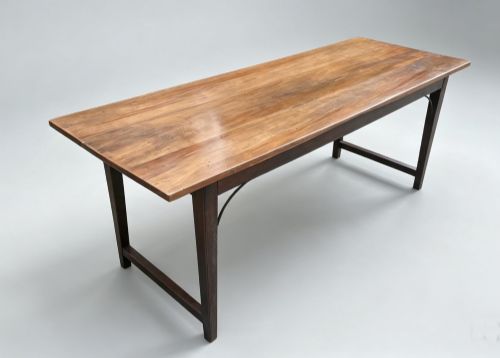
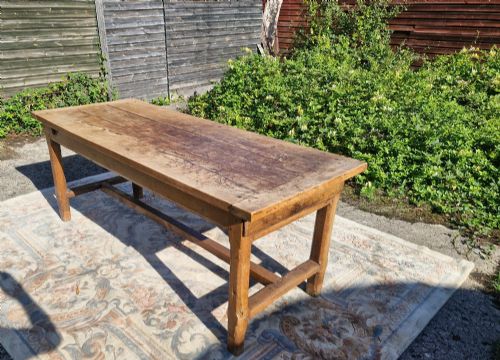
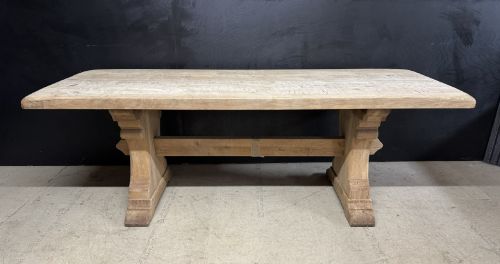
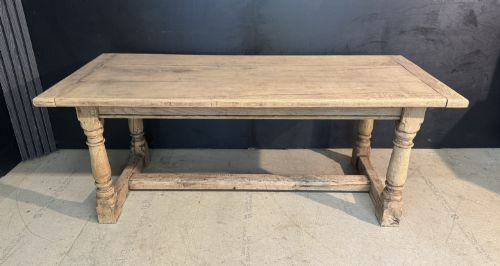
Large French Country Table
A large french country table brings practical scale and honest rustic character to a dining room or kitchen.
Large French Country Table
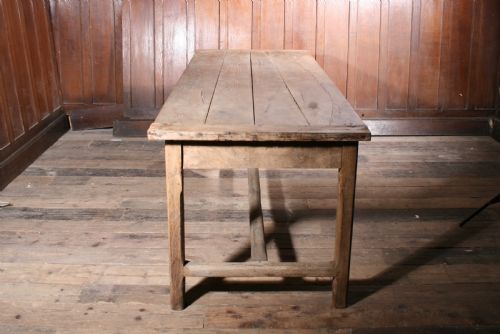
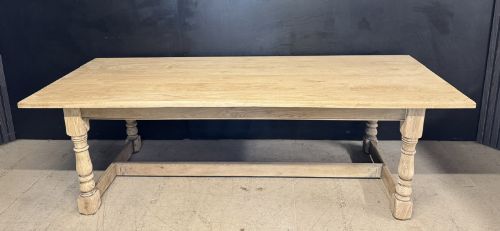
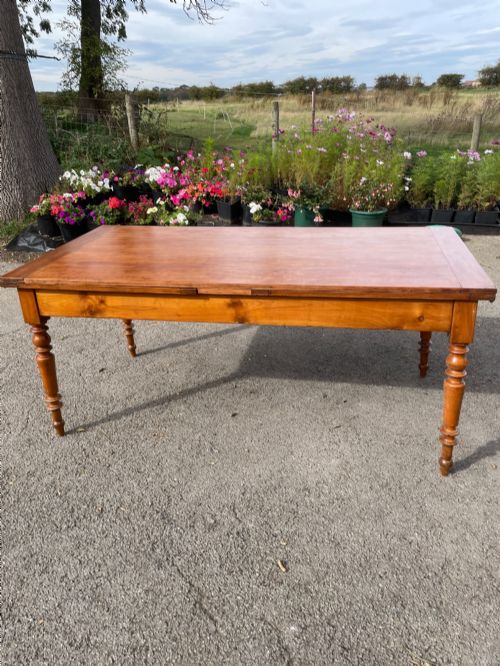
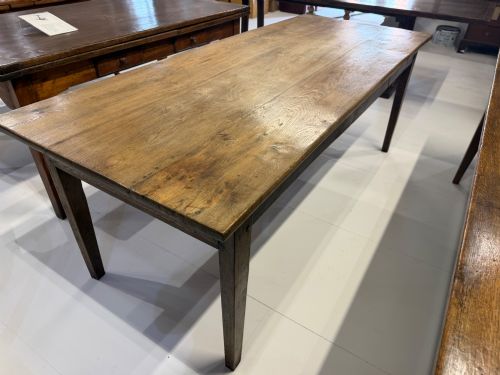
When you search for a large french country table, you encounter substantial dining surfaces rooted in provincial domestic life. These pieces span the eighteenth, nineteenth, and early twentieth centuries, constructed primarily as working furniture for rural households.
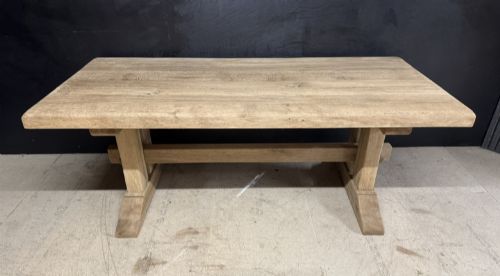
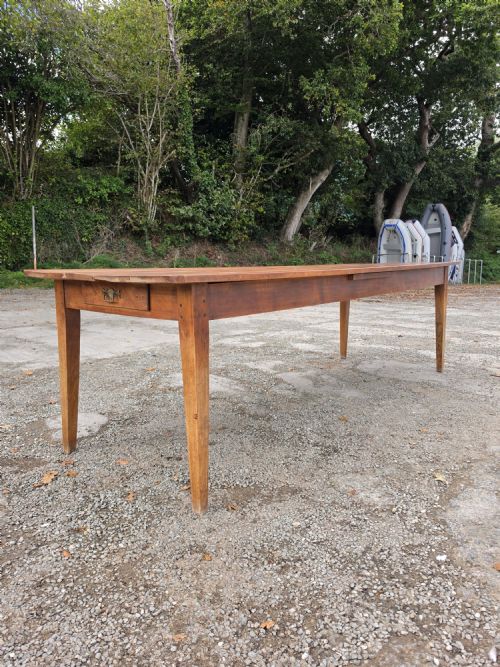
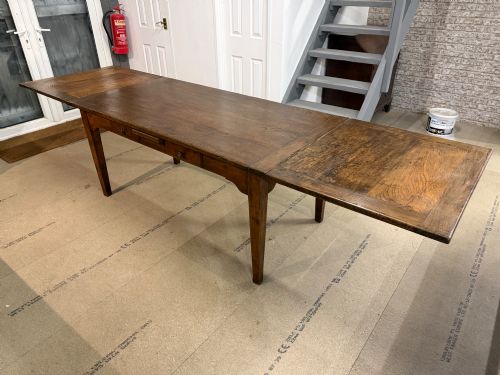
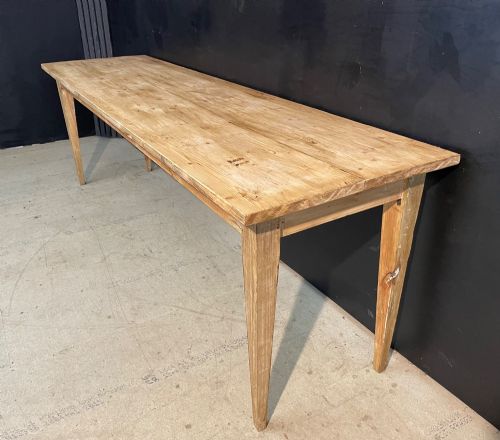
The most common form on this page is the farmhouse dining table, alongside refectory tables, kitchen boards, and occasional extending variants. They range from modest proportions up to monumental lengths exceeding four metres.
Makers built these tables for daily domestic labour and communal meals, using local timbers available in the French provinces. Their design prioritises sturdy construction and generous seating capacity over ornate decoration.
Materials and construction methods
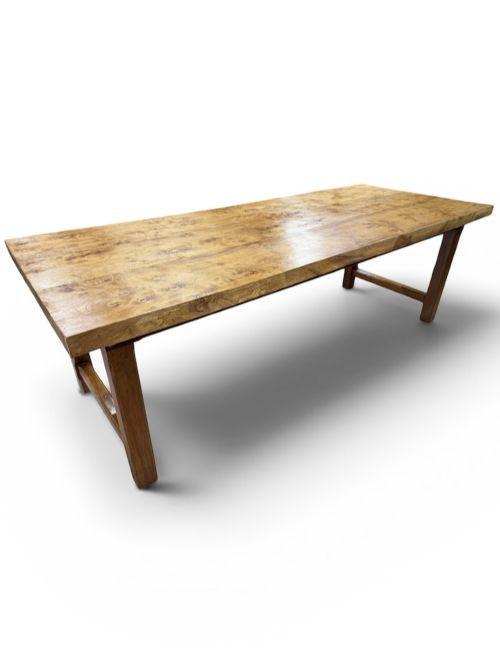
Carpenters built these tables using solid regional timbers including oak, cherrywood, pine, fruitwood, elm, and walnut. Boards were selected for width and durability, often joined simply to form thick plank tops that could withstand heavy daily use.
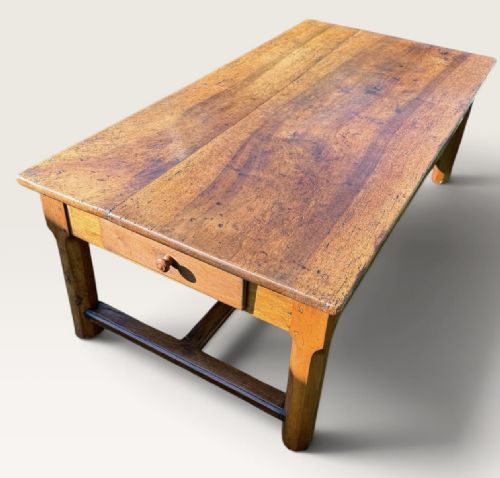
Frames rely on traditional joinery methods such as mortise and tenon joints, sometimes incorporating draw leaves or double extending mechanisms. Surfaces occasionally feature auxiliary elements like storage drawers built directly into the frieze.
Listings feature oak, pine, cherrywood, fruitwood, and walnut across eighteenth, nineteenth, and twentieth-century periods.
Indicators of quality
Quality in these tables depends upon the selection of timber and the integrity of the original construction. Superior examples feature well-figured single or two-board tops that remain stable across expansive lengths without excessive warping.
The proportion of the legs relative to the top and the preservation of original patination separate exceptional pieces from ordinary utility furniture. Intervention through bleaching or heavy restoration alters the natural ageing process of the wood.
The Large French Country Table Glossary
- Refectory table
- A long, narrow dining table originally designed for communal dining in monastic or institutional settings. These forms are frequently adapted for domestic kitchens and large dining spaces.
- Vendange table
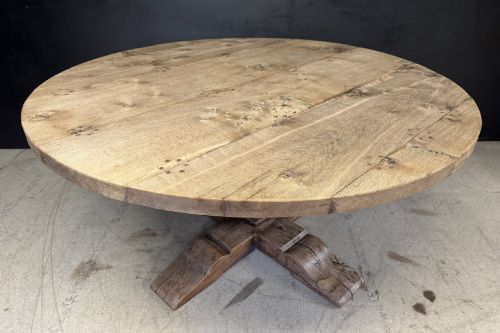
- A traditional French table associated with the grape harvest, often characterised by a circular or oval tilting top. They provide versatile surface space in country interiors.
- Draw leaf table
- A dining table equipped with pull-out leaves stored beneath the main top to extend the seating capacity. This mechanism allows the surface area to increase when needed.
- Patina
- The surface sheen and colour developed by wood through age, wear, and exposure to light over many decades. It serves as an indicator of authenticity and historical use.
Large French Country Table: Frequently Asked Questions
How do I clean a rustic wood table?
Wipe the surface with a damp cloth and mild soap, avoiding harsh chemical cleaners that strip the finish. Dry the timber thoroughly immediately afterwards.
Apply natural beeswax periodically to nourish the wood and maintain the protective barrier against moisture.
Are these tables suitable for daily use?
These pieces were originally constructed for heavy domestic work and communal dining, making them robust for modern family life. Solid hardwood tops handle everyday wear resiliently.
Use coasters and mats to protect antique timber from heat marks and moisture rings during meals.
How can I tell the period of a table?
Examine the tool marks on the underside of the timber, the construction of the joints, and the wear patterns around the edges. Hand-cut joinery and natural wood movement indicate older construction methods.
Compare the timber species and hardware against known examples from the eighteenth, nineteenth, and early twentieth centuries.
Do bleached finishes affect authenticity?
Bleaching is a treatment applied to lighten dark oak or pine timbers to suit modern interior aesthetics. While popular for contemporary decor, it removes the original historic finish.
Unbleached surfaces retain their deeper natural patination and show a longer history of domestic use.