
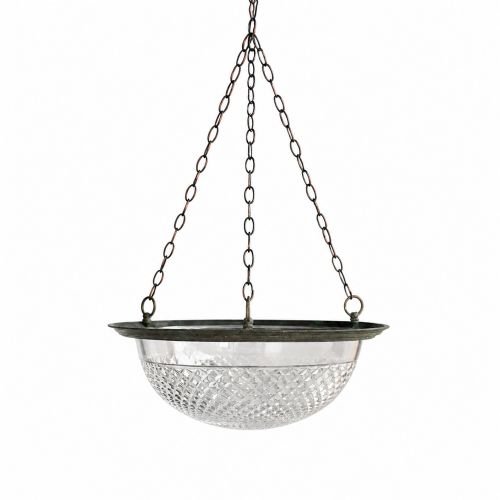
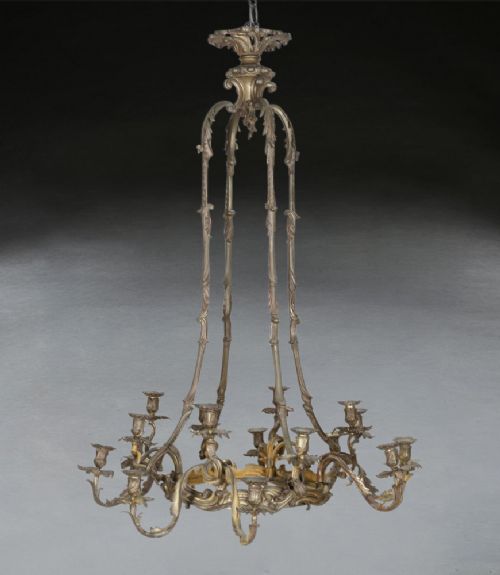


Large French Ceiling Chandelier
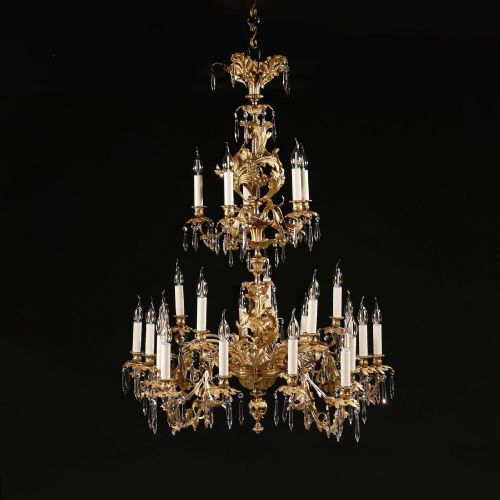
These large french ceiling chandeliers transform grand rooms with multiple tiers of cut crystal and gilt bronze illumination.
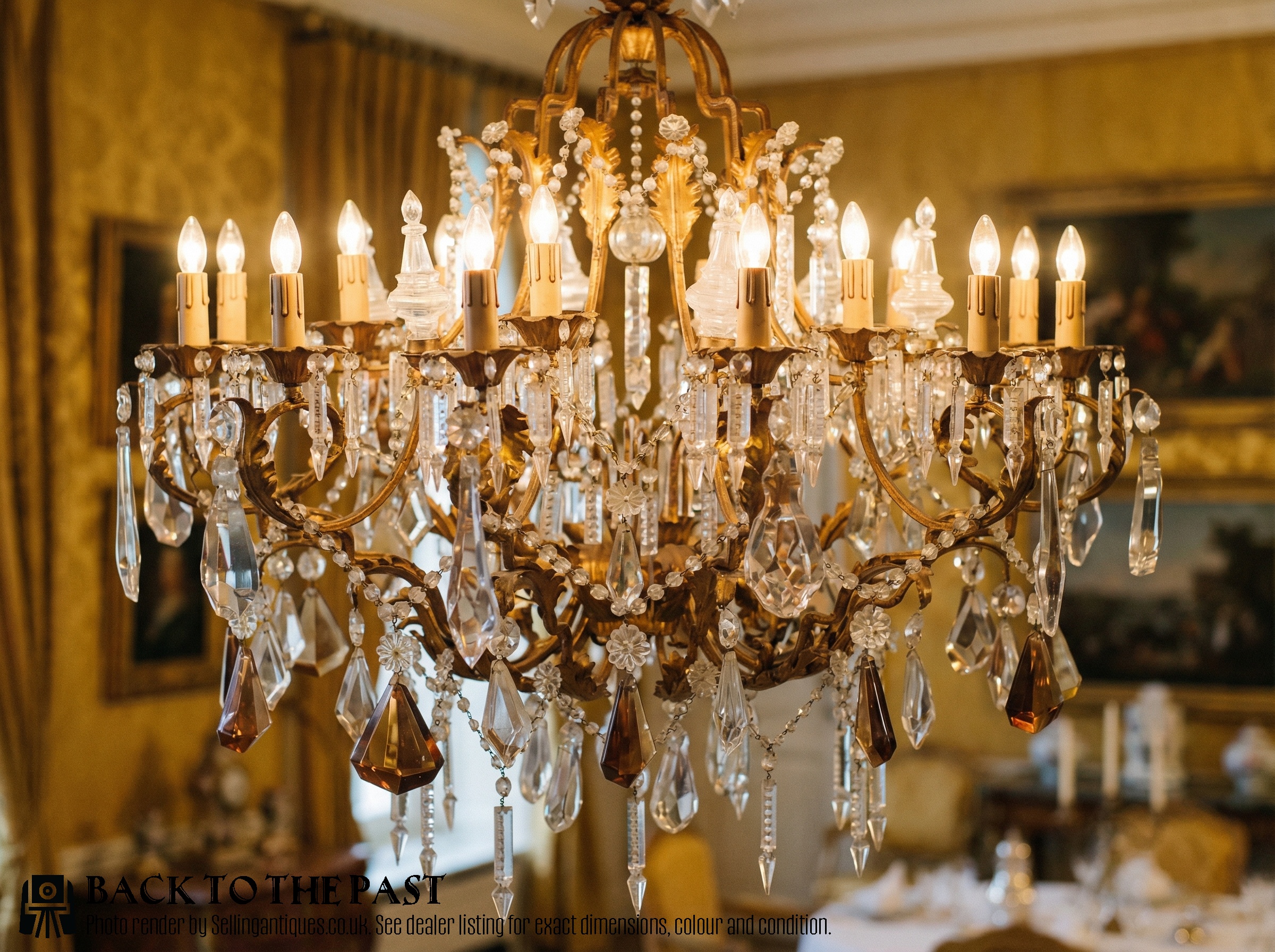
Large French Ceiling Chandelier
A large french ceiling chandelier provides overhead illumination through multi-armed fixtures designed for substantial rooms. Pieces meeting this description range from nineteenth-century gasoliers and classical ormolu to twentieth-century tent and waterfall configurations.
Buyers encounter styles spanning french empire, louis xv, and rococo revival alongside hanging lanterns and plafonniers. Origins extend into italian florentine and bohemian glasswork while retaining central ties to continental design traditions.
Forms scale from multi-tiered branch structures holding dozens of lights down to single-bulb hall lanterns and basket chandeliers. Materials cluster around cast metals and reflective glass components that dominate period production.
Materials and construction methods
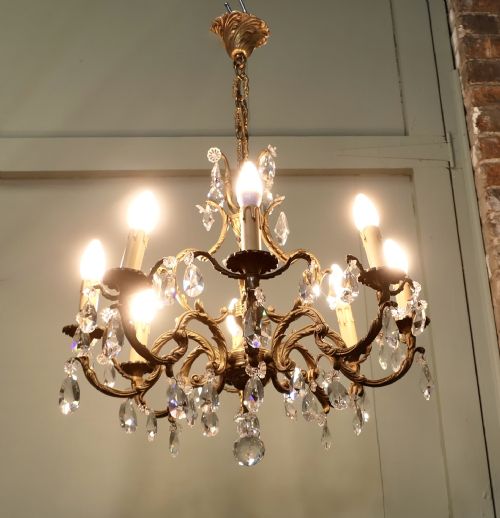
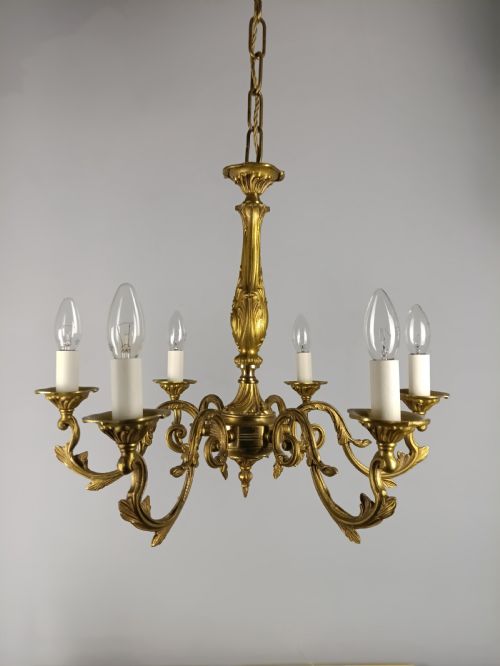
Construction relies heavily on cast metals including brass, bronze, ormolu, and gilt bronze. Metal armatures support heavy glass elements and distribute weight across multiple tiers.
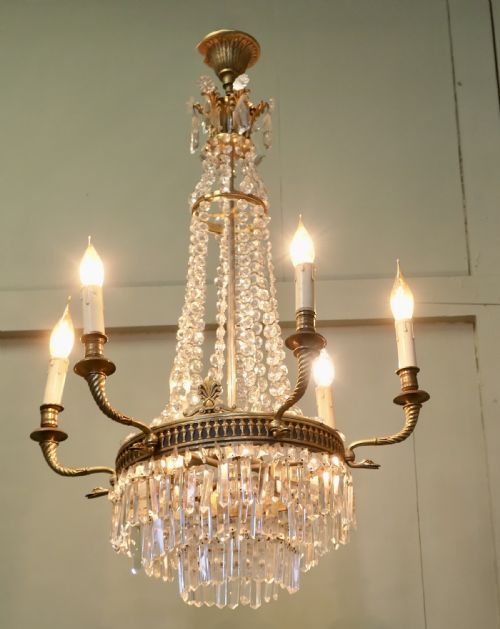
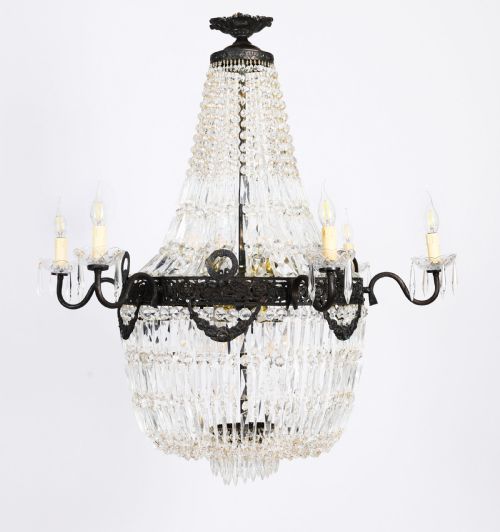
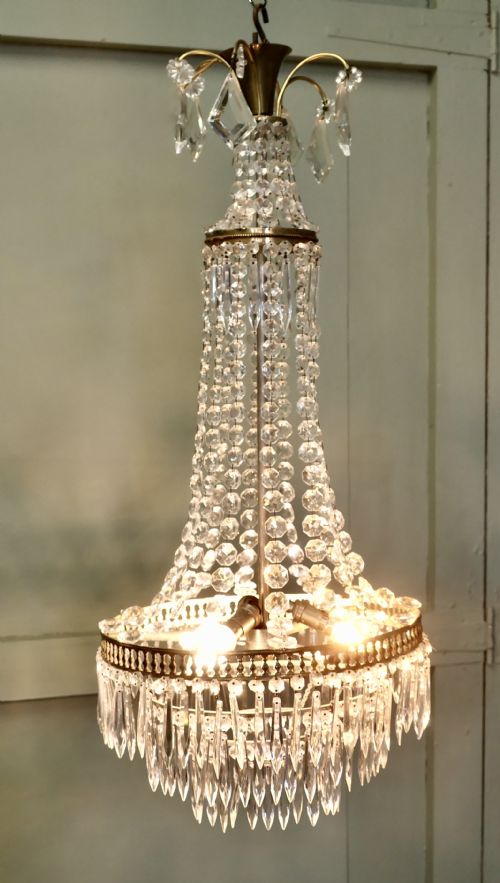
Decorative detailing incorporates cut crystal, lustres, and beaded strands wired together to form tents, waterfalls, or bag shapes. Glass drops catch and refract light from numerous candle-arms or electrified points.
Listings feature pieces spanning the nineteenth century through the nineteen-thirties, incorporating brass, gilt bronze, and cut crystal materials.
Distinctions in craftsmanship
Quality separates pieces by the crispness of bronze casting and the precision of hand-cut crystal elements. Higher tier examples feature heavier gauge metalwork, elaborate double-tiered framing, and integrated decorative motifs.
The integration of structural elements determines the integrity of larger multi-light installations. Superior pieces maintain alignment across twenty or more arms without structural sag in the central shaft.
Baccarat
The Large French Ceiling Chandelier Glossary
- Tent and waterfall
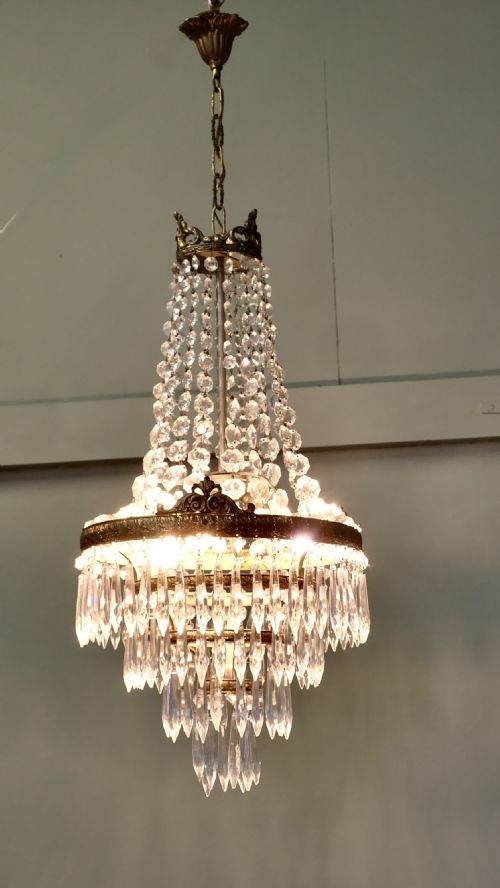
- A lighting configuration featuring an upper conical section of glass beads falling outward into a wider cascading lower tier. This arrangement maximises light reflection.
- Ormolu
- Gilded brass or bronze applied to metal mounts and decorative components. The technique yields a rich gold-coloured surface finish.
- Platfondier
- A ceiling-mounted light fixture sitting flush or close to the surface rather than suspended on a long drop chain. These fixtures suit rooms with lower ceiling clearances.
- Hall lantern
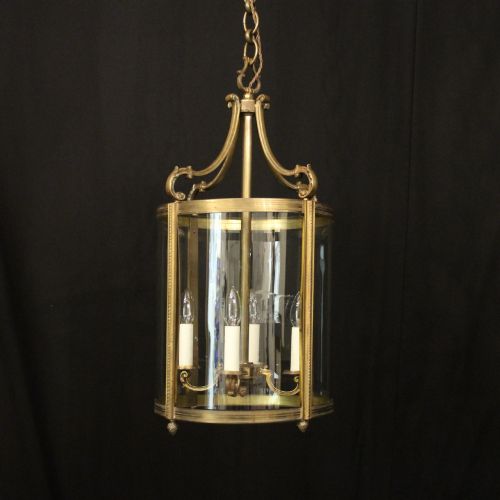
- An enclosed ceiling pendant featuring glazed panels within a metal frame. They provide directional illumination for entranceways and corridors.
- Lustre
- A cut glass pendant drop suspended from chandelier arms to enhance light refraction. They dangle in quantities ranging from single drops to heavy fringes.
Large French Ceiling Chandelier: Frequently Asked Questions
How do I hang a heavy chandelier safely?
Suspension requires fixing directly into ceiling joists or installing a heavy-duty steel support brace. Professional electricians evaluate ceiling load capacity before mounting multi-tiered bronze fixtures.
Wiring older fixtures often demands rewiring to meet contemporary safety standards while preserving original socket assemblies where possible.
What ceiling height do I need?
Large fixtures require substantial vertical space to clear traffic areas and maintain proper visual proportion. Rooms with ceilings under three metres generally accommodate flush plafonniers or compact lanterns rather than multi-tiered branch chandeliers.
Allowance must be made for the hanging drop length specified in individual pieces.
How do I clean crystal lustres?
Maintenance involves wiping individual glass drops with a mild cleaning solution while the fixture remains suspended. Many collectors remove delicate lustres periodically for thorough washing in warm soapy water.
Harsh chemical sprays should be avoided to protect antique metal patinas and gilt surfaces.
How do I identify an empire style fixture?
Empire style examples display classical architectural motifs, symmetrical tent formations, and restrained bronze mounts. Dating often points toward the nineteenth century or early twentieth-century revivals.
Proportions remain formal and balanced with emphasis on vertical lines and classical draping.