

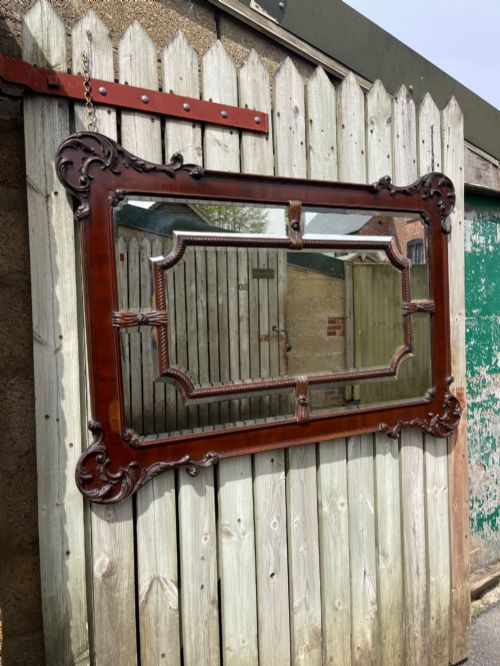


Large Framed Landscape Mirror
A large framed landscape mirror brings depth and light to a room, and the examples gathered here offer substantial architectural presence.
Large Framed Landscape Mirror
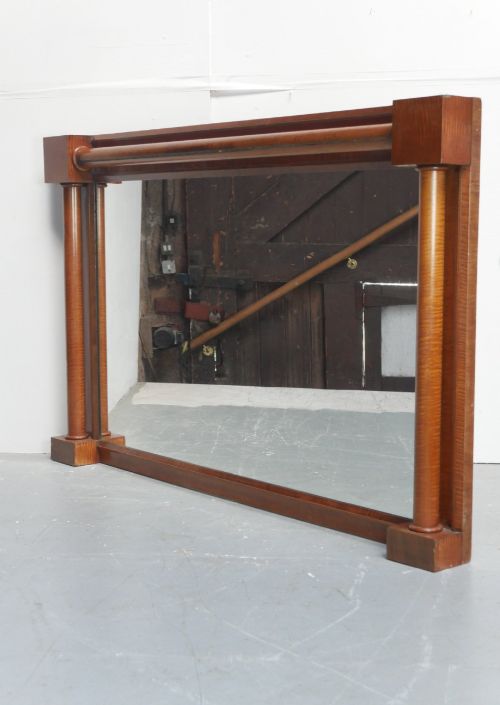
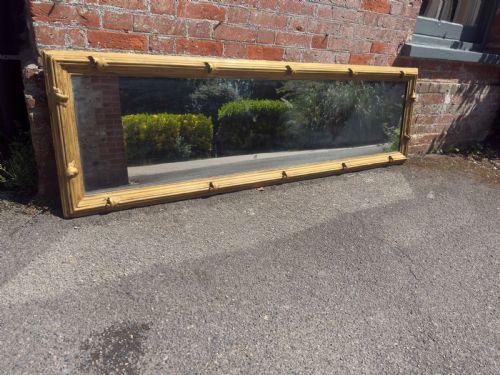
A large framed landscape mirror is primarily encountered in horizontal formats designed to sit above a mantelpiece or anchor a principal wall. The selection spans the nineteenth century through the Edwardian era, taking forms such as overmantels, pier mirrors, and sectional wall mirrors.
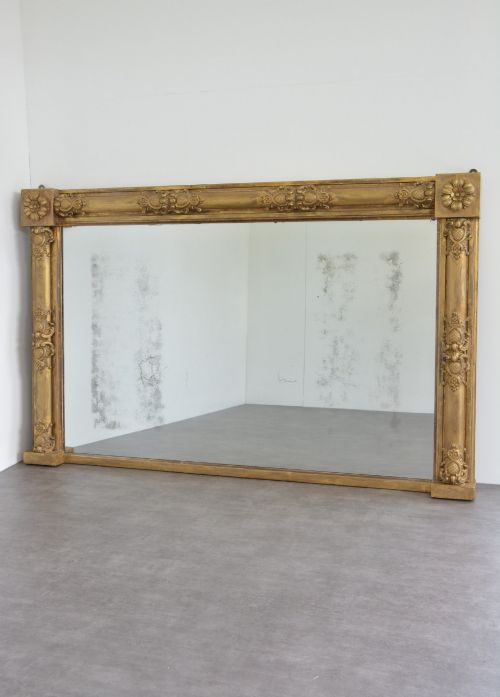
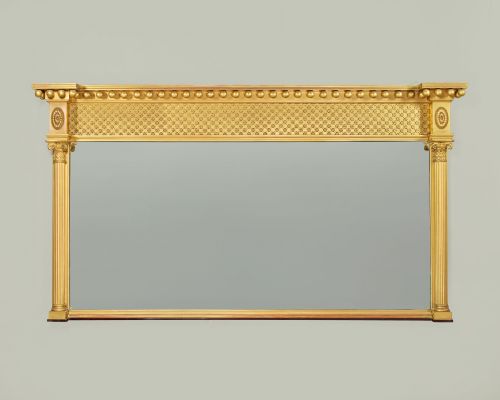
The dominant style on this page is the nineteenth-century gilt overmantel, often featuring classical proportions suited to period interiors. Alongside these, buyers find Regency designs, Venetian examples, and Arts and Crafts interpretations.
Makers and workshops utilised varied timber frames alongside gilded plaster work, creating substantial pieces intended as focal points within reception rooms and country houses.
How they were made
The construction of these mirrors relies on solid wood frames, frequently utilising mahogany, satin birch, burr walnut, and birds-eye maple. Carved wooden elements are combined with gesso and applied composition ornament before receiving layers of gold leaf or surface gilding.
Mirror glass of the period was set into these heavy frames, sometimes showing natural ageing such as foxing. Sectional frames and triptych formats required precise joinery to support multiple glass plates securely within the main structure.
Several mirrors arrive with lightly foxed glass, offering quiet proof of centuries spent watching rooms change around them.
What varies in quality
The distinction between standard production and the finest work lies in the depth and crispness of the carving within the wood and gesso. Superior examples demonstrate meticulous hand-carving and careful application of gold leaf, whereas lesser pieces rely on heavier composition mouldings.
The choice of timber under the gilding or polish also signals standard, with figured woods like burr walnut and satin birch representing more ambitious commissions compared to plain painted or simpler wooden carcasses.
The Large Framed Landscape Mirror Glossary
- Giltwood
- Wood that has been coated with gold leaf or a gold-coloured finish. This technique was widely applied to nineteenth-century overmantel frames.
- Gesso
- A plaster-like material applied to wood frames to create a smooth surface for carving or gilding. It allows for intricate moulded ornamentation.
- Overmantel mirror
- A large horizontal mirror designed specifically to hang above a fireplace mantel. These pieces often dominate the chimney breast.
- Foxed glass
- Mirror glass showing spots and discoloration caused by age and the degradation of the backing. Collectors often value this authentic sign of antiquity.
- Pier mirror
- A tall or wide mirror designed to hang on the wall space between windows. They reflect additional light into darker rooms.
Large Framed Landscape Mirror: Frequently Asked Questions
Where should I hang a large landscape mirror?
These mirrors traditionally sit above a fireplace mantelpiece where their horizontal proportions balance the hearth below.
They also function effectively on any principal wall in a dining room or hallway to reflect light and create a sense of expanded space.
How do I identify a Regency mirror?
Regency pieces often display neoclassical motifs, ebonised details, and disciplined architectural framing.
The materials and gilding techniques align with the early nineteenth century.
What is an overmantel mirror?
An overmantel mirror is a wide format glass built to occupy the wall directly above a fireplace surround.
They were proportioned to match the scale of nineteenth-century chimney breasts and reception rooms.
How do I care for antique giltwood frames?
Dust the carved surfaces gently with a dry, soft brush to avoid disturbing the fragile gold leaf or composition elements.
Keep the mirrors away from direct sunlight and damp environments to protect the wooden structure and silvered glass backing.