



Large Fireside Log Bin
A large fireside log bin brings hearthside utility and metal texture to a room, offering robust storage for winter fuel.
Large Fireside Log Bin
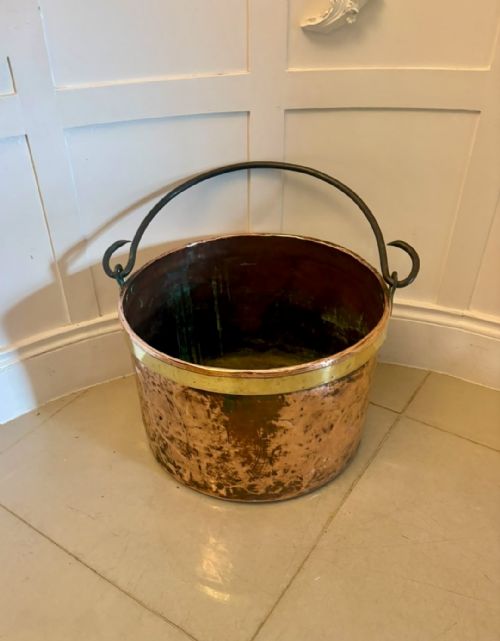
A large fireside log bin provides ample capacity for holding firewood near the hearth. These vessels appear in forms such as coal buckets, cauldrons, ferrats, and dedicated log baskets across the inventory.
Most examples found on this page date from the nineteenth century, with pieces spanning Georgian, Regency, Victorian, and Arts and Crafts styles. They serve both a practical fuel-holding function and a decorative role in country house interiors.
Makers and artisans constructed these containers from copper, brass, iron, wrought iron, and timber. Buyers encounter both riveted metal construction and woven or rigid forms designed for heavy domestic use.
How they were made
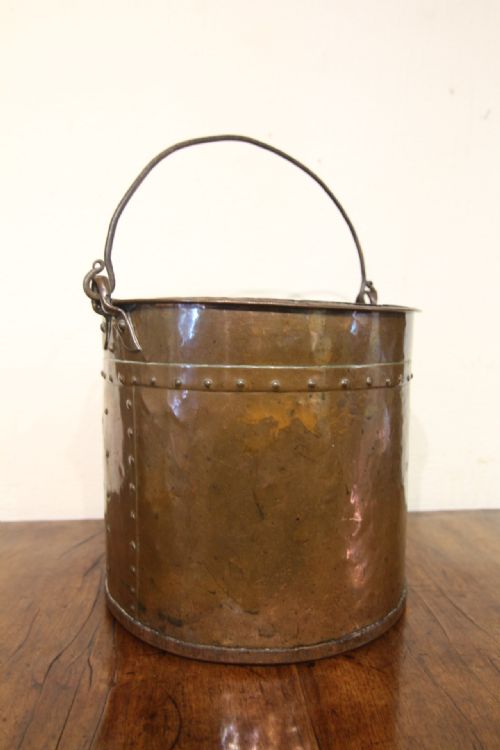
Metal vessels feature hammered or sheet copper and brass bodies joined by structural rivets, often paired with stout wrought iron swing handles and iron frames for stability. Blacksmiths and metalworkers shaped these materials to endure heavy lifting and constant loading with logs.
Timber and basketry constructions utilise sturdy natural materials woven or assembled to handle the weight of heavy fuel. Makers reinforced stress points with metal banding or iron hardware to ensure longevity beside the open hearth.
Large Fireside Log Bin Retail Price Guide 2026
Typical asking prices for large fireside log bin among the pieces listed under this phrase on Sellingantiques today, from the lower quarter to the upper quarter. They describe what is for sale here now, not the wider market.
Listings feature items from the Georgian and Regency periods through to the twentieth century, constructed in copper, brass, iron, and timber.
What varies in quality
The standard of a large fireside log bin rests upon the heaviness of the metal gauge and the integrity of its structural framing. Thicker copper walls and original iron mounts indicate superior durability and original workshop execution.
Proportion and surface patination distinguish finer examples from standard utility items. Pieces retaining their original wrought iron handles and unpolished surface textures hold greater visual interest for collectors.
The Large Fireside Log Bin Glossary
- Ferrat
- A traditional heavy vessel, often associated with French country use, utilised here for holding fuel. It provides deep container capacity for hearthside storage.
- Wrought iron
- Iron worked by hand while hot, creating durable handles and frames with characteristic surface texture. It supplies the structural strength for lifting heavy loads of wood.
- Regency
- A style period spanning the early nineteenth century characterised by classical restraint and clean lines. Pieces from this era display refined proportions in metalwork.
- Arts and Crafts
- A design movement valuing honest construction and visible handcraftsmanship. Items from this period emphasise simple utility and structural materials.
- Cauldron
- A large round metal pot with a swing handle, repurposed beside the fireplace for storing logs. Its deep bowl shape contains loose bark and debris effectively.
Large Fireside Log Bin: Frequently Asked Questions
What is a large fireside log bin used for?
These vessels hold and organise firewood directly beside an open hearth or woodburning stove. They keep fuel accessible while containing loose bark and wood chips.
Beyond utility, they act as substantial decorative objects that introduce metallic warmth and period character to a room.
How do I clean a copper log bin?
Maintenance depends on the desired appearance of the metal surface. Many owners prefer to leave the aged patination undisturbed.
If cleaning is necessary, use a gentle cloth to remove dust and debris without stripping the historic character of the copper.
Are these bins strong enough for heavy logs?
The listings show robust construction methods, including riveted copper walls and wrought iron swing handles. These materials were engineered for daily domestic service.
Their substantial weight and sturdy frames allow them to support heavy loads of timber safely.
How can I tell the period of a bin?
Dating relies on stylistic markers and manufacturing techniques such as hand-riveting and ironwork framing. Georgian and Regency pieces show different proportions compared to later Victorian or Arts and Crafts examples.
Materials like hammered copper and wrought iron appear across multiple nineteenth-century styles.