


Large Display Vitrine
A large display vitrine serves to showcase precious objects behind clear glass panes within rooms.
Large Display Vitrine
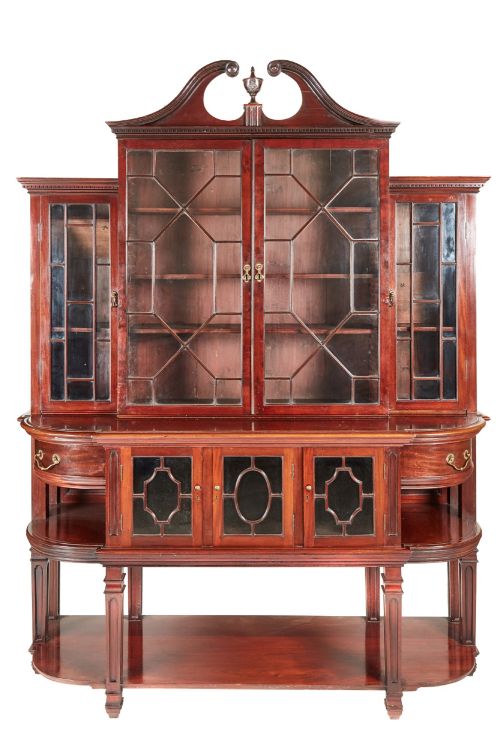
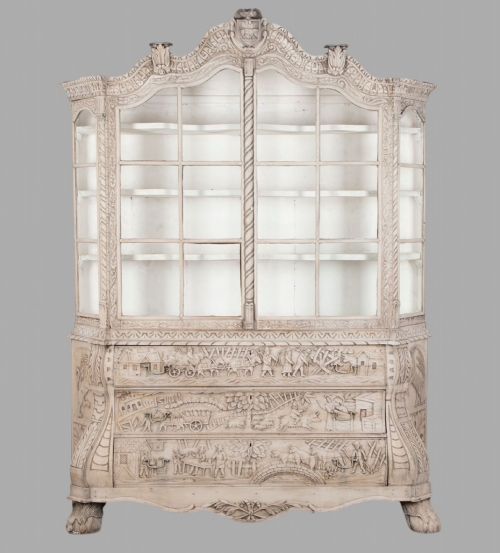
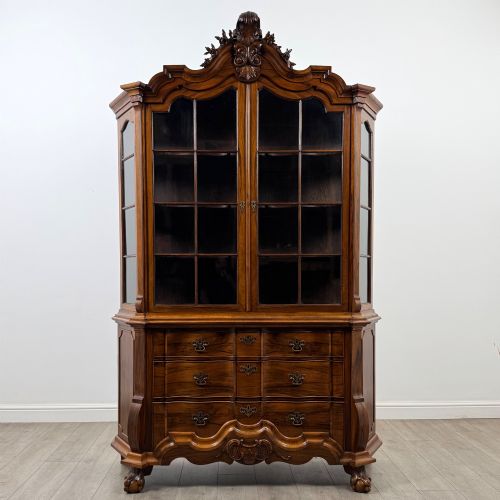
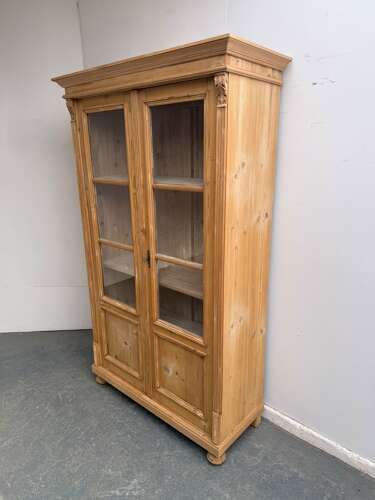
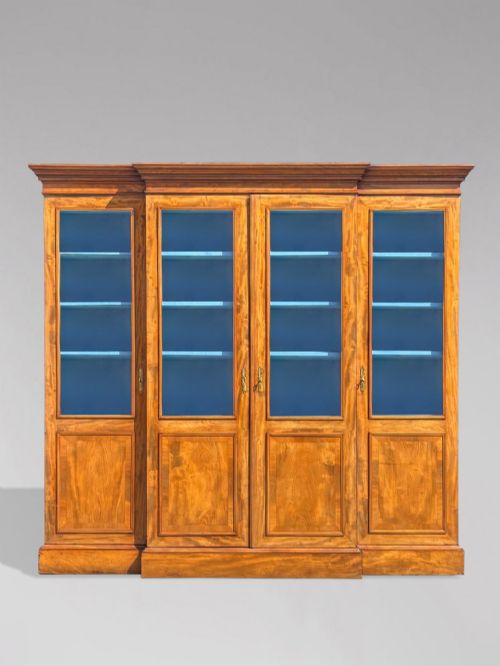
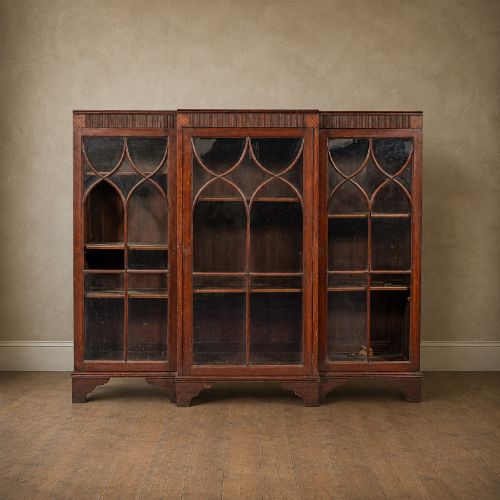
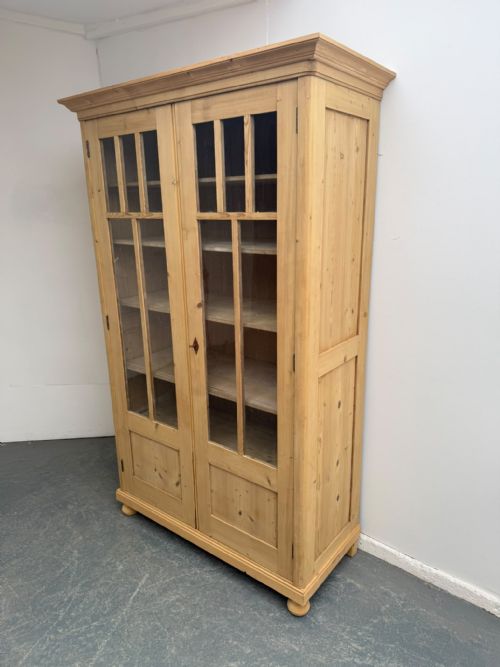
A large display vitrine is a substantial cabinet designed primarily for the exhibition of fine porcelain, books, and decorative objects behind glazed doors or glass panels. When searching this phrase, a buyer encounters significant pieces originating from the nineteenth and early twentieth centuries, spanning periods such as the Victorian and Edwardian eras. The inventory leans towards tall breakfront bookcases, bombé cabinets, and freestanding vitrines built to command attention in drawing rooms and reception spaces.
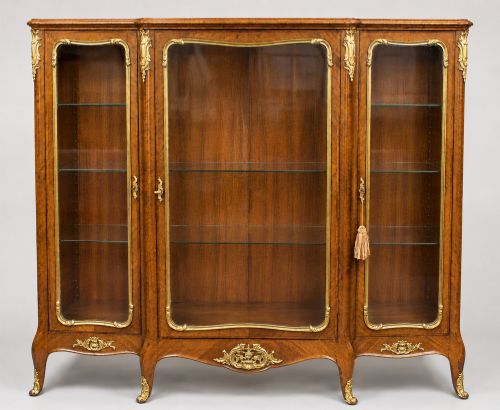
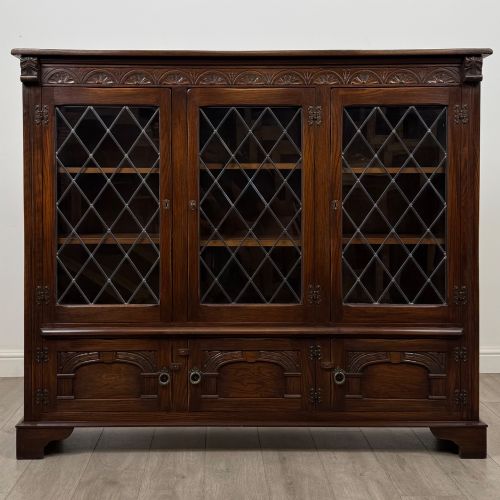
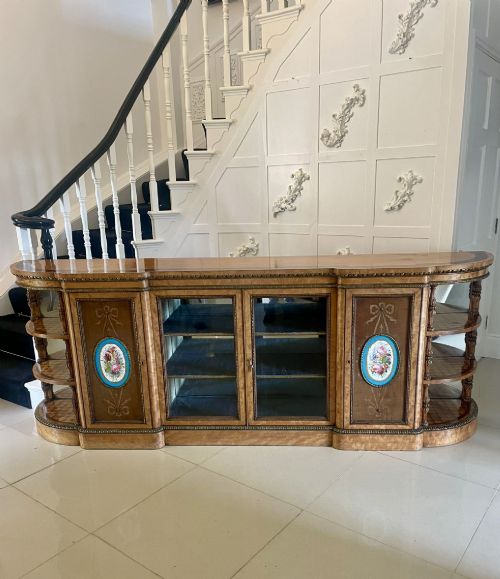
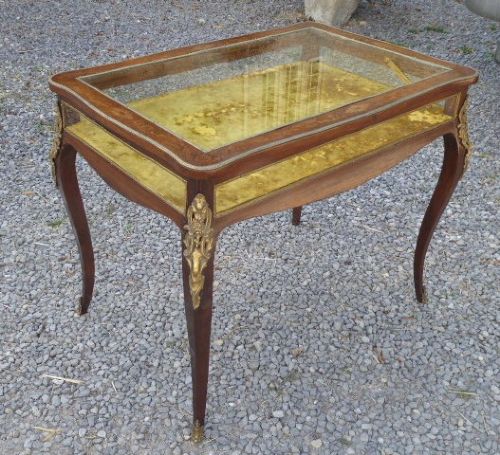
Forms vary from stately English mahogany breakfronts to elaborate continental pieces displaying distinct regional revivals. One frequently meets French vitrines finished with kingwood, marquetry, and ormolu mounts alongside sturdy oak and walnut examples from Edwardian workshops. These cabinets merge architectural presence with transparent display space, fulfilling the Victorian and Edwardian desire for curated interior exhibition.
Materials and construction
Cabinet makers utilised dense timber foundations of mahogany, walnut, and oak, often layering figured veneers like burr walnut, kingwood, and satinwood across primary surfaces. Marquetry panels introduce intricate floral or geometric designs through contrasting wood inlays, while ebonised finishes and parcel-gilding provide dramatic contrast. Carved details define revival styles, ranging from robust oak mouldings to delicate Rococo curves.
Glazing forms the central functional element, set within timber frames or astragal bars that structure the view into the interior. Ormolu and gilt brass mounts secure structural corners and frame glass panels, requiring precise casting and chasing by metalworkers. Bijouterie tables and vitrines integrate hinged glass tops or doors supported by brass hinges, balancing weight distribution across large glazed areas.
Some nineteenth-century shop display counters survived by escaping commercial back rooms into domestic drawing rooms.
Evaluating craftsmanship and execution
Quality rests upon the depth of timber selection and the precision of veneer matching across expansive cabinet doors and sides. Superior examples display continuous grain patterns in burr walnut or kingwood, while lesser items rely on simpler painted or plain mahogany surfaces. The crispness of hand-carved ornamentation and the weight of cast ormolu mounts signal the original investment in a piece.
Structural integrity governs long-term performance, particularly in large breakfront and bombé forms that bear heavy glass loads. Fine cabinets maintain tight door seals, smooth drawer actions, and securely fitted internal shelving without timber warping. The presence of exhibition-standard marquetry or signed bronze mounts elevates a piece from standard domestic furniture to high decorative art.
E. Pollard & Co. Ltd.·Linke
The Large Display Vitrine Glossary
- Vitrines
- Glass-fronted cabinets built specifically for displaying porcelain, curiosities, and fine objects. They rely on transparent panels on multiple sides to maximise light penetration.
- Ormolu
- Gilded bronze mounts applied to furniture edges and corners for decorative accent. This technique requires mercury gilding on nineteenth-century pieces.
- Bombe
- A swelling, outward-curving furniture profile associated with continental cabinet making. This shape demands advanced woodworking skill to maintain structural strength.
- Marquetry
- Inlaid patterns formed from various decorative wood veneers assembled on a carcase. Craftsmen cut contrasting timbers together to achieve seamless floral or geometric motifs.
- Astragal
- Moulding profiles used to divide glass panes within cabinet doors. These thin wooden bars create traditional grid patterns across large apertures.
Large Display Vitrine: Frequently Asked Questions
What is a large display vitrine used for?
These cabinets were built to protect and display collections of porcelain, silver, and precious curiosities within formal rooms. The glass panels allowed owners to exhibit their acquisitions while keeping dust away from delicate items.
In modern interiors, they serve a similar function for displaying books, ceramics, and sculptural objects. The elevated height and glass construction keep focal points visible across large living spaces.
How do I identify Victorian pieces?
Victorian cabinets often feature dark timbers like mahogany or rosewood, frequently paired with glazed breakfront designs. Heavy proportions and revival details such as Gothic tracery or classical cornices point to this mid-to-late nineteenth-century period.
Interior linings, hand-cut dovetails in drawers, and traditional brass hardware also indicate nineteenth-century construction methods. Makers during this era embraced varied historical styles from French Louis motifs to English Georgian revivals.
Where should I place a large vitrine?
These substantial cabinets require stable wall space away from direct sunlight to protect antique wood veneers and interior contents. Placing them in drawing rooms, dining spaces, or wide hallways allows adequate viewing distance for their scale.
Floor strength must be considered due to the combined weight of dense hardwood frames, mirrored backs, and heavy glass doors. Clearance for swinging doors or lift-up top lids on bijouterie tables remains essential for daily access.
What distinguishes Edwardian cabinets?
Edwardian display furniture tends to utilise lighter woods such as satinwood, mahogany, and inlaid walnut with refined stringing. The overall aesthetic leans toward airier proportions and restrained neoclassical or Sheraton revival influences.
Construction from the early twentieth century often displays cleaner internal framing and more subtle marquetry work than earlier Victorian equivalents. These pieces reflect a shift towards brighter, less cluttered drawing room schemes.
Are these cabinets difficult to maintain?
Maintenance involves regular dusting of exterior wood surfaces and careful cleaning of glass panels with non-abrasive solutions. Polishing should utilise traditional wax suited to antique timber finishes rather than modern silicone sprays.
Internal environments benefit from stable humidity levels to prevent wood movement and veneer lifting on burr walnut or kingwood surfaces. Hinges and locks require periodic light lubrication to ensure smooth operation of heavy glass doors.