

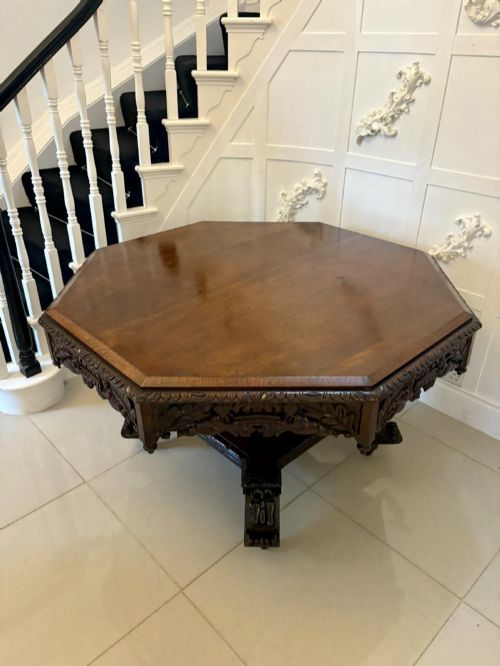
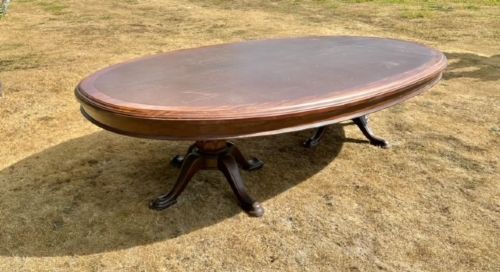
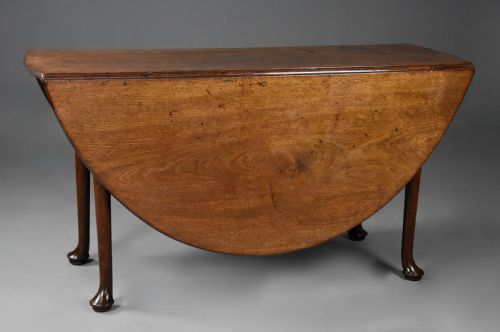
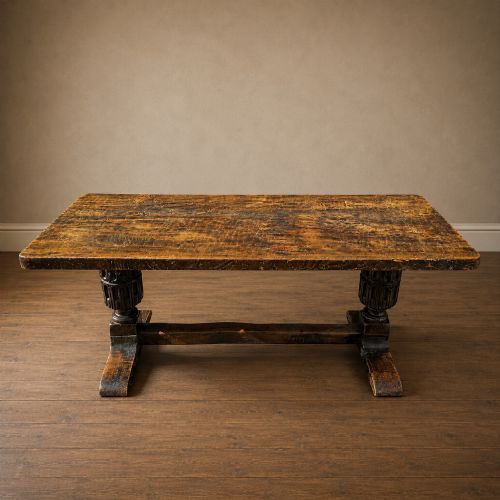
Large Dining Furniture
Large dining furniture brings together substantial tables, sideboards and buffets built to gather people.
Large Dining Furniture
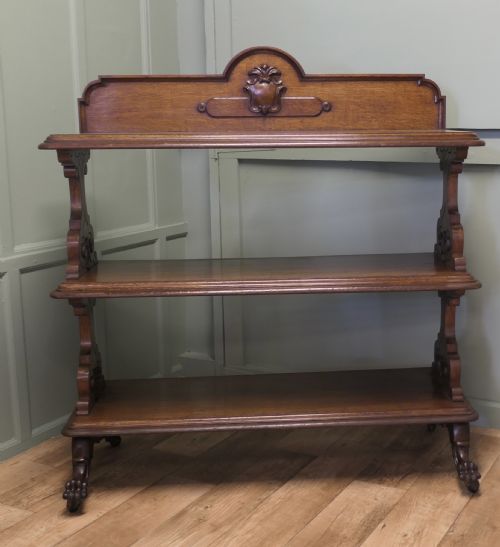
Large dining furniture encompasses sizeable tables, sideboards, buffets and serving pieces designed for communal meals and grand hospitality. When searching for large dining furniture, buyers encounter substantial pieces spanning the 17th century through the Edwardian era.
Mahogany and oak form the backbone of these pieces, complemented by rosewood, walnut and elm. Styles range from austere 17th century oak to ornate Victorian carvings and restrained Georgian proportions.
Materials and Construction
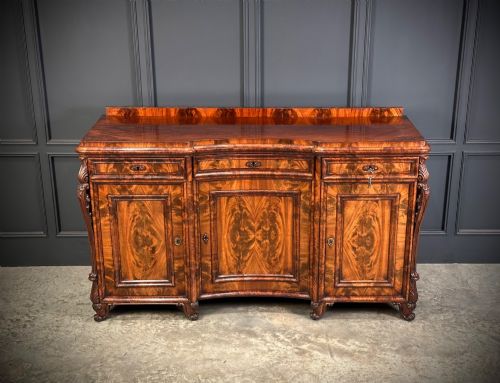
Makers utilised solid hardwoods such as mahogany, oak and walnut for structural integrity, often applying figured mahogany veneer or flame mahogany veneer to prominent surfaces. Timber selection governed both the visual weight and the daily utility of tables and sideboards.
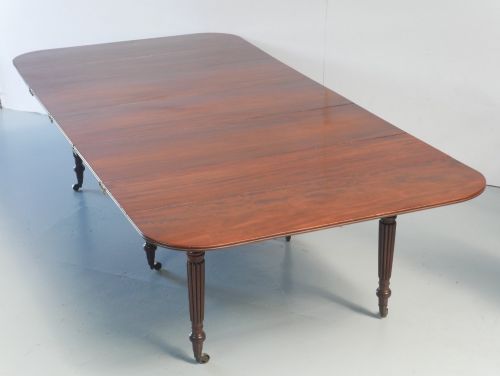
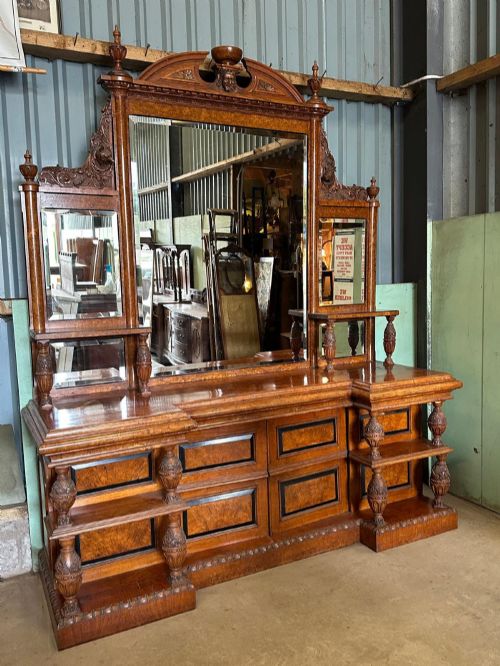
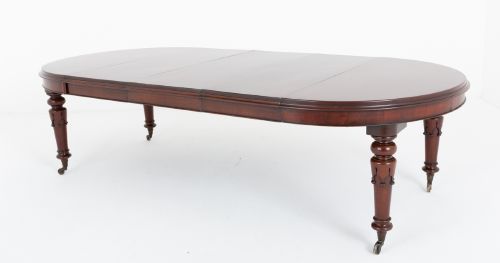
Tables frequently incorporated mechanical extending systems, wind-out mechanisms, drop leaves or tilt-top actions to manage considerable lengths. Joinery relied on traditional methods, while large sideboards featured brass hardware, carved details and mirrored backs.
Large Dining Furniture Retail Price Guide 2026
Typical asking prices for large dining furniture among the pieces listed under this phrase on Sellingantiques today, from the lower quarter to the upper quarter. They describe what is for sale here now, not the wider market.
Listings feature oak, mahogany, rosewood, walnut and elm across periods from the 17th century to the Edwardian era.
Distinctions in Quality
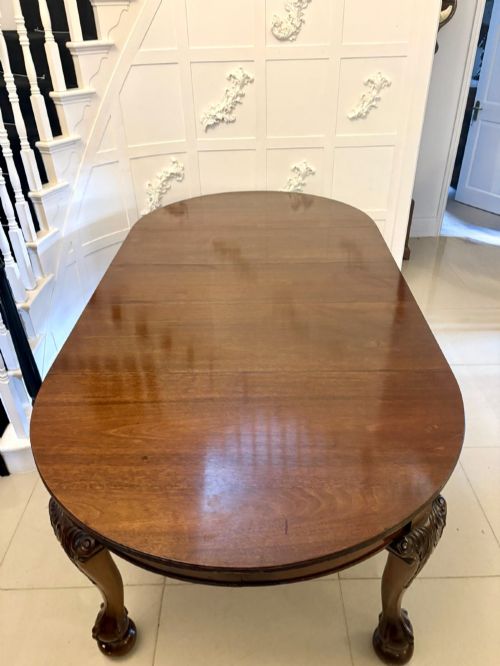
Quality rests upon the selection of timber and the sophistication of the joinery, separating utilitarian workshop items from masterworks. Figured mahogany veneers, substantial single plank elm or oak tops, and intricate carved details signal superior production.
The precision of extending mechanisms and the retention of original brass castors or hardware define the upper tiers of dining tables and sideboards. Attribution to recognised makers adds distinct architectural and structural refinement.
Gillows·Wylie and Lochead
The Large Dining Furniture Glossary
- Extending dining table
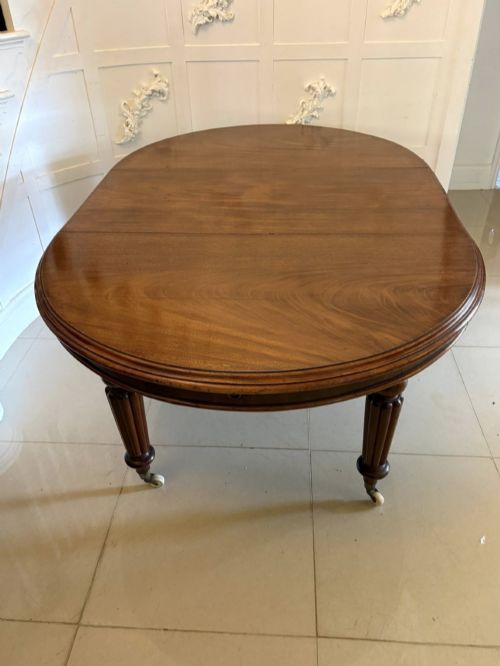
- A table designed with internal leaves or a wind-out mechanism to increase surface area for larger gatherings. These mechanisms allow substantial tables to adjust for everyday use or grand dinner parties.
- Gateleg table
- A drop-leaf table where hinged legs swing out to support the raised leaves. This form allows large surfaces to fold down when not in use.
- Refectory table
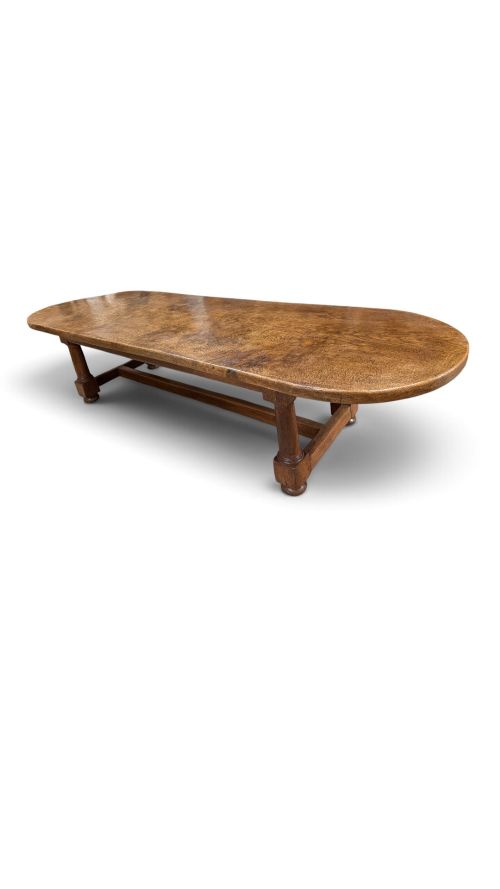
- A long, narrow dining table traditionally used in communal dining halls. They feature sturdy timber frames and often utilise single plank tops.
- Sideboard
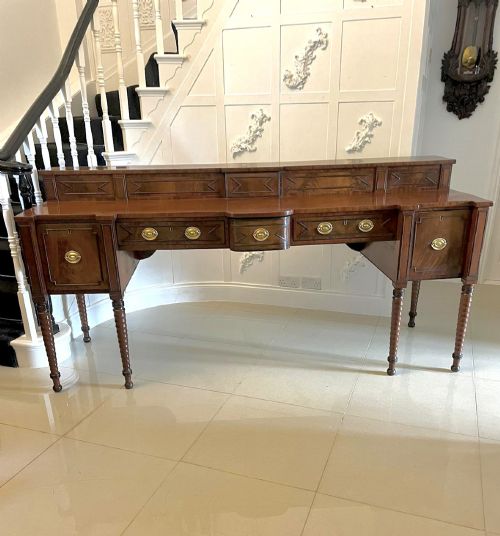
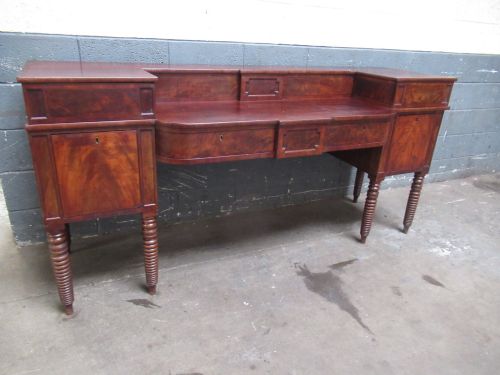
- A long piece of furniture placed in a dining room for storing cutlery, serving dishes and glassware. Georgian and Victorian examples frequently incorporate drawers and cupboards.
- Tilt-top table
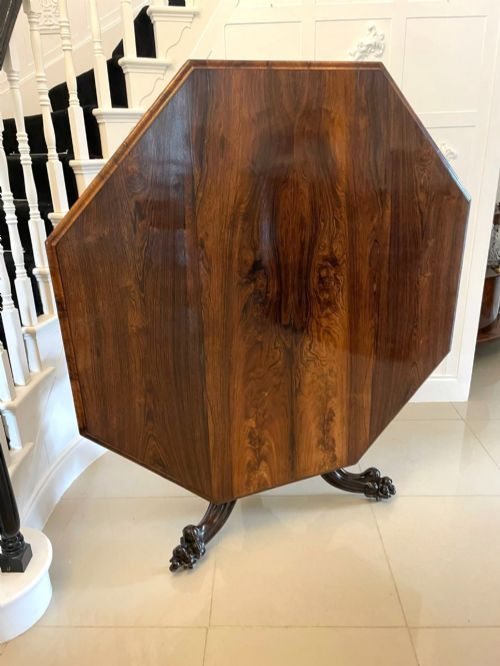
- A table with a mechanism allowing the top to pivot to a vertical position for storage. Round centre tables often employed this format.
Large Dining Furniture: Frequently Asked Questions
How do I measure for large dining furniture?
Measure the total floor space of the dining room while allowing adequate clearance around the table for chairs to pull out comfortably. Consider circulation space for sideboards and buffets.
Account for extra leaves when extended, ensuring doorways and stairwells permit delivery of substantial pieces.
What woods were used for dining tables?
Mahogany and oak appear most frequently across centuries, providing durability for heavy daily use. Walnut, rosewood and elm feature prominently in specific periods.
Finishes range from plain solid timber to figured veneers.
How do extending dining tables operate?
Many Victorian and Georgian tables utilise a wind-out mechanism operated with a crank handle to separate the ends. Additional leaves insert into the created gap.
Drop-leaf, gateleg and pedestal designs offer alternative methods for expanding surface area.
What is the difference between a sideboard and a buffet?
Sideboards traditionally feature cupboards and drawers for storing dining accessories, sometimes topped with a stage-back or mirror. Buffets serve a similar storage and display function with distinct proportions.
Both categories provide essential surface space for serving food during large gatherings.