



Large Country House Chair
A large country house chair brings historic presence and deep comfort to a room, built to anchor grand interiors with generous proportions and enduring scale.
Large Country House Chair
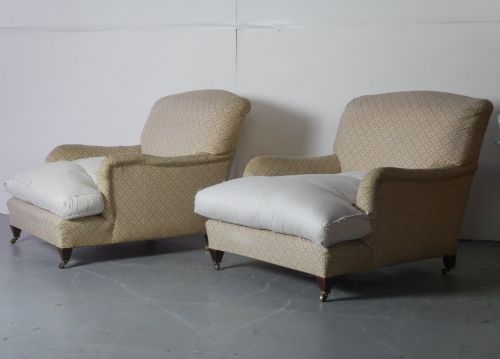
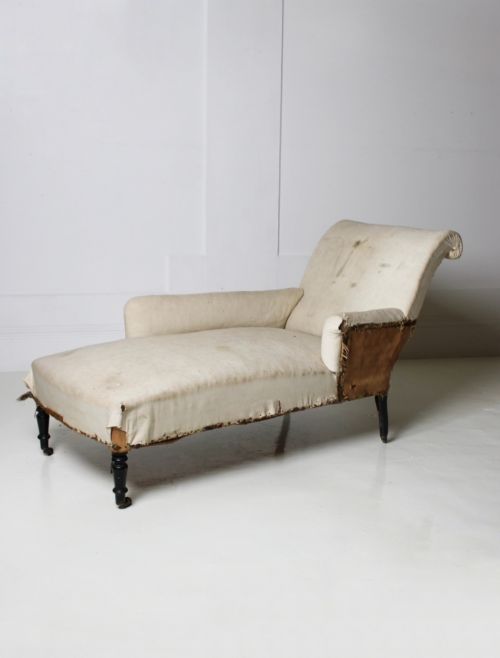
When you search for a large country house chair, you encounter seating designed for expansive domestic spaces rather than cramped parlours. These substantial pieces provide commanding presence, often intended for libraries, drawing rooms, or halls where scale matters.
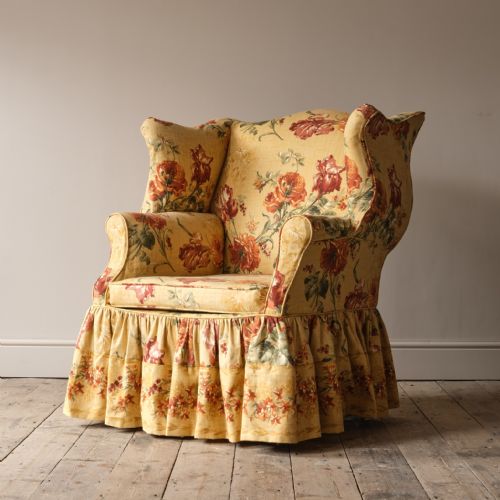
The selections on this page draw from periods including the Georgian era, the nineteenth century, and the early twentieth century. You find armchairs, wingback chairs, daybeds, and dining chairs reflecting traditional English country house tastes.
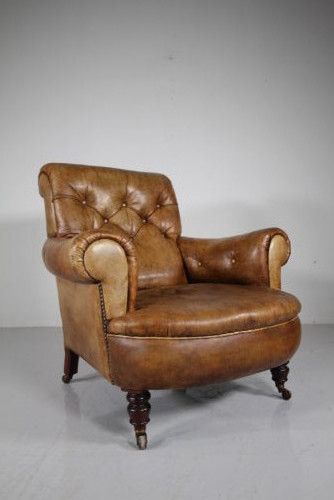
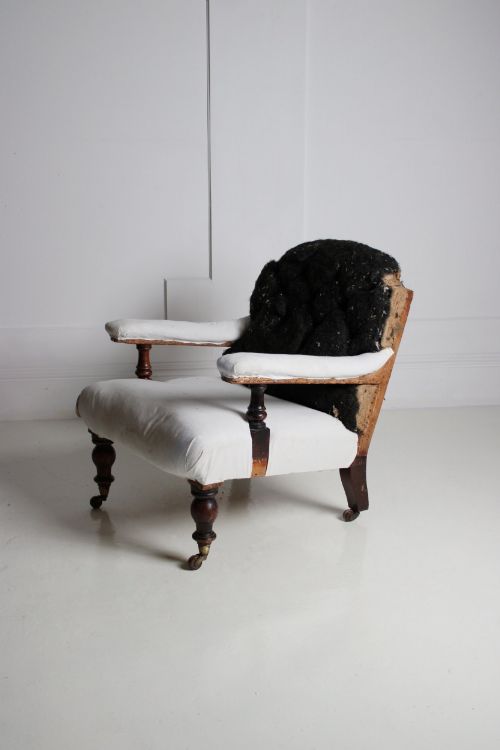
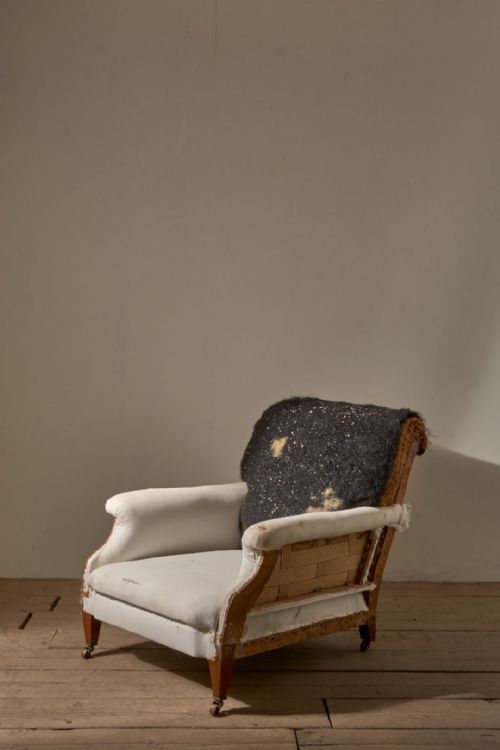
The most common formats on this page are deep-seated armchairs from the nineteenth and early twentieth centuries. These pieces balance architectural mass with upholstered comfort, often bearing the marks of traditional English Country House, Victorian, or Edwardian styles.
Materials and construction
Makers built these substantial chairs using robust timbers such as mahogany, walnut, beech, and pollard oak for the visible frames and legs. Structural integrity was paramount to support the deep, heavy proportions required for sustained domestic use.
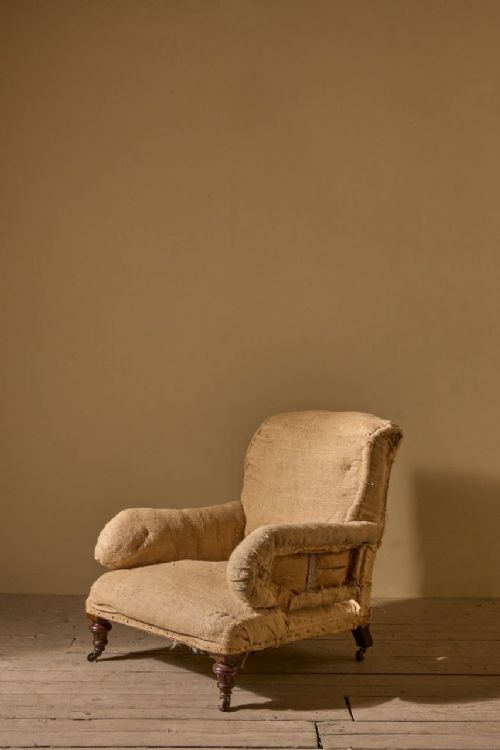
Upholstery techniques relied on heavy foundational fabrics like hessian and calico beneath the outer covering. Finish materials included traditional leather and patterned fabric, secured with brass detailing where appropriate.
Large Country House Chair Retail Price Guide 2026
Typical asking prices for large country house chair among the pieces listed under this phrase on Sellingantiques today, from the lower quarter to the upper quarter. They describe what is for sale here now, not the wider market.
The listings on this page span the Georgian period, the nineteenth century, and the 1920s and 1930s, constructed from mahogany, walnut, beech, and pollard oak.
Distinguishing quality
Quality in these chairs rests upon the proportion of the timber frame and the integrity of the underlying build. Finer examples maintain structural balance across expansive dimensions without appearing clumsy or over-heavy.
The sophistication of the upholstery build dictates the distinction between standard utility and superior comfort. Pieces that retain their original deep-sprung tension and authentic surface materials command greater appreciation from collectors.
Whytock & Reid
The Large Country House Chair Glossary
- Wingback armchair
- A seat featuring protective side panels designed to shield the occupant from draughts near grand fireplaces. This form remains a staple of traditional interiors.
- Daybed
- A hybrid furniture form combining seating and reclining functions, suited for long rooms and hallways. These pieces offer extended lounging surfaces.
- Pollard oak
- Timber derived from trees pruned to encourage dense branch growth, producing distinctive burr patterns. This material was utilised for high-status decorative furniture.
- Bridgewater style
- A traditional upholstery design characterised by low rolled arms and deep loose cushions. It defines relaxed country house comfort.
Large Country House Chair: Frequently Asked Questions
What defines a country house chair?
A country house chair is characterised by larger-than-average dimensions and a focus on deep comfort suited to grand estates. These pieces were made to inhabit vast rooms rather than urban dwellings.
They combine robust timber frames with generous upholstery, reflecting traditional English aesthetic values across various historical periods.
How do I place one in a modern room?
The key is to allow the substantial scale of the chair room to breathe within your layout. Position it away from walls where possible to let the proportions register.
Pair the piece with simpler, restrained furnishings so that the historic timber and upholstery remain the visual focus of the space.
Are these chairs comfortable for daily use?
These seating options were engineered precisely for long hours of reading, resting, or conversation in large domestic spaces. The deep seats and supportive backs offer genuine ergonomic utility.
Depending on the age of the upholstery, modern users often find the deep-sprung construction exceptionally accommodating for everyday relaxation.
How do I identify a Georgian chair?
Georgian pieces display the restraint and classical proportions associated with eighteenth-century design. Look for quality timber selection and architectural joinery beneath the upholstery.
Earlier examples often feature distinctive wingback profiles designed for functional warmth in draughty historic interiors.