
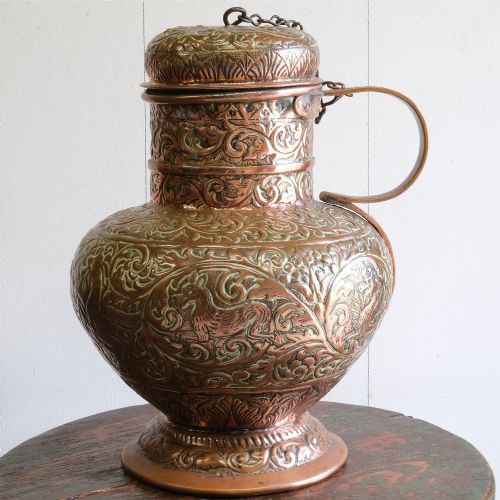
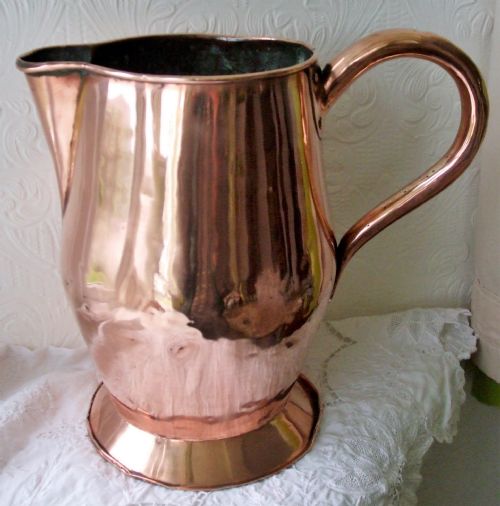


Large Copper Water Vessel
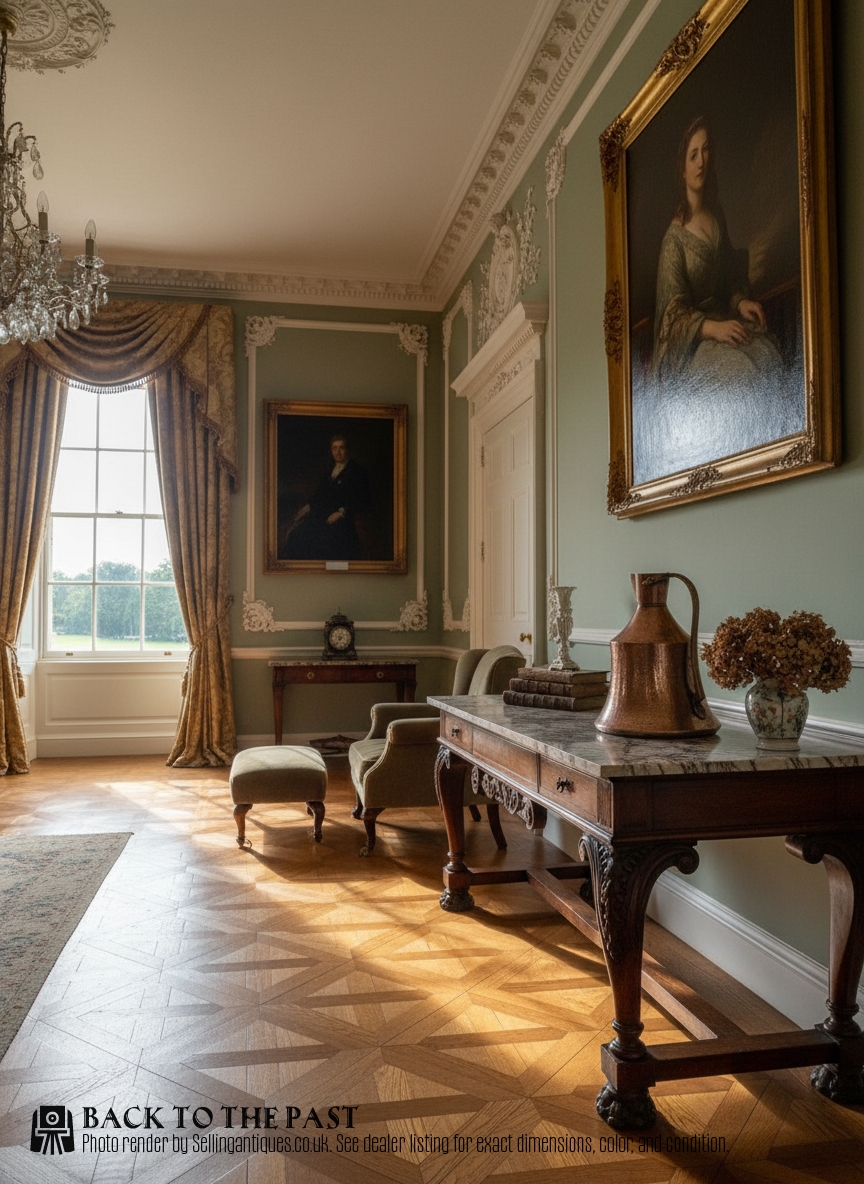
A large copper water vessel brings genuine warmth and utility into a room, forged from heavy metal to hold liquid for daily use.
Large Copper Water Vessel
A large copper water vessel is a substantial container designed for carrying, heating, or storing water across domestic and communal settings. These pieces appear in forms ranging from tall jugs and flagons to hanging urns, samovars, and barrels.
The selections span from the 18th century through the Victorian era and the Arts and Crafts movement, originating from English, Georgian, Scandinavian, and Japanese workshops. Jugs and pitchers dominate the current listings, alongside kettles and temple dispensers.
Buyers choose these items for their strong silhouettes and rich metallic surfaces. Each vessel carries the marks of practical work, whether found in a tavern, a home, or a temple.
How they were made
The primary material is heavy copper, frequently paired with brass for handles, taps, and rims, and occasionally lined with tin to keep water pure. Iron reinforcement and bone fittings appear on specific handles and mountings to insulate heat and provide structural strength.
Constructing these containers involved hand-beating sheets of metal and joining seams through dovetailing, brazing, or riveting. Surface decoration ranges from plain polished finishes to intricate cloisonne enamel work.
A dragon motif winds across a sixty centimetre Japanese temple water dispenser, watching over the contents.
What varies in quality
Quality rests in the weight of the metal and the integrity of the construction, where thicker walls and robust seaming mark the superior examples. The execution of handles, spouts, and mounts demonstrates the maker's skill and care.
Proportion and surface preservation distinguish standard utility items from exceptional decorative pieces. Retaining original brass fittings and uncompromised structural form elevates the standing of any vessel.
The Large Copper Water Vessel Glossary
- Samovar
- A heated metal container traditionally used to boil water. These large vessels often feature an internal central tube for fuel or heating elements.
- Flagon
- A large vessel with a handle and spout or lid used for holding liquids. They typically display sturdy construction designed for heavy daily service.
- Ferrat
- A traditional style of metal vessel associated with specific regional European metalworking traditions. It denotes a particular utilitarian form shaped from sheet copper.
- Cloisonne
- An enamelling technique where metal wire forms compartments on the surface that are filled with coloured glass paste and fired. This adds rich decoration to the body of the piece.
- Brazing
- A metal-joining process using a filler metal with a high melting point to fuse components together. Strong brazed seams are essential for holding liquid securely.
Large Copper Water Vessel: Frequently Asked Questions
How were large copper vessels used?
These vessels served for boiling, transporting, and storing water in homes, taverns, and institutions. Larger examples held enough liquid for multiple people or brewing tasks.
Many featured spouts, handles, or hanging bails to make pouring and moving heavy loads manageable for daily service.
How do I clean a copper vessel?
Maintenance requires gentle washing with warm soapy water and thorough drying to prevent spotting. Standard metal polish restores brightness if a shiny surface is desired.
Leaving the natural patina untouched is often preferred by collectors who value the aged character of the metal.
Can these vessels still hold water?
Many surviving containers retain their structural integrity and can hold liquid after a careful check of the seams. Older soldered or brazed joints may weaken over time.
Using them purely for display avoids any risk of leaking or damaging the historical interior lining.
How do I date an antique copper jug?
Dating relies on examining the manufacturing marks, handle attachments, and method of seam construction. Hand-riveted joints and dovetailing point toward earlier periods.
Stylistic cues such as Georgian proportions or Arts and Crafts simplicity also help narrow down the decade of creation.