

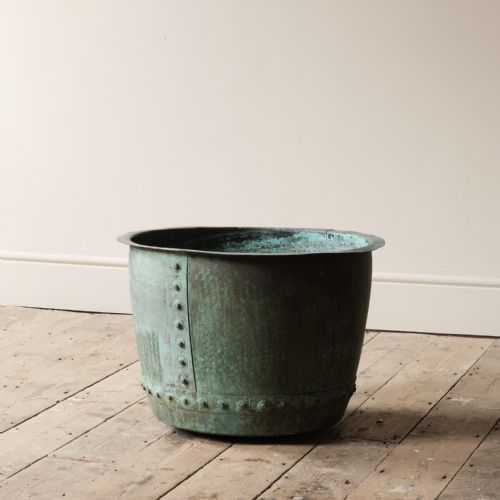
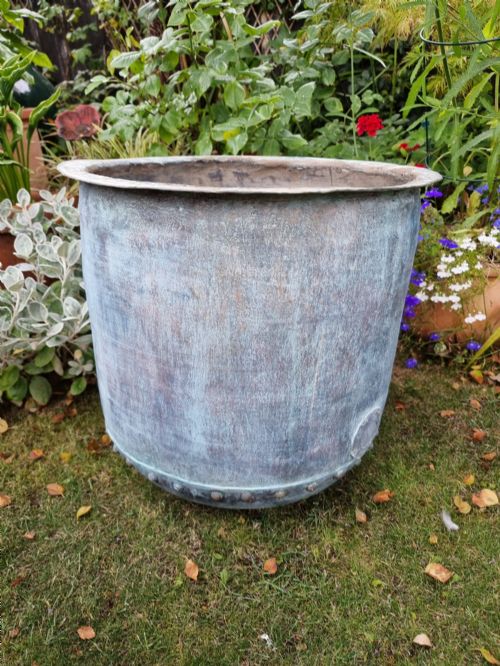
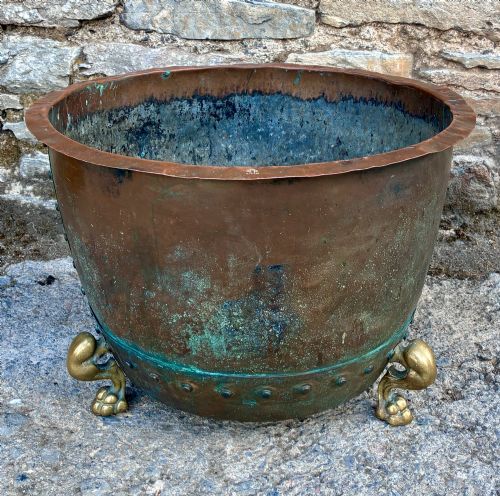
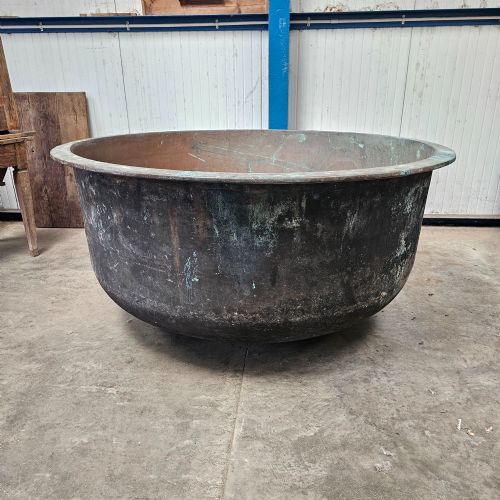
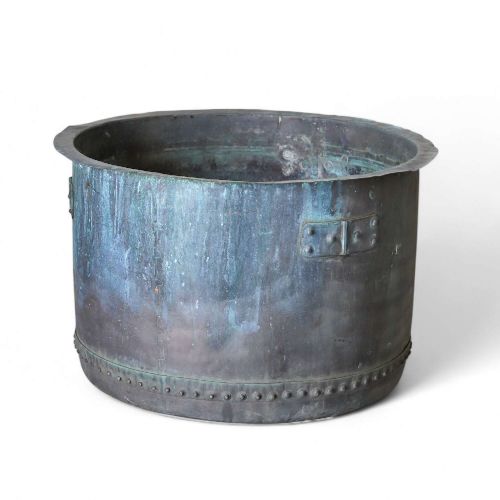
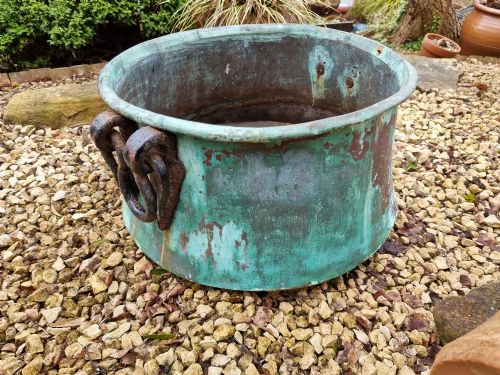


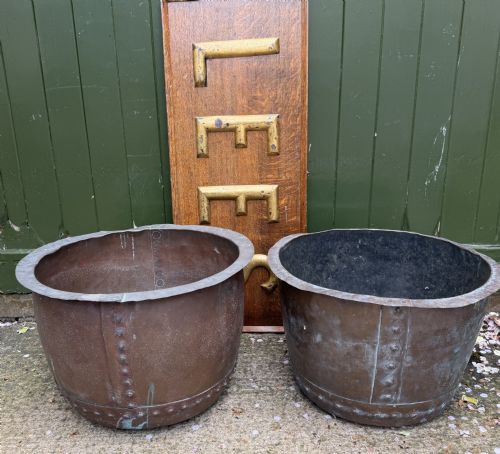


Large Copper Boiler
A large copper boiler brings heavy-gauge metalwork and utilitarian warmth into modern interiors.
Large Copper Boiler
When you search for a large copper boiler, you are looking at heavy vessels originally built for utility and laundry during the Georgian and Victorian eras. These items appear across various styles such as rustic farmhouse, French provincial, and Victorian industrial. Today, they serve practical roles in domestic spaces as log bins, planters, and garden vessels.
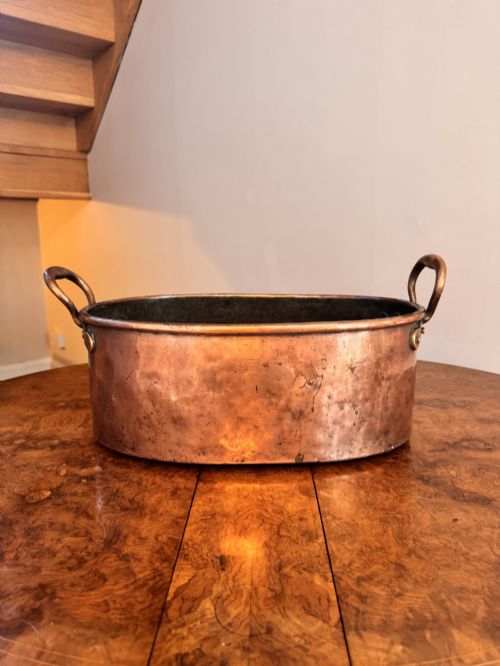
The most common forms on this page include pots, cauldrons, and coppers featuring robust handles made from iron or wrought iron. Many pieces show the heavy wear of nineteenth century country use, bearing patinas and verdigris surfaces built over decades. English and French origins dominate the selection, spanning periods from around eighteen hundred through the late nineteenth century.
How they were made
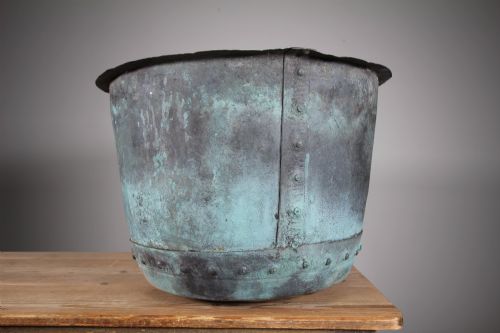
These vessels rely on sheet copper joined by hand-riveting, creating overlapping seams that provide structural strength for holding water and heavy materials. Smiths integrated cast iron and wrought iron for swing handles, rims, and base supports, ensuring the vessels could withstand intense heat and physical weight.
Surfaces developed their character through active use over heat sources and exposure to moisture, resulting in natural patinas and verdigris finishes. Details like brass fittings and occasional wooden or bone elements appear on related heating vessels such as kettles and samovars.
Large Copper Boiler Retail Price Guide 2026
Typical asking prices for large copper boiler among the pieces listed under this phrase on Sellingantiques today, from the lower quarter to the upper quarter. They describe what is for sale here now, not the wider market.
Listings feature nineteenth-century copper pots and French cheese vats made from copper, iron, brass, and wrought iron.
What varies in quality
Quality rests in the weight of the copper gauge and the integrity of the hand-riveting along the body and seams. Thicker metal walls resist dents and hold their structural form better when deployed as garden planters or heavy log buckets.
The character of the surface patination and the originality of iron handles distinguish standard utility pieces from exceptional examples. Surviving components, such as original lids or matching pairs, elevate the historical completeness of the vessel.
The Large Copper Boiler Glossary
- Verdigris
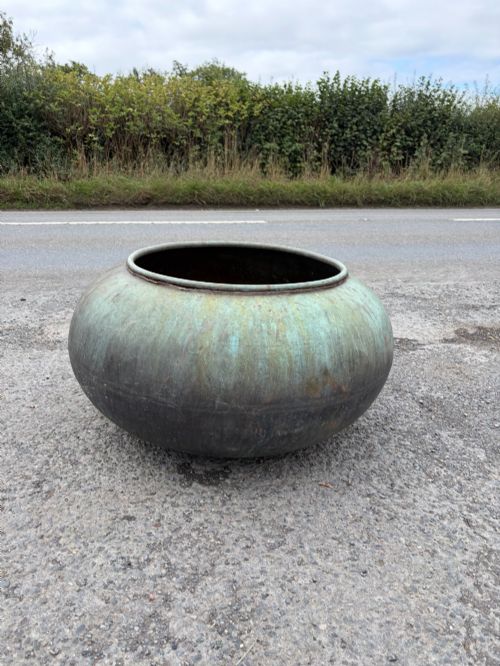
- A green layer or patina formed on copper through natural weathering and oxidation over time. This surface coloration is valued for its visual depth and proof of age.
- Riveted
- Joined together using metal bolts hammered flat at the ends to secure overlapping copper sheets. This technique provides the distinct industrial texture seen on nineteenth century vessels.
- Cauldron
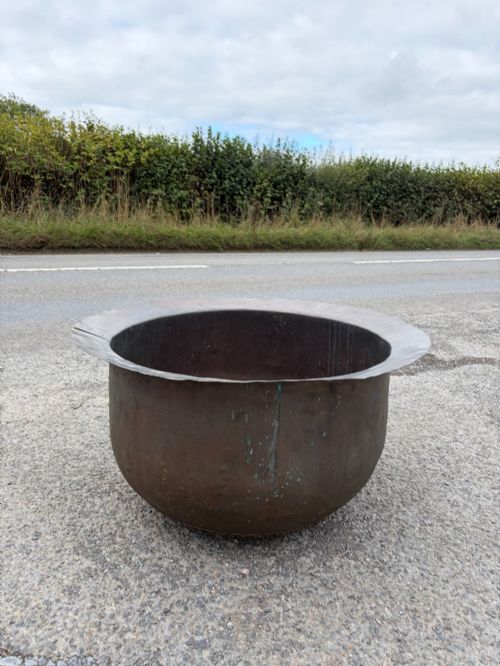
- A large deep metal pot with a swing handle, traditionally used over an open fire for boiling liquids. In modern settings, these function well as heavy log bins or garden planters.
- Samovar
- A heated metal urn traditionally used to boil water for tea, featuring internal flues and spigots. Victorian examples often combine heavy copper construction with brass details.
- Patina
- The surface sheen and colour variation developed on copper through age, handling, and exposure to the elements. Good patinas show layers of historical use rather than chemical treatments.
Large Copper Boiler: Frequently Asked Questions
What were large copper boilers used for?
These vessels were originally manufactured for heavy-duty domestic tasks such as washing laundry, heating water, and large-scale cooking in Georgian and Victorian households. Their robust construction allowed them to handle intense heat and heavy loads of liquid.
Today, their primary function has shifted from utility to decoration, where they serve as durable log bins, garden planters, and large vessel displays in homes and gardens.
How do I clean an antique copper boiler?
Most collectors prefer to leave the natural patina and verdigris intact, as these surface layers provide historical character and evidence of age. Washing gently with warm water and mild soap removes surface dirt without stripping the metal's finish.
Abrasive cleaners and harsh metal polishes should be avoided because they remove the aged surface tones that define nineteenth-century copperware.
Can I use these outdoors as planters?
Copper handles outdoor exposure very well because the metal resists deep corrosion by forming a protective verdigris layer when exposed to moisture. Many pieces listed are already utilised as garden display pots and outdoor planters.
Ensure adequate drainage if planting directly into the vessel, or use the copper pot as an outer cachepot to protect the historic interior.
How do I date a copper boiler?
Dating relies on manufacturing techniques, such as the transition from hand-hammered seams to machine-rolled edges, alongside the style of iron handles and fixings. Georgian and early nineteenth-century pieces often display heavier hand-riveting and simpler utilitarian forms.
Victorian pieces frequently incorporate maker marks, brass fittings, or distinct regional styles associated with English and French workshops from eighteen fifty onward.