

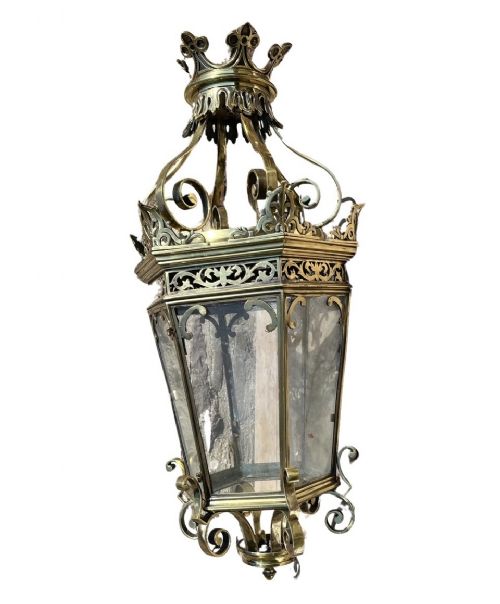


Large Brass Foyer Lighting
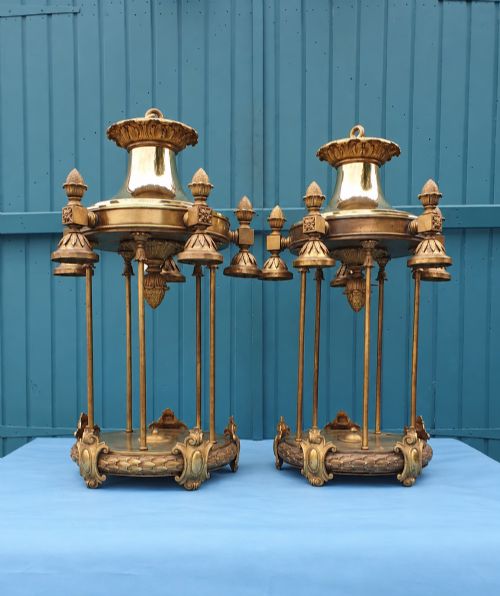
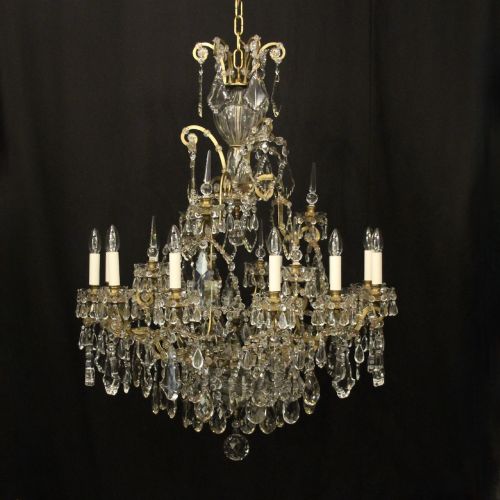
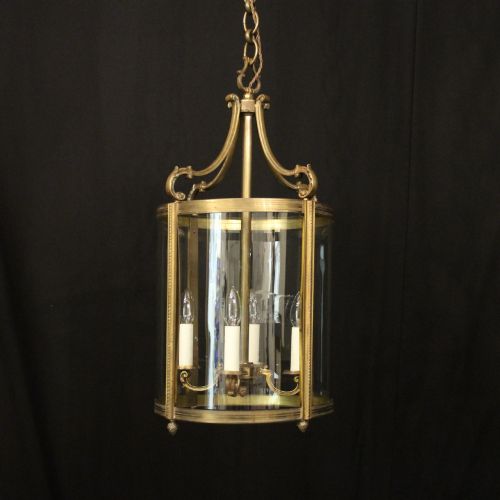
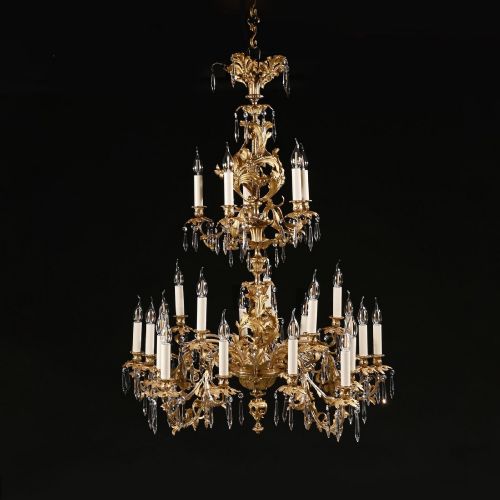
Large brass foyer lighting brings grand scale and warm metalwork to an entrance hall, offering imposing hanging lanterns and multi-light chandeliers.
Large Brass Foyer Lighting
The versions you are most likely to meet on this page include French hall lanterns with glazed panels and elaborate chandeliers in Louis XV, Louis XVI, and Rococo styles. Many examples originate from French workshops, dating from the Edwardian era and the nineteen-twenties.
These fixtures serve both a practical illumination purpose and a dramatic decorative function within a property. Their robust frames and considerable drop make them natural centrepieces for grand architectural proportions.
Materials and construction
The construction relies heavily on cast brass, bronze, and gilded bronze frames formed into robust structures capable of supporting substantial glass elements. Metalwork is frequently shaped into ornate French styles, incorporating intricate surface detailing and structural mounting points for multiple bulb tiers.
Glazing techniques include heavy cut glass and bevelled glass panels secured within metal door frames or lantern bodies. Chandeliers incorporate extensive crystal drops and prisms suspended from metal arms to enhance light refraction across large rooms.
Large Brass Foyer Lighting Retail Price Guide 2026
Typical asking prices for large brass foyer lighting among the pieces listed under this phrase on Sellingantiques today, from the lower quarter to the upper quarter. They describe what is for sale here now, not the wider market.
Some lanterns feature functional little doors, reminding you that someone once had to lean inside with a taper.
Factors of quality
Quality in these pieces is dictated by the density of the metal casting and the precision of the chased or gilded surface finish. Heavier bronze and brass frames with crisp ornamentation sit at the upper end of the scale compared to simpler fabricated assemblies.
The complexity of the glass components also marks the distinction between standard production and exceptional examples. Deeply bevelled glass panels, heavy cut crystal elements, and integrated functional doors elevate the execution of the piece.
The Large Brass Foyer Lighting Glossary
- Hall lantern
- An enclosed hanging light fixture designed primarily for corridors and entrance halls. These typically feature metal frames fitted with glass panels.
- Gilt bronze
- Bronze metal treated with a thin layer of gold or gold-coloured alloy applied to the surface. This technique produces a durable, luxurious metallic finish seen on French decorative pieces.
- Bevelled glass
- Glass panes featuring an angled edge cut around the perimeter. This treatment catches the light and adds depth to lantern enclosures.
- Chandelier
- A branched, decorative ceiling-mounted lighting fixture designed to hold multiple light sources. They range from formal crystal designs to heavy cast metal frames.
Large Brass Foyer Lighting: Frequently Asked Questions
Where should I hang a hall lantern?
These fixtures suit high-ceilinged entrance halls, grand stairwells, and wide vestibules where their physical scale remains in proportion to the architecture.
Ensure adequate ceiling clearance beneath the fixture so that doors swing freely and pedestrian movement underneath stays unimpeded.
How do I clean bevelled glass panels?
Remove dust with a soft, dry cloth before applying a mild glass cleaner to the surfaces. Take care around antique metal frames to avoid exposing vulnerable joints to excess moisture.
Dry the glass thoroughly with a microfiber cloth to prevent streaks and maintain clarity.
What is a multi-light chandelier?
A multi-light chandelier carries numerous individual illumination points across branching metal arms, often numbering twenty or more bulbs on larger frames.
These fixtures provide substantial ambient illumination suited to large rooms and high ceilings.
How do I identify French styles?
French styles like Louis XV and Rococo exhibit asymmetrical scrollwork, naturalistic foliage motifs, and ornate cast bronze frames. Louis XVI pieces introduce more symmetrical, neoclassical lines.
Examining the casting quality and specific decorative motifs helps distinguish regional French design periods.