


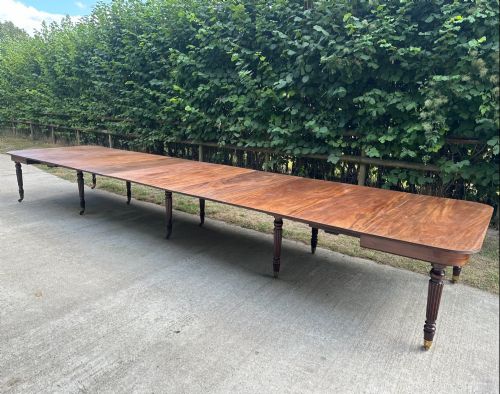
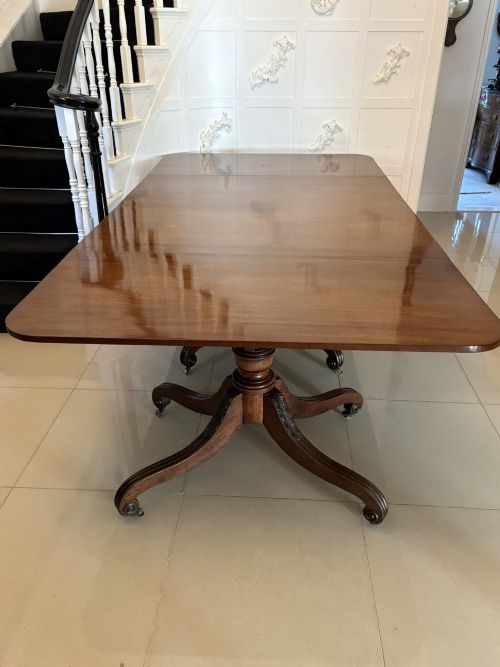
Large Banquet Dining Table
A large banquet dining table gathers a room around solid timber, offering the stretch and presence needed for grand gatherings.

Large Banquet Dining Table
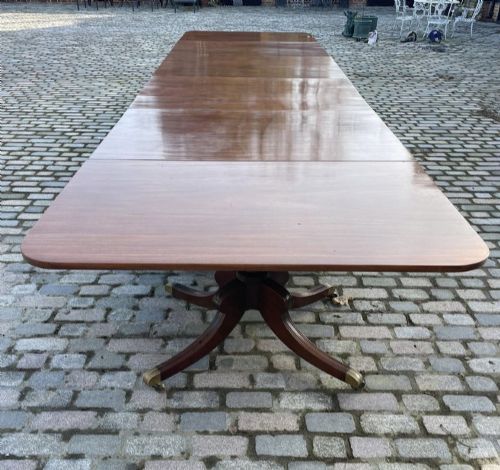
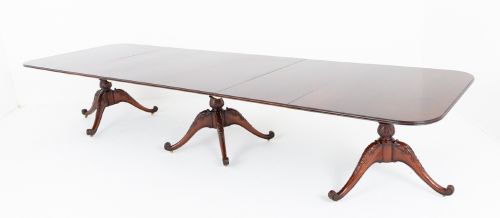
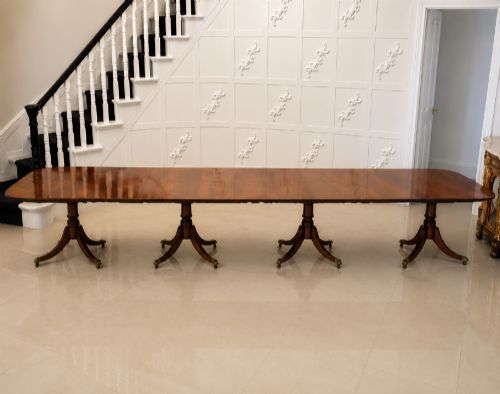
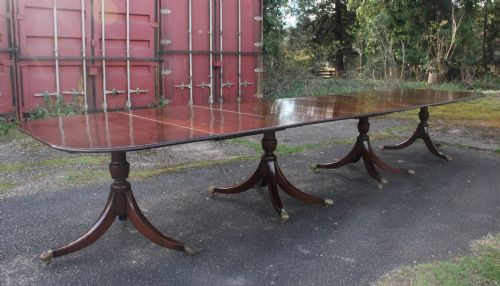
A large banquet dining table provides substantial seating capacity through multi-pillar constructions, additional leaves, and refectory formats designed for extended dining rooms. These pieces accommodate between ten and twenty-eight guests, relying on sturdy multi-pedestal bases or trestle supports to distribute weight evenly across expansive lengths.
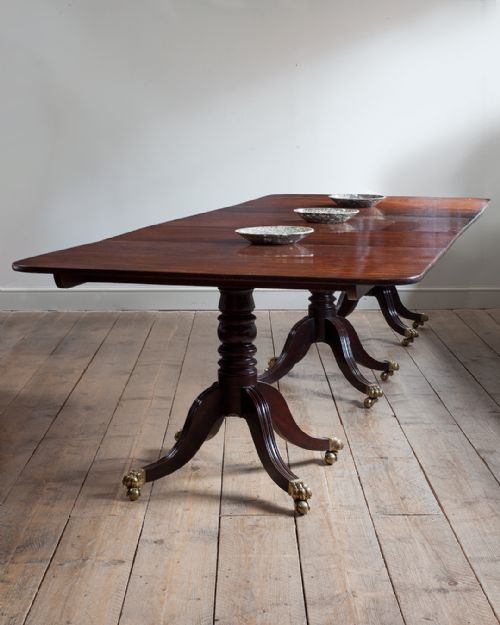
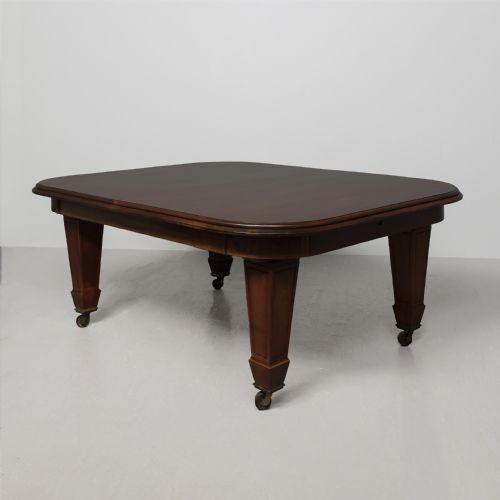
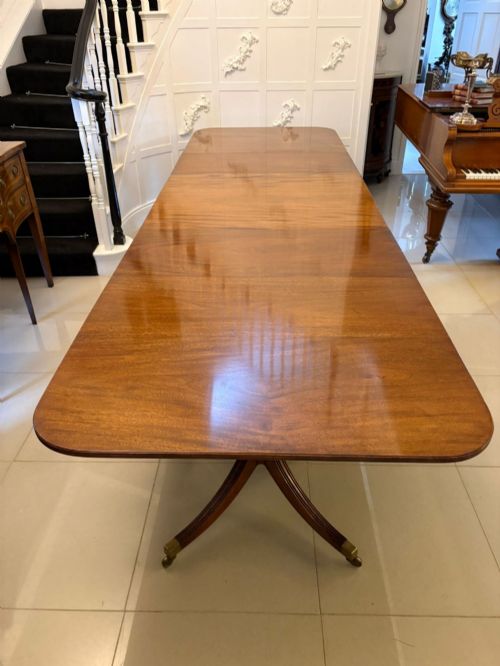
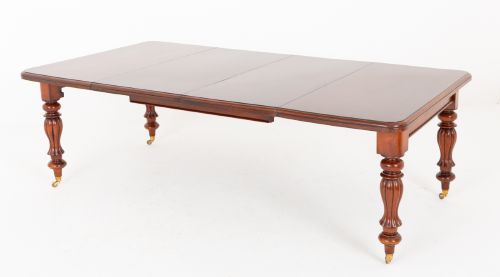
Mahogany dominates the selection, frequently paired with figured veneers, brass castors, and reeded legs characteristic of Regency, Victorian, and Georgian cabinet work. Oak and walnut also appear in refectory and draw-leaf formats, spanning periods from the early nineteenth century through to later twentieth-century revivals.
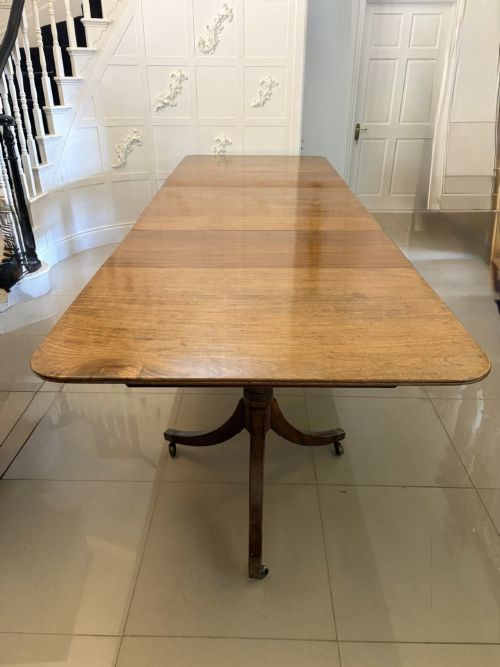
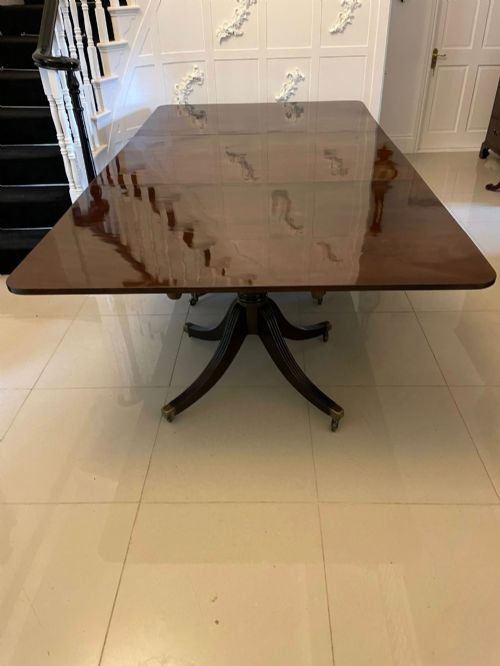
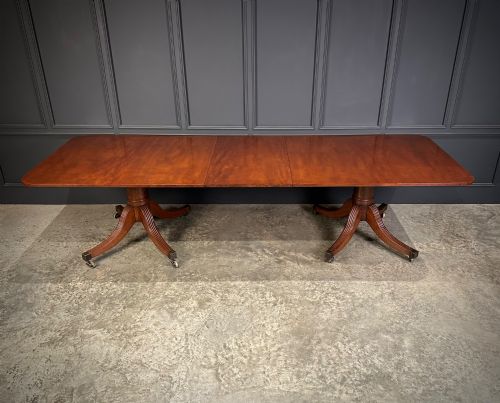
The most common form on this page is the multi-pillar extending mahogany dining table from the nineteenth and early twentieth centuries. These tables utilise removable leaves and pillar supports to adjust length while maintaining stability across large spans.
Materials and construction
Cabinet makers constructed these dining tables using solid timbers and decorative veneers such as mahogany, burr walnut, and oak. Timber selection prioritised deep grain patterns and structural durability to support long surfaces without sagging.
Extending mechanisms relied on heavy pillar pedestals fitted with brass castors, screw actions, and drop-in leaves. Joinery techniques included robust framing and draw-leaf systems that allowed multiple sections to glide apart smoothly.
The listings show mahogany as the predominant timber, alongside oak and walnut used in refectory and revival formats.
Distinctions in quality
Quality rests upon the selection of figured mahogany timber, the crispness of reeded legs, and the integration of original matching leaves. Superior examples maintain smooth extending actions across three, four, or six pedestals without losing alignment.
Workshop origin distinguishes standard production from notable cabinet makers such as Gillows, Wylie & Lochead, or Maple & Co. Master construction shows in balanced proportions, stable pillar joints, and precise brass fittings that endure heavy daily use.
Gillows·Wylie & Lochead·Maple & Co·Whytock & Reid·Robert Adam
The Large Banquet Dining Table Glossary
- Pedestal
- A central column support resting on splayed legs, commonly used in sets of two, three, or four to hold long dining surfaces. These pillars often terminate in brass claw castors.
- Extending table
- A dining table designed to increase in length through the insertion of removable leaves. This mechanism allows the surface to expand for large dinner parties.
- D-End
- A table end shaped in the semi-circular form of a capital letter D. These sections detach or join together to form a balanced perimeter on pillar dining tables.
- Refectory table
- A long, narrow dining table traditionally supported by heavy trestles or four legs linked by stretchers. These sturdy wooden pieces originate from communal dining halls.
- Draw-leaf
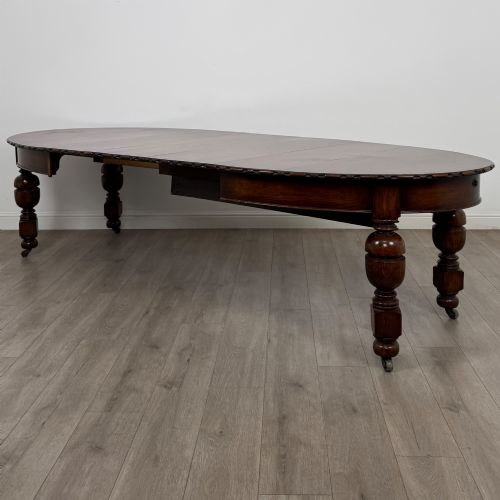
- An extending table mechanism where end leaves slide out from beneath the main surface. This system expands the table length while keeping leaves stored within the frame.
Large Banquet Dining Table: Frequently Asked Questions
How many people can sit at these tables?
Seating capacity ranges from ten guests up to twenty-eight guests depending on the length of the top and the number of extra leaves inserted.
Larger formats utilise four to six pedestals to support spans exceeding sixteen feet comfortably.
How do extending leaves work?
Leaves drop into the centre of the table when the pillars pull apart on wooden or metal runners.
Original leaves matching the grain and colour of the main top are prized for maintaining a uniform appearance.
What periods do these tables come from?
The selection spans from George III and Regency periods through the Victorian era and into Edwardian and later twentieth-century revivals.
Georgian and Regency pieces feature classical proportions, whilst Victorian examples often provide massive proportions for large rooms.
Are these tables suitable for daily use?
Solid mahogany and oak constructions provide the robust foundation necessary for frequent dining and family gatherings.
Brass castors and sturdy pillar configurations allow the massive weight to move safely across floor surfaces when required.