
Large Bookcase Glass
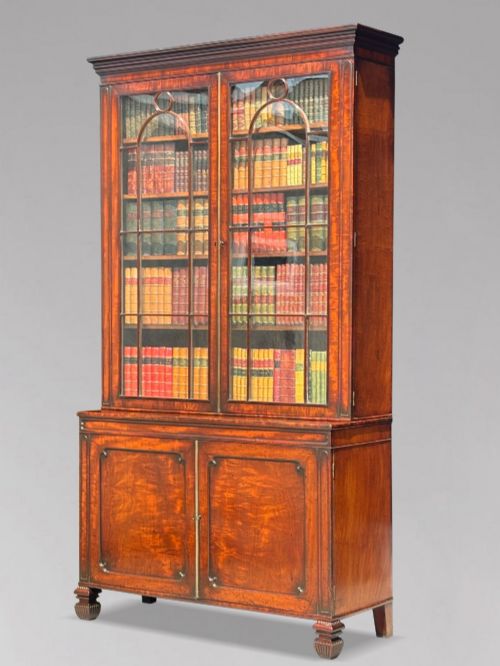
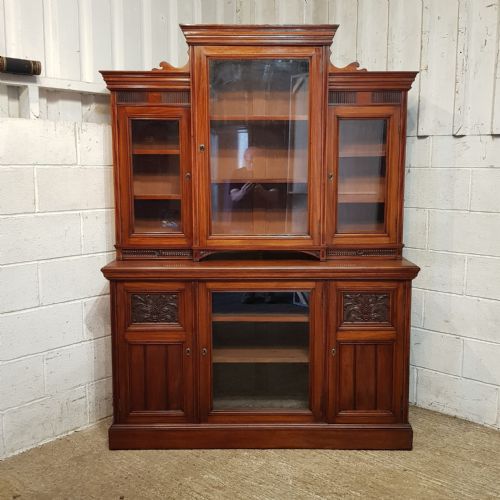
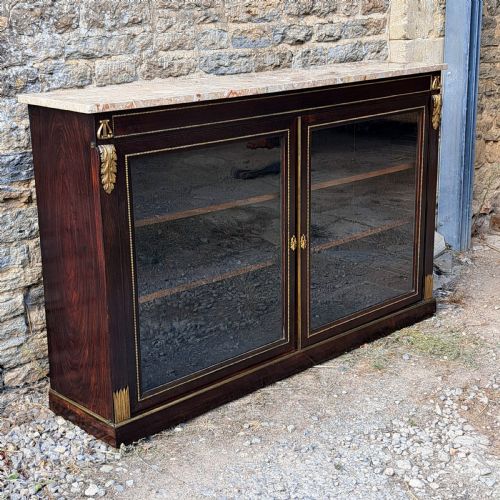
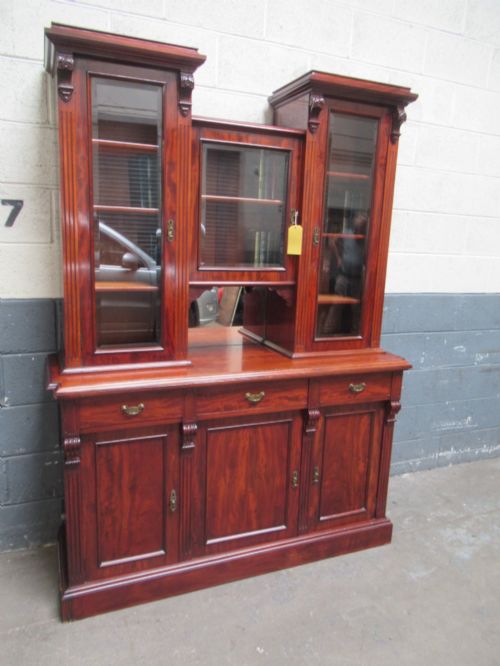
A large antique bookcase glass provides imposing storage for a substantial library, bringing timber and transparency together in one grand room piece.
Large Bookcase Glass
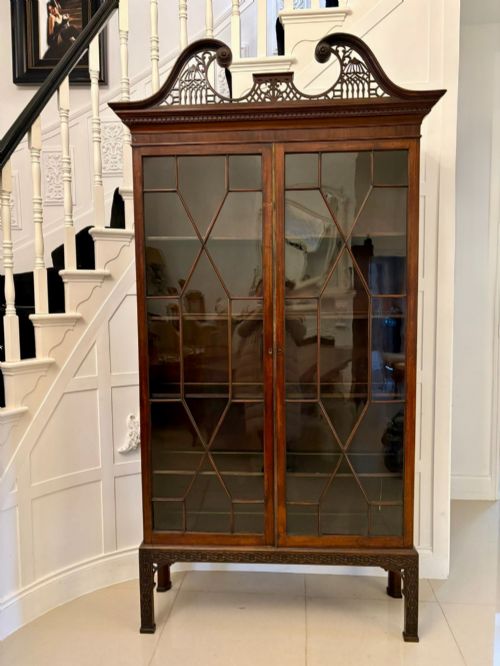
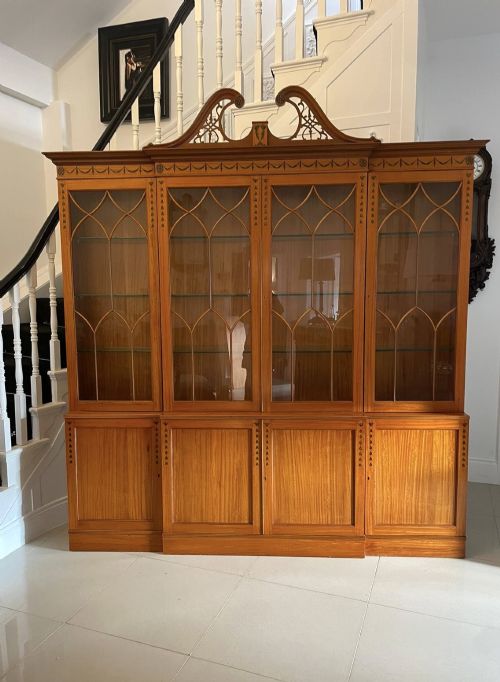
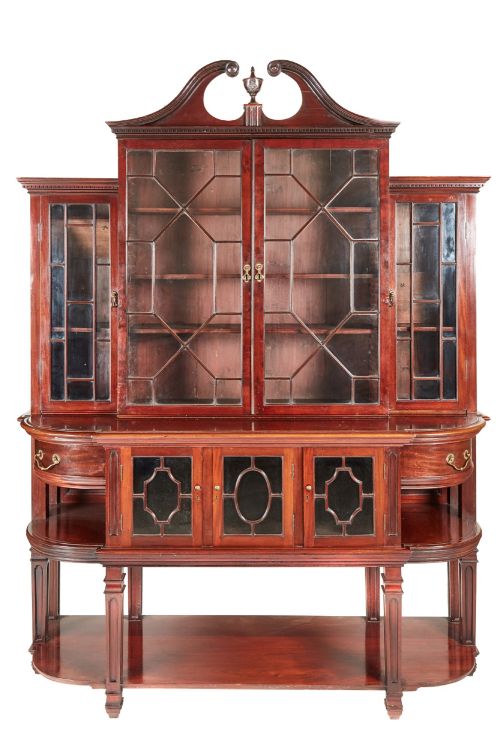
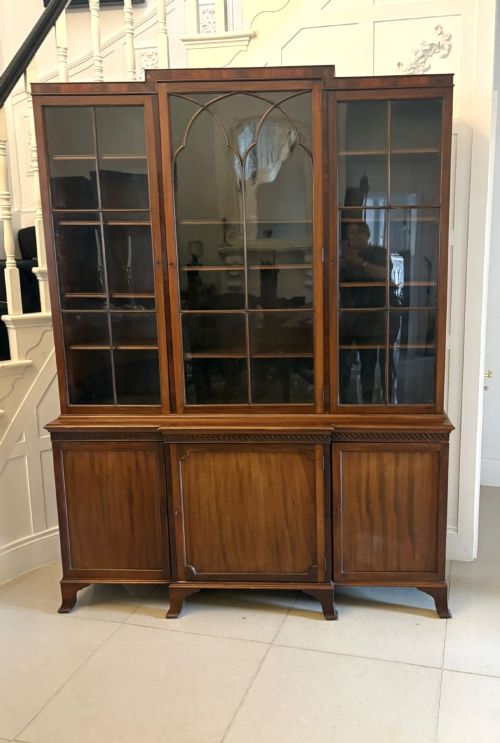
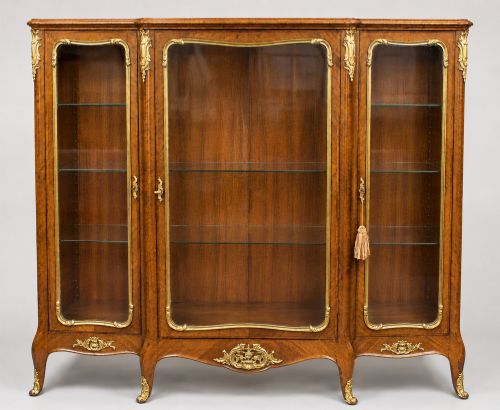
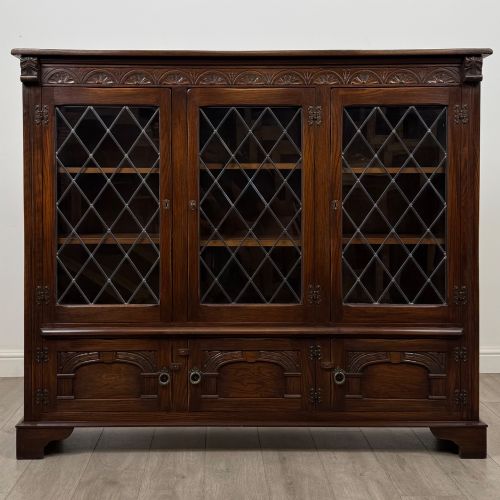
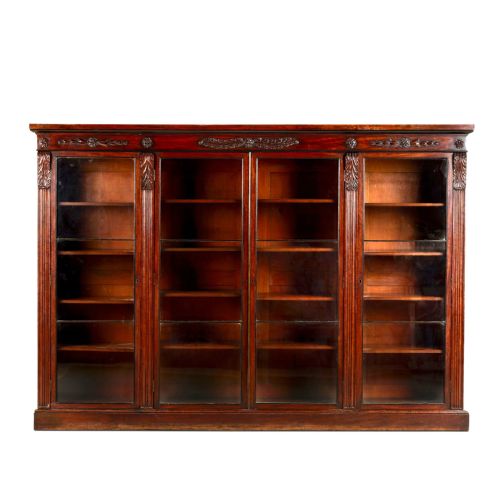
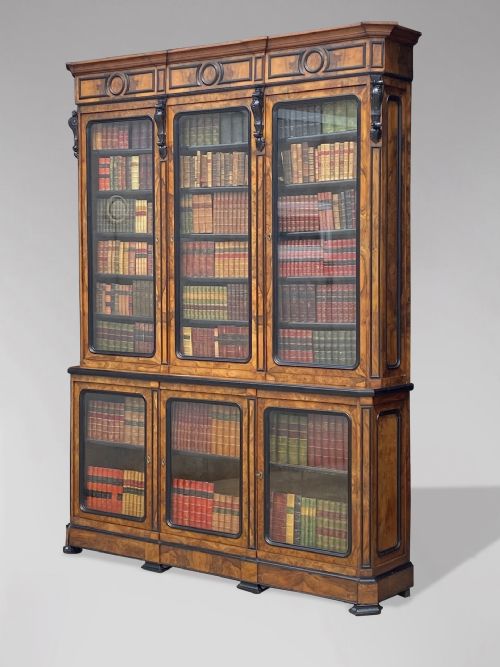
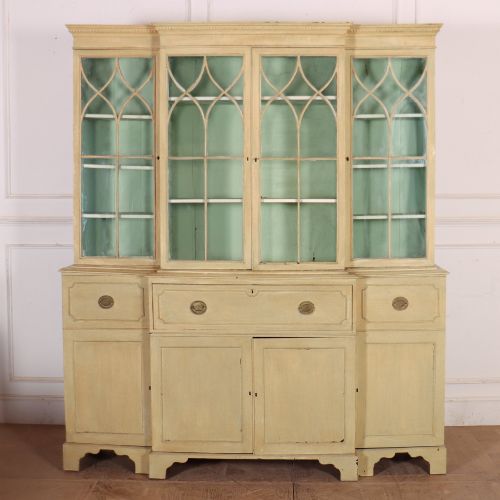
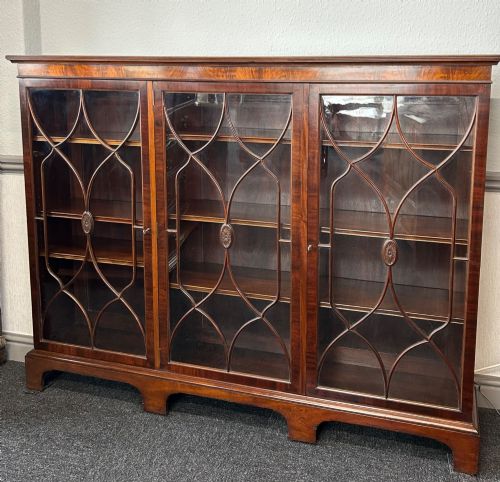
When searching for a large antique bookcase glass, buyers encounter substantial timber constructions designed to house volumes while displaying contents behind transparent panels. The pieces on this page span the nineteenth century and the Edwardian era, predominantly featuring Victorian mahogany frameworks and breakfront configurations.
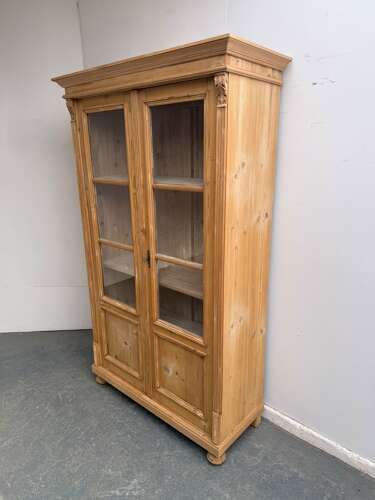
Forms range from multi-door library bookcases to satinwood breakfront display cabinets and Chinese Chippendale style cabinets on stands. Oak, walnut, and pine also appear across these listings, alongside glazed top sections and secretaire variants.
Origin points encompass English country house workshops and continental makers, reflecting diverse revival styles including Georgian, Regency, and Dutch Baroque.
Materials and Construction
Construction relies heavily on dense timbers such as mahogany, walnut, and oak, often enhanced by satinwood, rosewood, or burr walnut veneers. Marquetry inlay, ormolu mounts, and painted decoration frequently accent the primary wood bodies.
Glazing techniques utilise glass panes secured within wooden frameworks, from simple astragal bars to intricate astral glazing and leaded glass doors. Brass hardware and structural mounts complete the assembly of these substantial cabinet pieces.
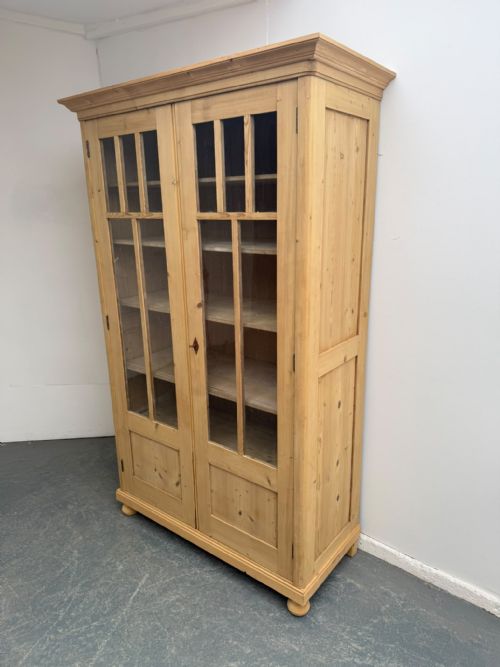
Some pine bookcases carry traces of old paint, waiting for a fresh coat or a return to raw waxed timber.
Quality Variations
Quality rests in the precision of the timber selection, such as figured mahogany or burr walnut, and the finesse of the marquetry inlay or ormolu mounts. Finer examples display meticulous joinery in the breakfront profiles and refined proportion across multiple doors.
The clarity and historic integrity of the glass panes, alongside original painted decoration and period brass hardware, separate standard utility pieces from exceptional salon and library furniture.
Wylie and Lochhead·Hille
The Large Bookcase Glass Glossary
- Astragals
- The wooden glazing bars that divide individual panes of glass within a cabinet door. They form geometric or curved patterns across the front.
- Breakfront
- A piece of furniture where the central section projects forward from the flanking outer sections. This architectural form creates depth and shadow in large cabinets.
- Secretaire
- A desk component incorporated into a cabinet, typically featuring a drop-down writing flap concealing small drawers and pigeonholes. It merges workspace with storage.
- Vitrine
- A glass-sided display cabinet designed primarily for the exhibition of objets d'art rather than books. Ormolu mounts frequently accent these refined pieces.
- Marquetry
- Decorative veneer work created by fitting together small pieces of tinted wood, shell, or ivory to form pictorial or floral designs. It requires exceptional cabinetmaking skill.
Large Bookcase Glass: Frequently Asked Questions
How do I fit a large bookcase?
Measure ceiling height and wall space carefully before acquisition, ensuring clearance for doors and cornices. Many larger examples require professional placement.
Consider the weight of dense timbers like mahogany and oak when selecting a permanent floor position in your home.
Where were these bookcases used?
These large cabinets originally stood in country house libraries, formal drawing rooms, and substantial Victorian studies. They served to protect valuable volumes from dust while allowing visual inspection.
Today, they function effectively in contemporary living spaces as focal points for both literature and display collections.
How do I clean the glass?
Use a soft microfiber cloth and a mild glass cleaning solution applied directly to the cloth rather than the wood. This prevents moisture damage to historic frames.
Take care around delicate astragals and antique glazing bars to avoid loosening fragile old panes.
How do I date these cabinets?
Examine construction methods, timber choices, and stylistic revival cues such as Georgian or Regency motifs. Nineteenth-century pieces often show hand-cut dovetails and specific secondary woods.
Compare proportions and decorative details like ormolu mounts or marquetry against documented period examples.