



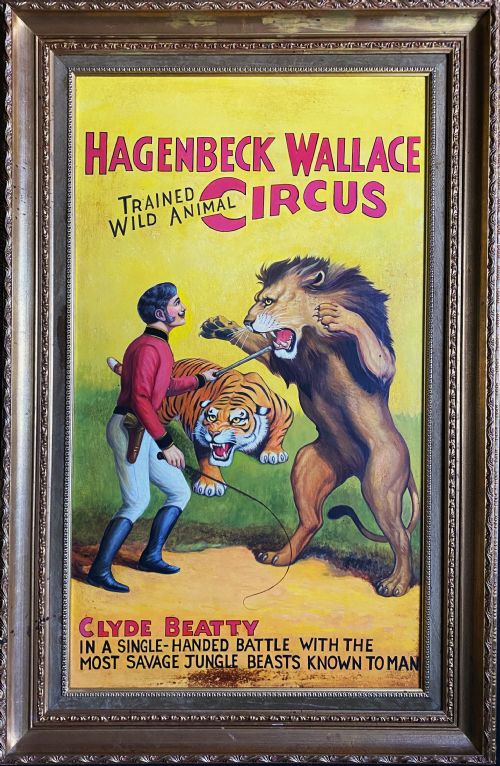


Large Animal Canvas
These large animal canvas works span centuries of sporting and rural art, bringing commanding presence and traditional subjects into modern rooms.
Large Animal Canvas
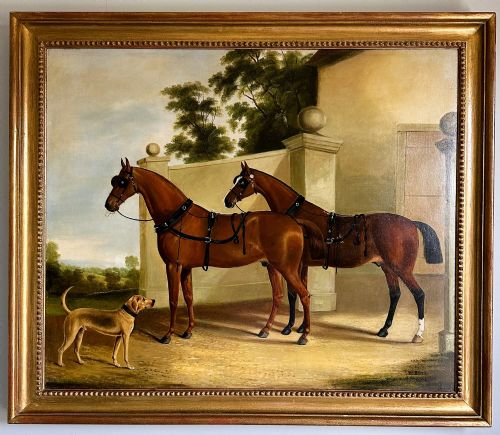
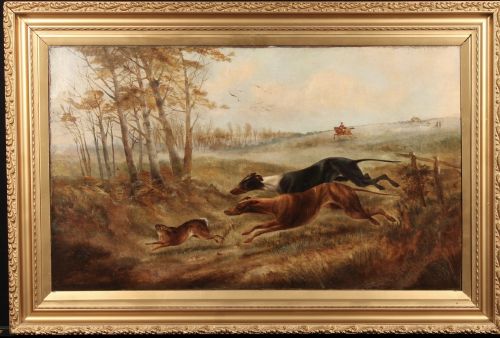
A large animal canvas presents substantial oil paintings dominated by horses, hounds, cattle, sheep, birds, and wild beasts. These works range from seventeenth-century European compositions to nineteenth-century Victorian sporting art and mid-century illustrations.
Buyers encounter grand domestic livestock scenes alongside dramatic wildlife encounters and hunting subjects. The scale of these paintings demands dedicated wall space and anchors a room with historic rural subjects.
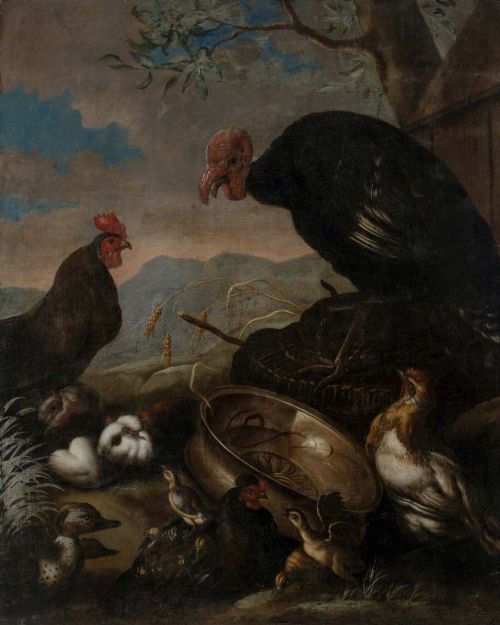
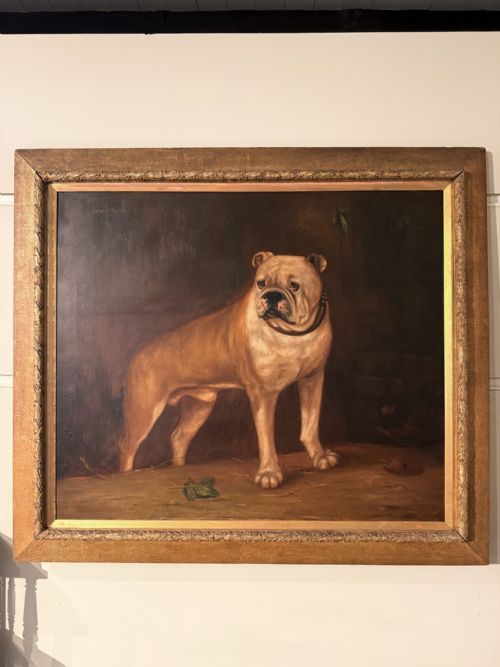
The selection on this page centres on oil paintings executed on canvas, frequently housed within period giltwood or gesso frames. Examples extend from naive stable portrayals to accomplished Victorian Realism and Baroque fowl studies.
How they were made
Artists built these works using oil paint applied to woven canvas supports, allowing for rich colour blending and fine detail in animal coats and feathers. The stretched canvas was mounted within timber frames, often finished with gesso and gilt wood.
Makers utilised layered oil techniques to achieve depth in rural landscapes and realistic textures in fur and plumage. Frame makers applied carved gesso details and gilt finishes to complement the scale of the central canvas.
Large Animal Canvas Retail Price Guide 2026
Typical asking prices for large animal canvas among the pieces listed under this phrase on Sellingantiques today, from the lower quarter to the upper quarter. They describe what is for sale here now, not the wider market.
Listings feature oil paintings on canvas spanning the seventeenth, eighteenth, nineteenth, and mid-twentieth centuries, framed in gilt wood and gesso.
What varies in quality
Anatomical precision and the liveliness of the brushwork separate accomplished animal portraiture from simpler naive expressions. Master painters captured the tension in hunting dogs or the placid weight of highland cattle with distinct anatomical accuracy.
The preservation of the original oil surface and the integrity of the giltwood frame influence the overall character of the piece. Superior examples retain their original canvas tension and deep pigment saturation without extensive overpainting.
George Armfield·Angelo Maria Crivelli·William Henry Mander·Thomas Sidney Cooper·Philipp Ferdinand de Hamilton·Henri Schouten·John W Morris
The Large Animal Canvas Glossary
- Giltwood
- Wood carved and coated with gold leaf or a gold-coloured metallic finish. This material forms the ornate frames frequently surrounding large oil paintings.
- Gesso
- A plaster-like mixture applied to wooden frames as a base for moulding and gilding. It provides a smooth surface for intricate decorative details.
- Oil on Canvas
- Pigments bound in an oil medium applied to a stretched woven fabric support. This combination offers durability and rich tonal variation.
- Victorian Sporting Art
- Paintings depicting field sports, horses, dogs, and rural game from the nineteenth century. These works emphasise action and animal behaviour.
- Baroque
- An artistic style from the seventeenth century characterised by dramatic lighting and intense emotional subjects. Works from this period often feature complex wildlife compositions.
Large Animal Canvas: Frequently Asked Questions
What periods do these paintings come from?
The available works span several centuries, starting from the seventeenth century through the eighteenth and nineteenth centuries into the mid-twentieth century.
Victorian and nineteenth-century pieces form a significant portion of the selection, alongside earlier Baroque and later mid-century illustrations.
How should I hang a heavy framed canvas?
Large canvases require secure wall fixings distributed into wall studs or masonry to support the considerable weight of the stretched fabric and wooden frame.
Professional picture hangers utilise heavy-duty D-rings and steel wire rated well above the actual weight of the artwork.
Are these paintings signed by the artists?
Some canvases bear the signature or attribution of recognised painters, while others remain unsigned naive works from anonymous hands.
Attributions rely on recorded provenance, stylistic comparison, and documented signatures where visible on the canvas.
What subjects are most common?
Cattle, sheep, carriage horses, hunting dogs, and birds feature prominently across the various landscape and stable settings.
Scenes range from tranquil rural pastures with highland cattle to dynamic hunting encounters involving hounds, foxes, lions, and tigers.