




Ladderback Side Chairs
Ladderback side chairs combine practical dining seating with horizontal slat construction, offering traditional charm and sturdy timber frames.
Ladderback Side Chairs
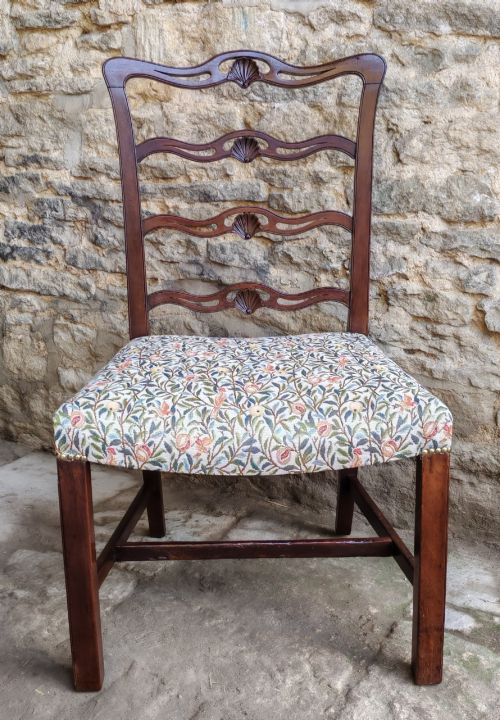
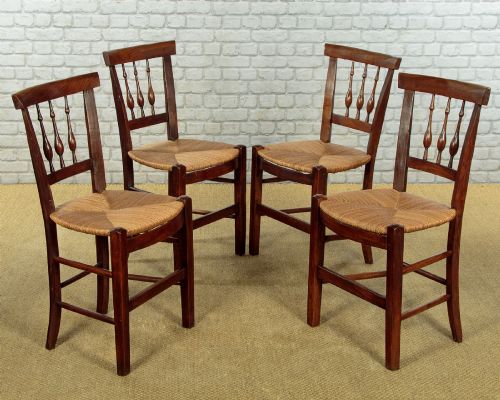
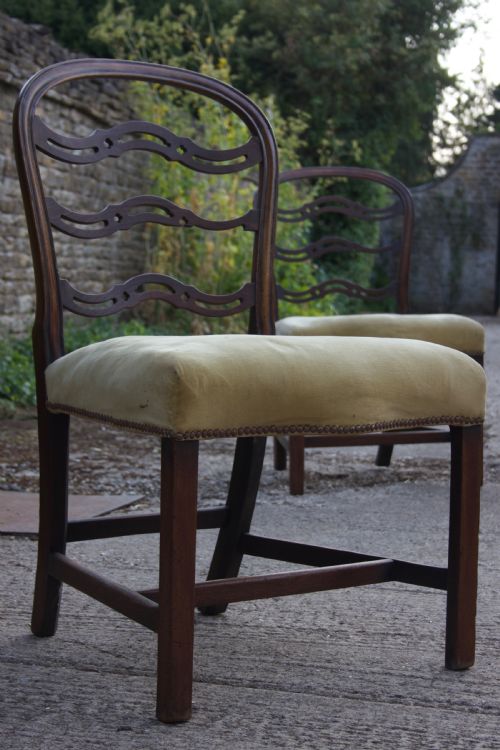
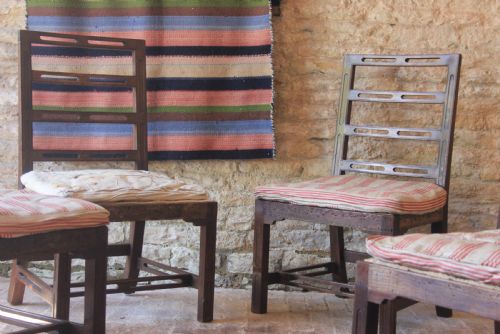
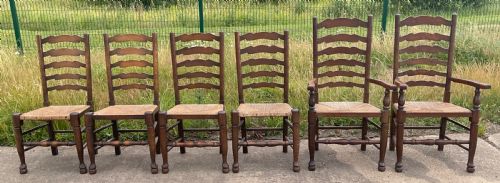
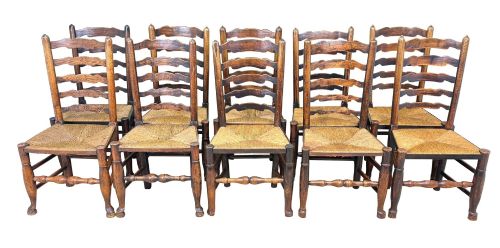
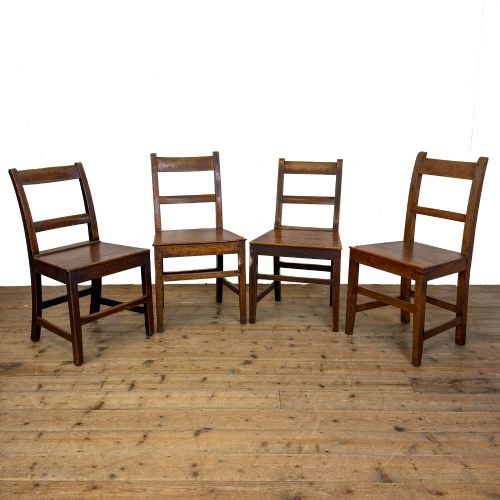
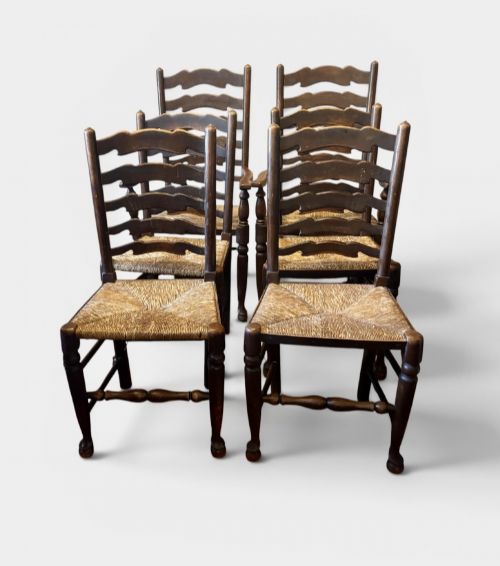
Ladderback side chairs are upright dining and kitchen seats defined by horizontal wooden slats running between the vertical uprights of the backrest. These chairs appear frequently in oak, mahogany, elm, and beech, often fitted with woven rush or fabric seats.
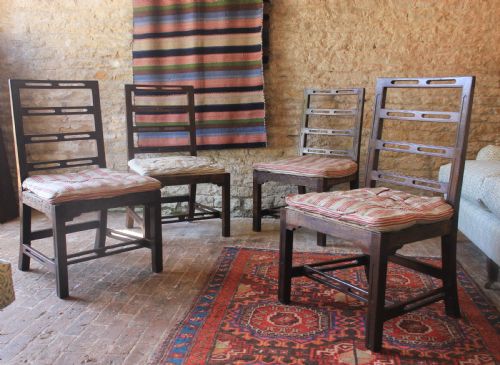
The pieces on this page span several periods, ranging from 18th-century Georgian examples to 19th-century country styles and early 20th-century Arts and Crafts revivals. Sets of four, six, or eight chairs recur across English, Irish, Welsh, and French regional workshops.
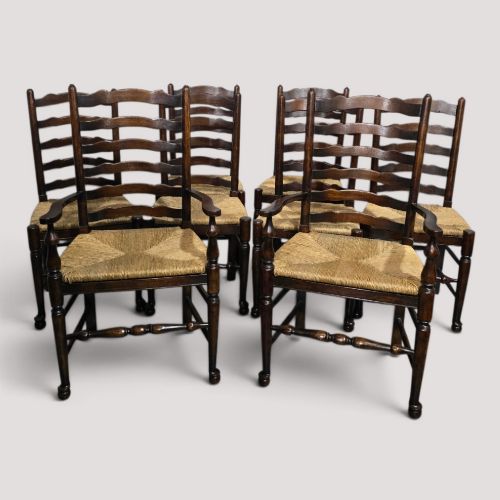
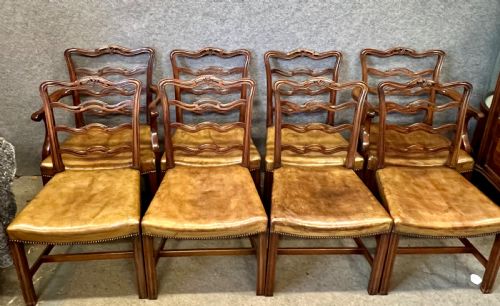
Buyers seeking these chairs will find robust farmhouse kitchen seating alongside formal mahogany dining room sets. Regional variations include rush-seated Dales chairs and Lancashire elm designs suited for everyday domestic use.
How they were made
Cabinet makers and country joiners constructed these frames using solid hardwoods like oak, mahogany, elm, and ash, jointed with traditional mortise and tenon techniques. The characteristic horizontal back slats were typically shaped by hand, steam-bent, or shaved to fit the upright posts.
Seat construction frequently relied on organic materials such as plaited straw, súgán, or woven rush wound tightly around wooden rails. Later or more formal iterations incorporated drop-in pads upholstered in fabric, leather, velvet, or brass-tacked hide.
Listings feature oak, mahogany, elm, and beech frames paired with rush, fabric, leather, and velvet seating.
What varies in quality
Quality in these chairs rests upon the integrity of the timber framing and the tightness of the joinery across the back rails and legs. Heavier, dense hardwoods show less structural movement over centuries of daily sitting.
The preservation of original woven rush or early upholstery webbing separates untouched examples from later restorations. Finer specimens retain balanced proportions in the slat graduation and matching grain patterns within larger dining sets.
Lawrence Neal·Edward Gardener
The Ladderback Side Chairs Glossary
- Rush seat
- A seating surface woven from dried marsh rushes twisted into cords and wrapped around the chair frame. This traditional method provides a resilient and comfortable base.
- Súgán
- An Irish term for twisted straw or hay used as cordage for chair seating. It appears on regional vernacular pieces.
- Harlequin set
- A collection of dining chairs that match in general style and period but vary slightly in individual detail. Such sets were often assembled over time rather than purchased as a single batch.
- Spindle back
- A chair back featuring slender turned vertical wooden rods rather than horizontal slats. This related form shares many regional construction techniques.
- Bergere
- An enclosed upholstered armchair with a wooden frame, sometimes incorporating cane panels. Edwardian versions occasionally blended this style with ladderback slats.
Ladderback Side Chairs: Frequently Asked Questions
How do I care for rush seats?
Keep rush seated chairs in rooms with stable humidity to prevent the natural fibres from becoming brittle or drying out over time. Vacuum gently with a soft brush attachment to remove dust from the woven strands.
Avoid placing these chairs near direct heat sources or in damp environments. Treat the wooden frame with appropriate furniture wax while protecting the woven seat from excess moisture.
Are ladderback chairs comfortable for long dinners?
The curved horizontal slats of these chairs are designed to support the spine by fitting the natural contours of the back. Many examples also feature generous seat proportions suited for extended sitting.
Adding loose squab cushions can increase comfort on wooden-seated versions. Rush and upholstered variants provide a softer seating base naturally.
How do I spot a harlequin set?
Harlequin sets consist of chairs that share a general period, timber, and ladderback design but show subtle differences in turning, dimensions, or slat count. These groupings were gathered together historically to make up a full dining set.
Examining the underframes and joinery reveals whether chairs originated from the same workshop or were matched later. Such sets offer a traditional, collected look for a dining table.
What timber is best for daily use?
Oak, elm, and ash provide exceptional structural strength and resilience for chairs subjected to frequent daily movement. Mahogany offers similar durability with a more formal appearance suitable for dining rooms.
Heavier solid timber frames resist wobbling at the joints over decades of use. Selecting chairs with sturdy stretcher bases ensures long-term stability.