


Ladderback Mahogany Dining Chairs
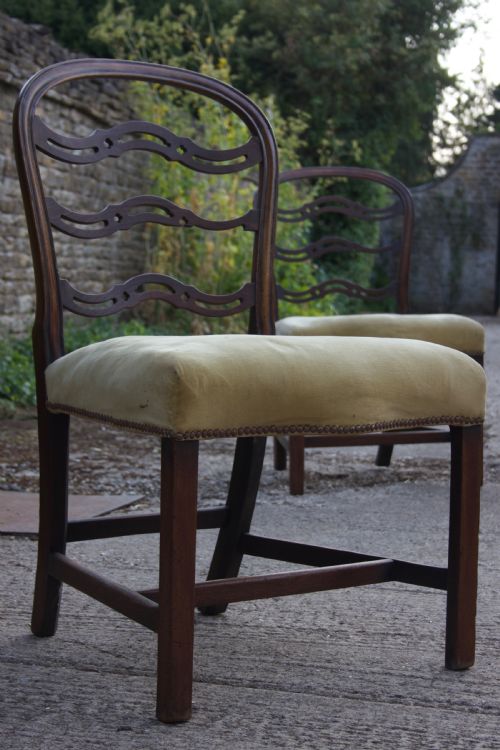
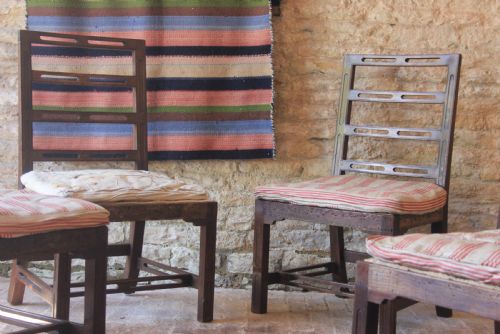
These ladderback mahogany dining chairs bring sturdy upright posture and classical open slat backs to the dining table.
Ladderback Mahogany Dining Chairs
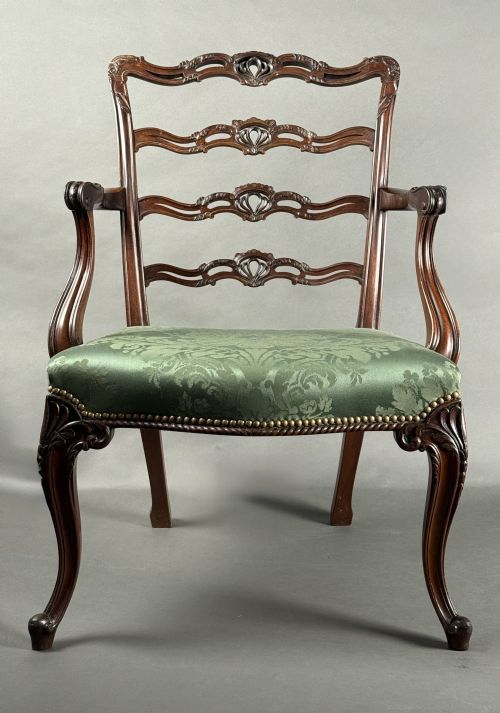
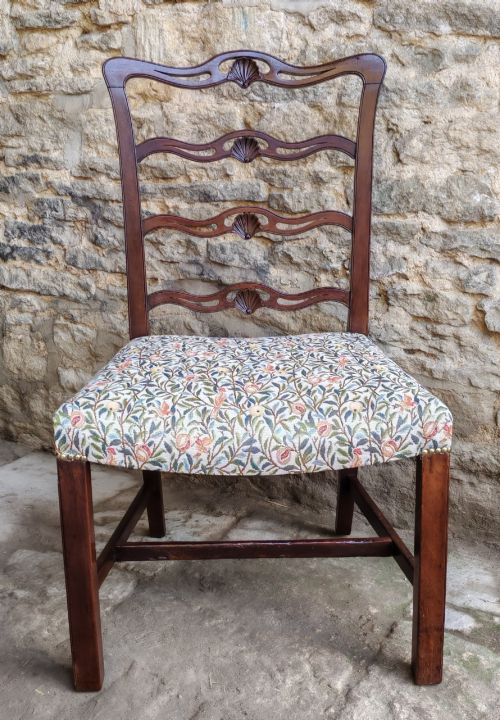
When you search for ladderback mahogany dining chairs, you encounter seating built primarily from solid mahogany timber featuring horizontal wooden slats across the backrest. The pieces on this page span the eighteenth century, the Georgian era, and subsequent revival periods including Edwardian and nineteen-thirties interpretations.
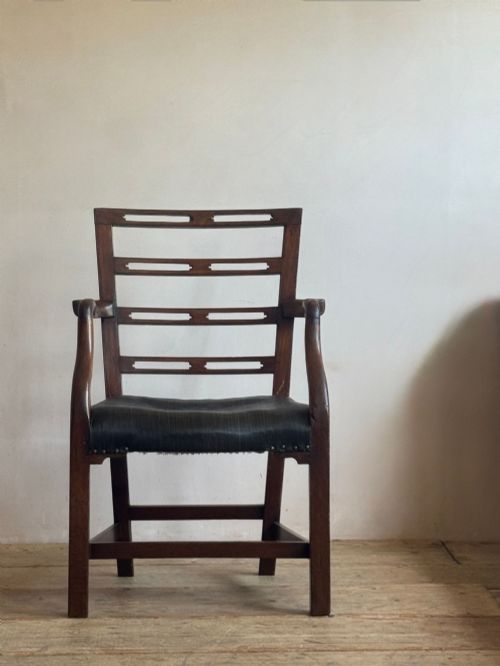
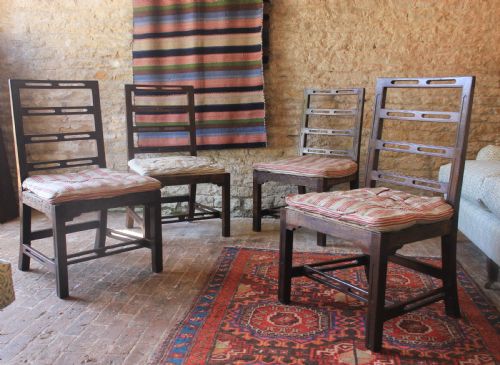
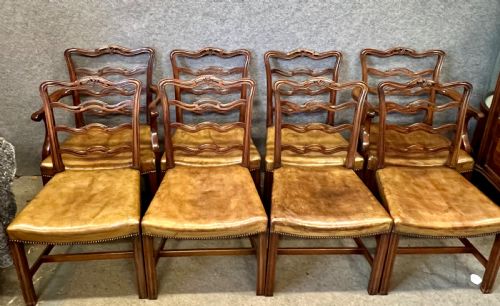
Most examples take the form of standard dining chairs, though armchairs, desk chairs, and office carvers also appear across the listings. You find single chairs alongside larger matched sets numbering four, six, eight, twelve, or eighteen pieces.
The design vocabulary draws heavily on Chippendale, Hepplewhite, and George III styles, often displaying carved details on the top rail or pierced horizontal slats. These forms range from authentic eighteenth-century Scottish and Irish seating to later nineteenth-century revivals.
How they were made
Makers constructed these frames predominantly from solid mahogany, occasionally incorporating secondary timbers such as oak or dark hardwood for internal framing or structural supports. The timber was typically carved by hand to shape the crest rails and sculpt the horizontal ladder slats.
Seat pads were upholstered over drop-in frames or fixed bases, utilising materials like leather, fabric, velvet, and tapestry. Brass tacks frequently secure the edges of these upholstered seat covers to the wooden seat rails.
Several sets include a pair of armchairs to anchor the table, ensuring the host sits in proper carved comfort.
What varies in quality
The degree of crispness in the wood carving separates standard production from finer work, particularly where pierced ladder slats and shaped crest rails meet the upright stiles. Earlier eighteenth-century examples display greater fluency in hand-tooling than later mass-produced revival sets.
The uniformity and preservation of a matching set dictate its standing, since assembling twelve or eighteen antique chairs from the same workshop requires consistent timber selection and joinery integrity. Original drop-in seat frames and undisturbed finish patination add to the overall cohesion of the piece.
The Ladderback Mahogany Dining Chairs Glossary
- Mahogany
- A durable tropical hardwood known for a rich reddish-brown tone and stable grain that accepts fine carving. It serves as the primary structural material for these chairs.
- Ladderback
- A chair back featuring a series of horizontal wooden slats resembling the rungs of a ladder. These slats are often curved for lumbar support and pierced with decorative fretwork.
- Chippendale
- A classical eighteenth-century British furniture style characterised by ribbon backs, carved splats, and cabriole legs terminating in claw-and-ball feet. Later revival versions copy these motifs.
- Hepplewhite
- A lighter eighteenth-century style noted for shield-shaped backs, elegant tapered legs, and refined neoclassical ornamentation. Chairs in this manner display restrained elegance.
- Carver
- An armchair designed with elbow supports, traditionally placed at the head of a dining table. They match the single side chairs in a dining set.
Ladderback Mahogany Dining Chairs: Frequently Asked Questions
How do I date a ladderback mahogany chair?
Dating relies on examining the timber construction, joinery techniques, and stylistic markers such as carved crest rails or leg profiles. Eighteenth-century pieces show hand-cut joinery and period patination, whereas nineteenth-century revivals often display machine-tooled elements and heavier proportions.
Comparing the specific slat design and stretcher arrangement against documented Georgian and Chippendale patterns helps narrow the period of origin. Revival pieces from the Edwardian era or the nineteen-thirties usually carry distinct secondary woods and modern hardware beneath the upholstery.
Are large sets harder to find?
Sets comprising eight, twelve, or eighteen chairs are significantly scarcer than single chairs or pairs because many pieces from original dining suites did not survive intact over the centuries. Finding a matched group requires verifying that all chairs share identical timber grain, carving depth, and structural dimensions.
Many larger offerings on the market represent assembled sets or later revival suites rather than original eighteenth-century dining services. Checking the underside of the seat frames reveals whether the construction methods match across the entire group.
What is the difference between George III and revival styles?
George III pieces date from the reign of King George the Third in the second half of the eighteenth century, featuring authentic period construction and hand-finished timber surfaces. Revival styles, such as Victorian Chippendale or Edwardian inlaid versions, were manufactured decades later while copying those earlier historical aesthetics.
Revival furniture often incorporates machine-cut components, distinct internal lining papers, or standard Edwardian inlay techniques that differ from original eighteenth-century workshop practices. Both categories offer functional seating, but their age and historical context diverge significantly.
How do I care for antique mahogany dining chairs?
Maintain these chairs by keeping them away from direct sunlight and strong heat sources that cause the mahogany timber and upholstery fabrics to dry out and split. Regular dusting with a soft, dry cloth preserves the polished surface without building up excessive wax residues.
Period leather and fabric seat pads require specialised cleaning agents suited to their specific textile type rather than general household sprays. Ensure that loose joinery is addressed promptly by a professional restorer to prevent structural strain during daily use.