

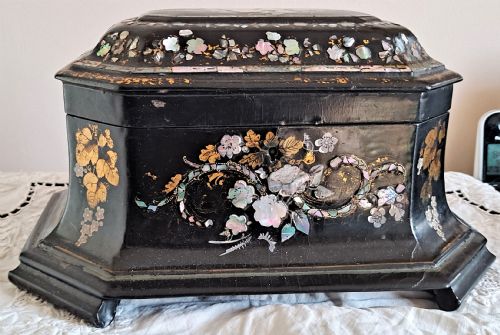

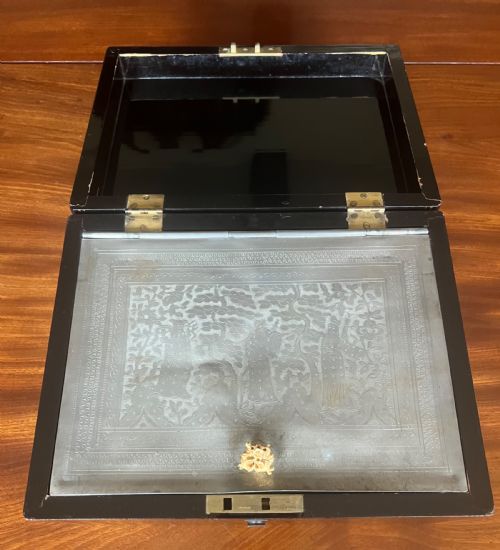


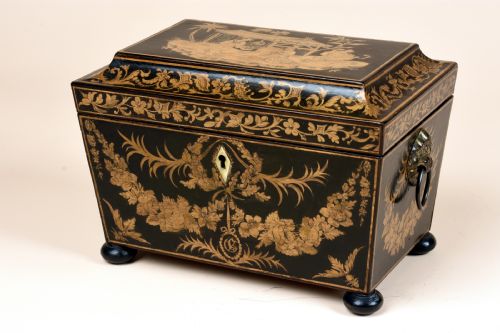

Lacquered Tea Box
Lacquered tea boxes bring glossy finishes and intricate oriental scenes into a room, offering both historic charm and neat desktop storage.
Lacquered Tea Box
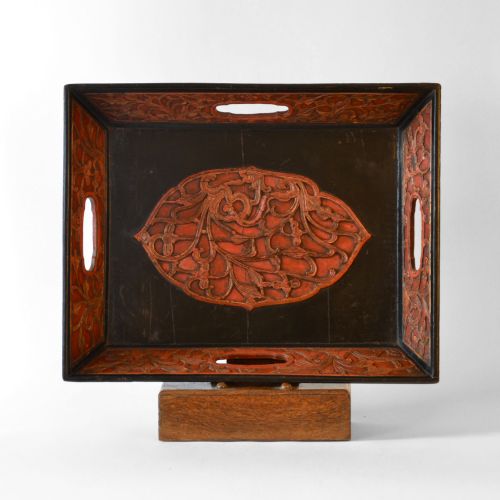
A lacquered tea box serves as a charming container designed to hold dried leaves, combining decorative surface work with practical compartmentalised storage. These pieces frequently appear in Chinese export styles alongside British Regency and Victorian interpretations.
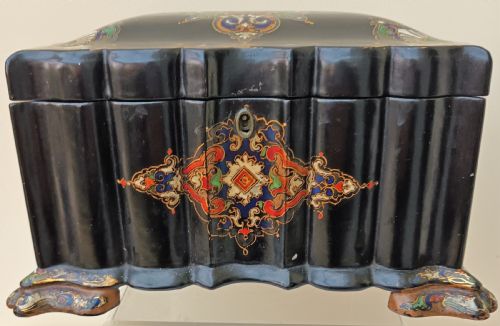
The objects on this page span Georgian, Regency, and Victorian periods, with Chinese export examples also making an appearance. Buyers will frequently encounter papier-mâché and wood carcasses finished with elaborate surface decoration.
Materials and construction methods
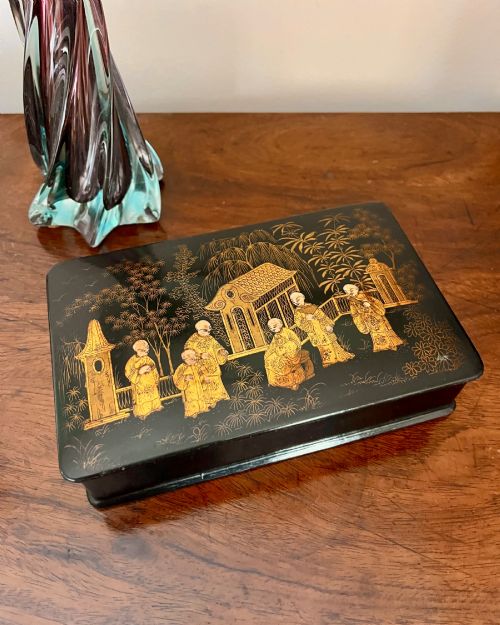
Artisans built these boxes using sturdy wooden carcases or papier-mâché layers, applying multiple coats of lacquer to achieve a smooth, resilient ground. Surface ornamentation often involved meticulous penwork, hand painting, and the application of delicate gold leaf.
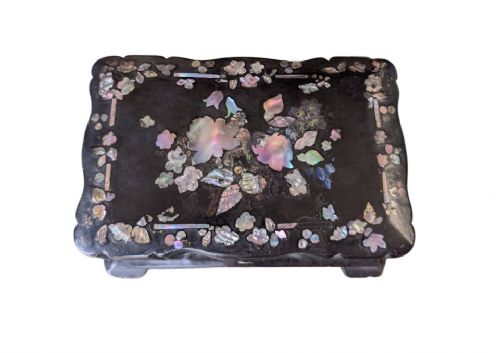
Many examples incorporate decorative details such as brass fittings, bone elements, or mother-of-pearl inlay to accent the dark or brightly coloured lacquer grounds. Chinese export workshops and British makers alike relied on skilled hand application for these finishing touches.
Lacquered Tea Box Retail Price Guide 2026
Typical asking prices for lacquered tea box among the pieces listed under this phrase on Sellingantiques today, from the lower quarter to the upper quarter. They describe what is for sale here now, not the wider market.
Listings include 19th Century, Regency, Georgian, and 1870 periods, employing lacquer, wood, gold leaf, brass, papier-mâché, bone, paint, and metal.
Distinguishing quality in lacquer work
Quality rests primarily on the depth and crispness of the surface decoration, whether one examines fine penwork detailing or complex chinoiserie landscape scenes. Smoother lacquer finishes and well-preserved gilt work indicate superior craftsmanship.
Internal condition also marks the difference between average and exceptional pieces, particularly where original mixing compartments and fitted lids remain intact. The integration of materials like bone or metal hardware shows the maker's original investment in the piece.
The Lacquered Tea Box Glossary
- Lacquer
- A durable resin finish applied in multiple layers to wood or papier-mâché. It creates a smooth, glossy surface that protects the painted decoration beneath.
- Penwork
- A meticulous decoration technique using fine ink lines to create detailed monochrome or tinted illustrations. It is frequently found on Regency period boxes.
- Papier-mâché
- A composite material made from paper pulp or layers of paper bound with glue. It was moulded and dried to form sturdy box carcases before lacquering.
- Tea caddy
- A vessel specifically constructed for storing tea leaves. Earlier versions often featured internal lidded compartments for keeping different blends separate.
Lacquered Tea Box: Frequently Asked Questions
What is a lacquered tea box?
A lacquered tea box is a decorative container built to store dry tea leaves safely away from light and air.
These pieces use traditional lacquering techniques on wood or papier-mâché bases, often featuring painted scenes or penwork designs.
How were these boxes used originally?
In past centuries, tea was an expensive commodity kept under lock and key by the head of the household.
Servants brought the caddy to the parlour where the host measured out the leaves for brewing.
How do I care for a lacquered box?
Keep these objects out of direct sunlight and away from radiators to prevent the lacquer from drying and cracking.
Dust gently with a dry, soft cloth and avoid using liquid polishes or chemical cleaners on the delicate surface.
How do I identify a Regency period piece?
Regency boxes often showcase fine penwork designs, neoclassical proportions, or specific chinoiserie motifs popular around the early nineteenth century.
Examining the internal construction and hinges helps confirm the age alongside stylistic clues.