





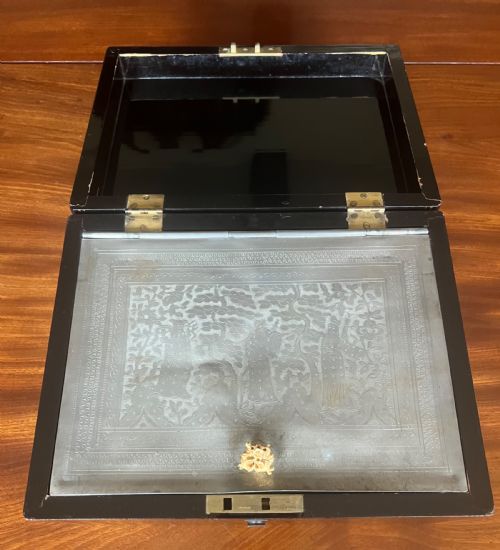

Lacquered Keepsake Box
A lacquered keepsake box offers a portable chamber for small valuables, bringing painted surfaces and polished timber together on a dressing table.
Lacquered Keepsake Box
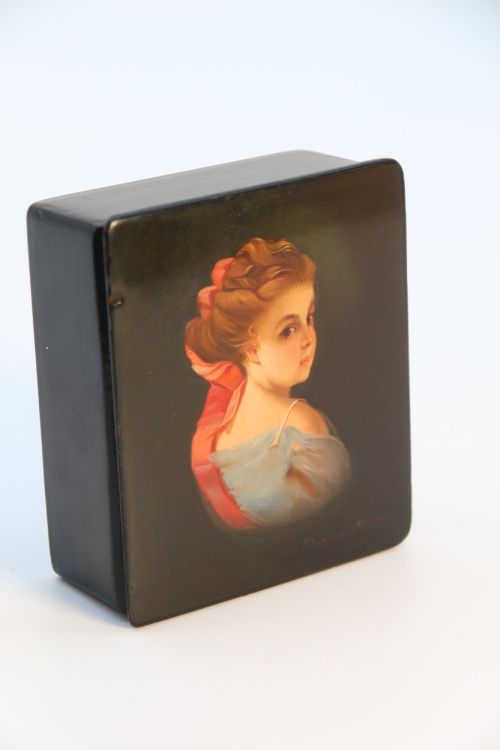
A lacquered keepsake box gathers pieces from various centuries and geographic traditions, spanning Victorian and Georgian examples alongside Japanese Meiji and Russian folk art. The inventory includes decorative boxes, jewellery boxes, and tea caddies that serve as small containers for personal items.
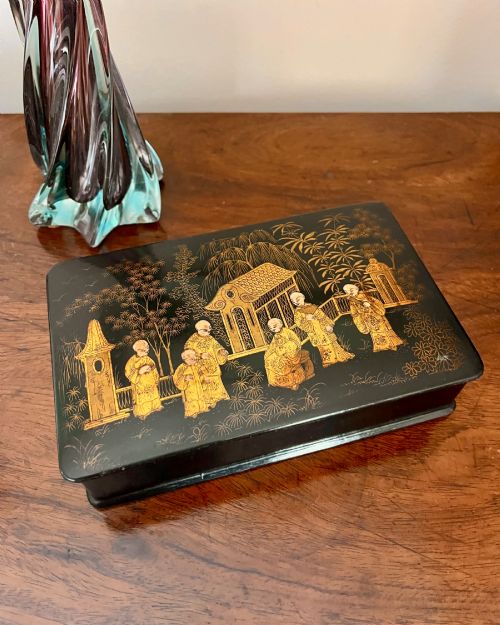
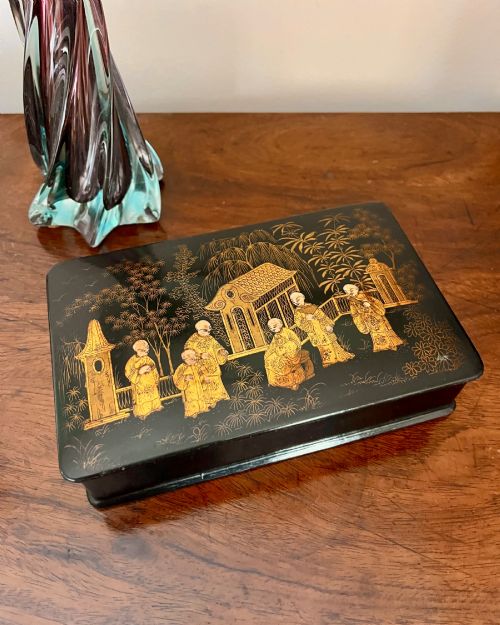
Chinoiserie motifs and painted surfaces appear frequently across the selection, often taking the form of traditional scenes rendered in gold leaf or fine ink. These receptacles range from small sharing boxes to larger cashier and turban boxes.
How they were made
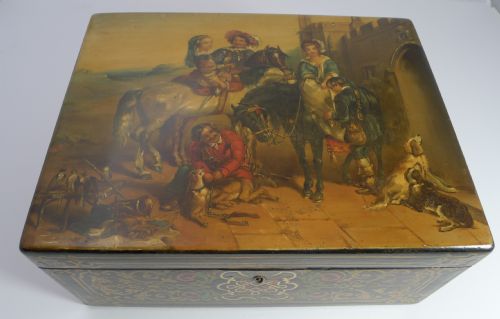
Many of these pieces employ papier-mâché or solid wood such as oak, built up with layers of lacquer to create a smooth, hard-wearing finish. Artisans then applied paint, ink, and gold leaf to decorate the exterior surfaces.
Penwork and hand-painted details define the decoration on numerous specimens, requiring steady linework and careful brush control. Metal and brass elements often furnish the hinges, locks, and handles.
Lacquered Keepsake Box Retail Price Guide 2026
Typical asking prices for lacquered keepsake box among the pieces listed under this phrase on Sellingantiques today, from the lower quarter to the upper quarter. They describe what is for sale here now, not the wider market.
One box doubles as a resting place for a turban.
What varies in quality
The sophistication of the painted ornament and the crispness of the gilt work set finer examples apart from simpler items. Hand-painted portraits and intricate chinoiserie landscapes demand greater skill than generic or repetitive patterns.
The condition of the lacquer finish and the integrity of the underlying papier-mâché or timber structure influence the overall standard. Boxes retaining their original brass hardware and clean interior linings represent higher execution.
Jennens and Bettridge
The Lacquered Keepsake Box Glossary
- Papier-mâché
- A composite material made from paper pulp or reinforced sheets of paper mixed with glue, pressed into moulds and dried until hard. It provides a lightweight yet durable base for lacquer and paint.
- Penwork
- A decorative technique using fine ink lines to create intricate patterns and architectural views on wood or prepared surfaces. It was particularly popular during the Regency period.
- Meiji
- The period in Japanese history spanning from eighteen sixty-eight to nineteen twelve. Pieces from this era often display refined craftsmanship and traditional pictorial themes.
- Qajar
- Pertaining to the Iranian dynasty that ruled from seventeen eighty-nine to nineteen twenty-five. Lacquer work from this culture frequently showcases detailed hand-painted portraits and floral borders.
Lacquered Keepsake Box: Frequently Asked Questions
What is a lacquered keepsake box?
A lacquered keepsake box is a small lidded container finished with hardened resin or lacquer, designed to store trinkets, letters, or jewellery.
These pieces combine decorative exterior painting with practical compartmented interiors for personal storage.
How do I care for lacquer boxes?
Keep these items out of direct sunlight and away from heat sources to prevent the lacquer from cracking or fading. Dust them gently with a soft, dry cloth without using liquid polishes.
Stable indoor humidity levels help preserve both the wooden or papier-mâché foundation and the painted surface.
Where were these boxes made?
The pieces originate from diverse workshops across Britain, Europe, Russia, China, Japan, Kashmir, and Persia. Each region contributed distinct materials and painting traditions.
British examples often feature penwork or Victorian papier-mâché, while Asian and Middle Eastern origins bring specialised lacquer and miniature painting.
How are different periods identified?
Stylistic clues such as Regency penwork, Georgian chinoiserie motifs, or Victorian papier-mâché construction point toward specific eras. Materials like brass hardware and signature styles also assist in dating.
Examining the base and interior construction reveals the manufacturing methods characteristic of a particular century.