




Lacquer Wall Mirror
These lacquer wall mirror pieces bring painted Chinoiserie elegance and rich gloss finishes to domestic rooms.
Lacquer Wall Mirror
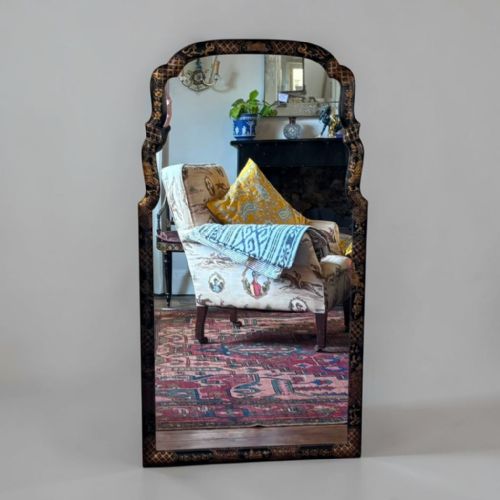
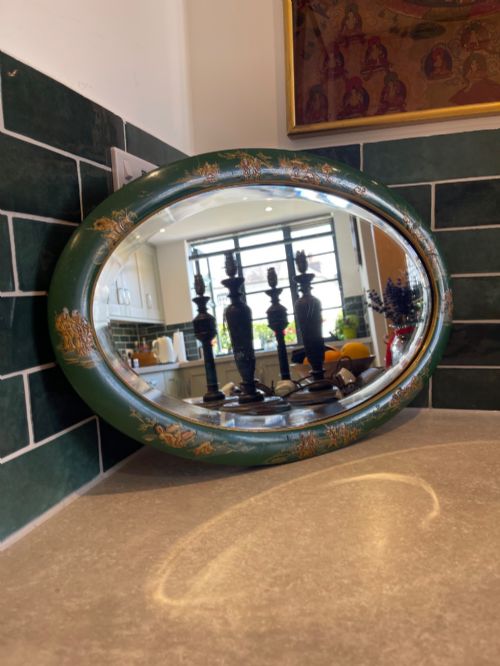
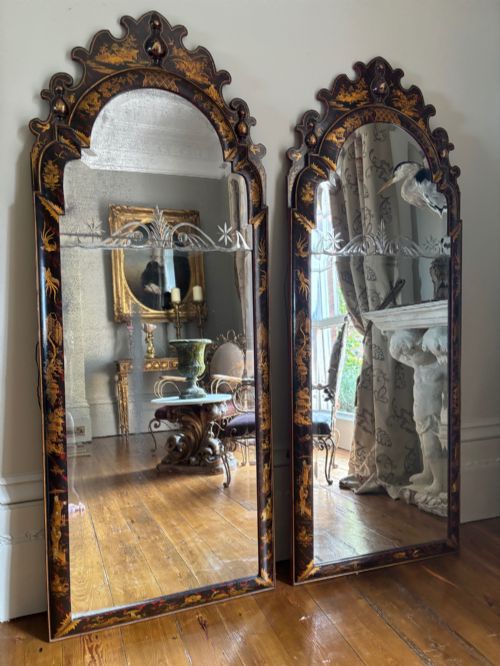
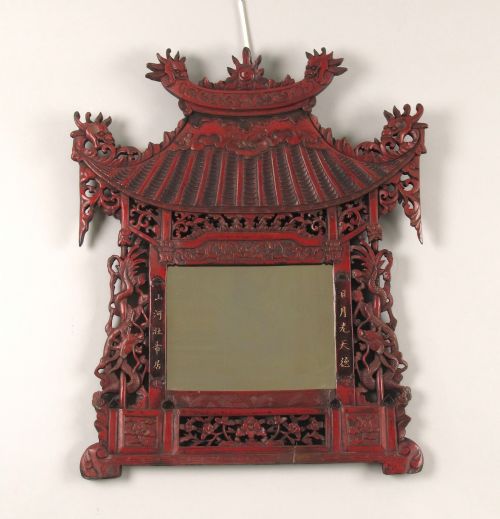
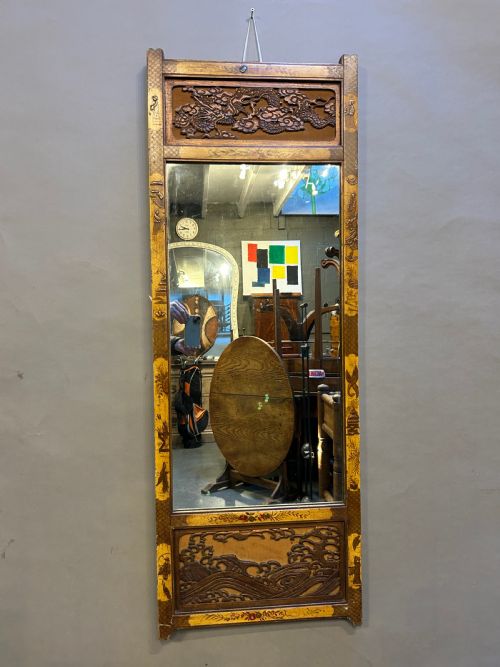
A lacquer wall mirror combines reflective glass with decorative Asian-inspired painted surfaces, spanning Georgian designs through to Edwardian interpretations. You will frequently encounter early twentieth century examples alongside nineteenth century pieces finished in black, cream, or red lacquer.
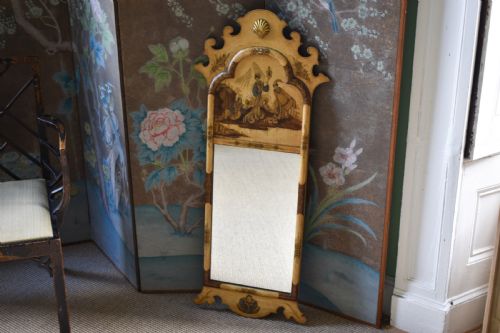
The forms range from compact oval frames to large overmantel mirrors and tall pier mirrors designed for specific wall spaces. Many of these pieces draw directly upon Queen Anne and Georgian style traditions, often incorporating pagoda motifs or gilt highlights.
Materials and construction
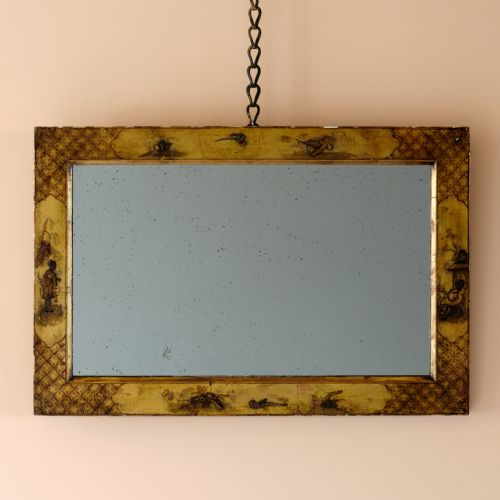
Makers built these frames using timber such as ebonised wood and softer woods prepared to receive successive layers of lacquer. The surface decoration relies on applied gold leaf, gilt details, and hand-painted Chinoiserie scenes.
Mirror glass is set within these decorated wooden structures, sometimes accompanied by carved giltwood elements or brass mounts.
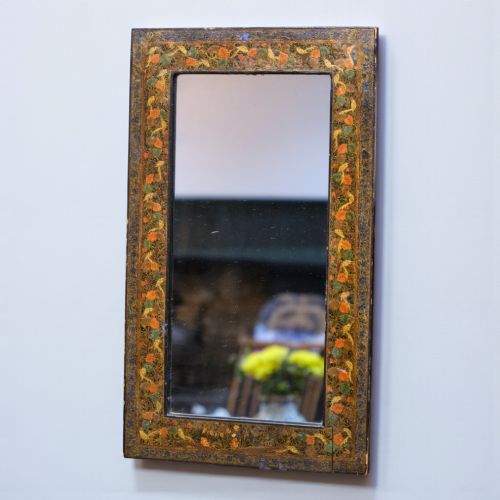
The listings demonstrate a strong presence of Edwardian and nineteenth century pieces, alongside Georgian influences and Kashmiri examples.
Assessing quality and craftsmanship
The depth and execution of the lacquering process distinguish finer pieces from simpler decorative items, with multi-layered finishes showing greater durability and nuance. Hand-painted Chinoiserie detail varies considerably in precision, from schematic motifs to intricate figural scenes.
The quality of the timber frame carving, particularly on pieces referencing Queen Anne or Georgian styles, dictates the overall refinement of the mirror.
The Lacquer Wall Mirror Glossary
- Chinoiserie
- European decorative style inspired by Chinese artistic traditions, featuring motifs like landscapes, pagodas, and figures.
- Japanned
- European lacquerwork imitating Asian finishes, commonly using black or red grounds with raised gilt decoration.
- Overmantel mirror
- A large mirror specifically proportioned to hang above a fireplace mantelpiece.
- Pier mirror
- A tall wall mirror designed to hang on the narrow wall space between windows.
- Giltwood
- Wood that has been treated with gold leaf or gold paint to create a metallic sheen.
Lacquer Wall Mirror: Frequently Asked Questions
How do I hang a heavy lacquer wall mirror safely?
These wooden frames require sturdy fixings suited to the weight of the timber and glass. Ensure you locate wall studs or use appropriate heavy-duty wall anchors.
Position the mirror at a comfortable eye level, taking into account the proportions of surrounding furniture such as console tables or mantelpieces.
What is the difference between Chinoiserie and Japanned finishes?
Chinoiserie broadly encompasses European interpretations of Chinese motifs and scenes across various decorative arts. Japanning refers more specifically to the European imitation of Japanese and Asian lacquer techniques, typically involving dark or red varnished grounds with raised metallic details.
Both finishes appear frequently on mirrors from the Georgian period through the Edwardian era.
How should I clean and maintain a lacquered frame?
Dust the lacquered wooden frame gently with a soft, dry cloth to prevent surface scratching. Avoid harsh chemical cleaners or excessive moisture, which can damage the delicate varnish and gilt highlights.
Clean the mirror glass separately using a standard glass cleaner applied to a cloth rather than sprayed directly onto the frame.
Are these mirrors suited to modern interiors?
The bold colours and reflective surfaces of these pieces work effectively as focal points in contemporary rooms. Black, red, and cream lacquer finishes provide strong visual contrast against plain walls.
They pair well with traditional and modern furniture alike, adding texture and historical character to a space.