

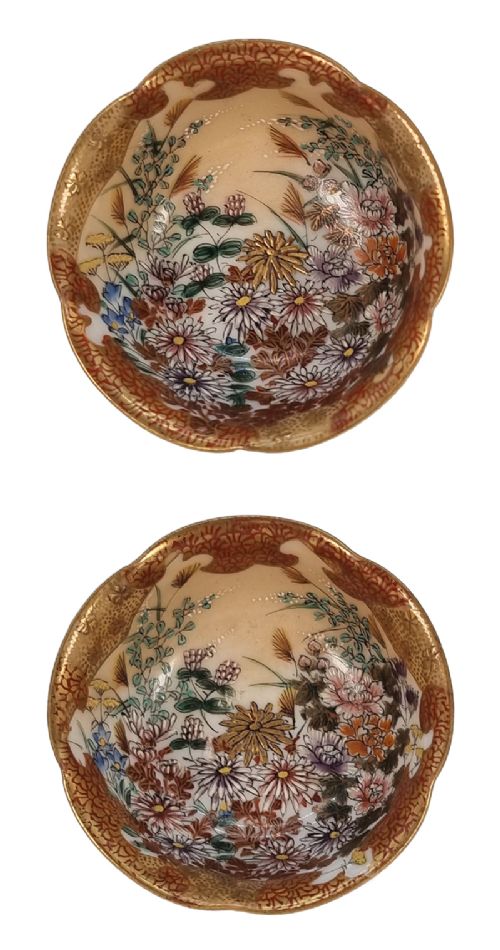



Kutani Porcelain Pair
A kutani porcelain pair brings centuries of Japanese artistry into a room, offering matching forms painted in striking enamels and gold leaf.
Kutani Porcelain Pair
Vessels range from cylindrical and flared neck shapes to crane shaped dishes moulded in shallow relief. These matching objects originate primarily from Japanese export traditions and domestic production spanning the Edo, Meiji, and Taisho periods.
How they were made
The construction relies on porcelain bodies shaped by hand or mould, forming stable bases for subsequent decoration. Artisans then applied detailed hand-painted designs using rich enamel pigments alongside gold leaf and gilding.
Certain pieces incorporate moulded details in shallow relief beneath the glaze before final firing and enamel work. Materials such as brass, silk, wood, and fabric appear primarily in the mounts and fittings of pieces adapted into lamps.
Kutani Porcelain Pair Retail Price Guide 2026
Typical asking prices for kutani porcelain pair among the pieces listed under this phrase on Sellingantiques today, from the lower quarter to the upper quarter. They describe what is for sale here now, not the wider market.
Some nineteenth-century vases found a second life as table lamps, proving that even antique porcelain appreciates a good electrical glow.
What varies in quality
Quality rests in the precision of the hand-painted brushwork and the clarity of the enamel pigments against the porcelain ground. Superior examples display disciplined control in the application of gold leaf and iron red details.
The harmony of the pair dictates its standing, where matching dimensions, pigment saturation, and pattern alignment create a balanced visual presence. Preservation of the original surface finish and the crispness of moulded relief work further elevate certain pieces above standard production.
The Kutani Porcelain Pair Glossary
- Kutani
- A style of Japanese porcelain characterised by colourful enamel decoration and extensive use of gold. It originated in the Kaga province and encompasses distinct historical periods of production.
- Meiji Period
- The era in Japanese history spanning from eighteen sixty-eight to nineteen twelve, noted for significant export of decorative arts to Western markets. Pieces from this time often exhibit elaborate hand-painted narratives.
- Enamel
- Vitreous material fused to the porcelain surface through firing to create vibrant, durable colours. It forms the primary medium for pictorial motifs on these wares.
- Gilding
- The application of gold leaf or gold powder to accentuate specific decorative elements on the porcelain body. This technique adds depth and light reflection to the painted surface.
- Relief
- Decoration that stands out from the surrounding flat porcelain plane, created by moulding the clay prior to firing. It adds tactile dimension to motifs such as birds and floral arrangements.
Kutani Porcelain Pair: Frequently Asked Questions
How do I date a kutani porcelain pair?
Dating relies on stylistic markers, potting characteristics, and the historical context of Japanese export wares. Nineteenth-century pieces often display dense Meiji period enamel work, while earlier examples show distinct palette choices.
Examination of the porcelain paste and the wear on the base provide further clues to age. Comparing the decorative motifs against documented periods helps narrow down the decade of manufacture.
Were these pairs made for export?
Many matching sets from the nineteenth century onward were produced specifically for international markets following the opening of Japan. These export pieces met Western demand for decorative symmetry and traditional Japanese aesthetics.
Domestic items also reached collectors through trade and diplomatic channels. The presence of matching forms often indicates an intentional export pairing designed for mantelpieces or side tables.
How should I display matching vases?
Symmetrical placement on a mantelpiece, sideboard, or dedicated pedestals allows a matching set to anchor a room's composition. Keeping them in moderate light preserves the vibrancy of the enamels and gold leaf.
Ensure the supporting furniture is stable, particularly with larger nineteenth-century examples that carry significant weight. Avoid placing them in direct sunlight to protect delicate surface pigments over time.
What motifs appear on these pieces?
Common subjects include natural elements such as house sparrows, cranes, and floral arrangements rendered in iron red, black, and gold. These traditional Japanese designs carry symbolic meanings relating to longevity and the seasons.
Figural scenes and geometric borders also feature prominently on Meiji period vessels. Each motif reflects the prevailing artistic repertoire of the kilns during production.