




Kingwood Serpentine Drawers
Kingwood serpentine drawers combine rich timber veneers with undulating fronts, offering collectors exceptional French decorative arts craftsmanship.
Kingwood Serpentine Drawers
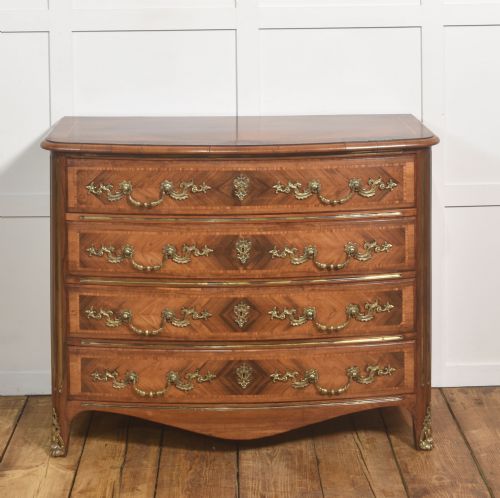
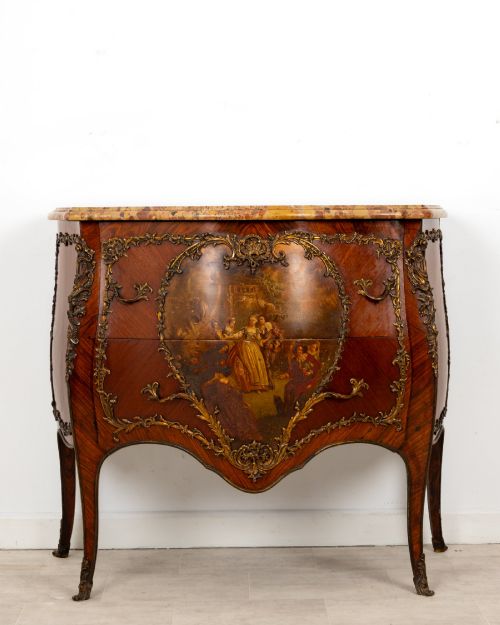
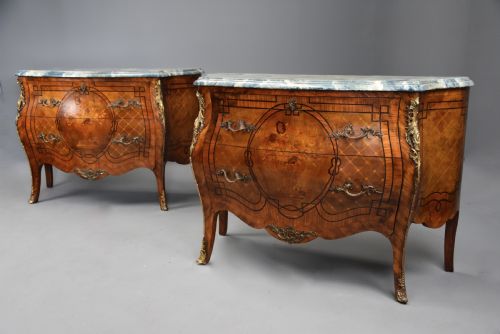
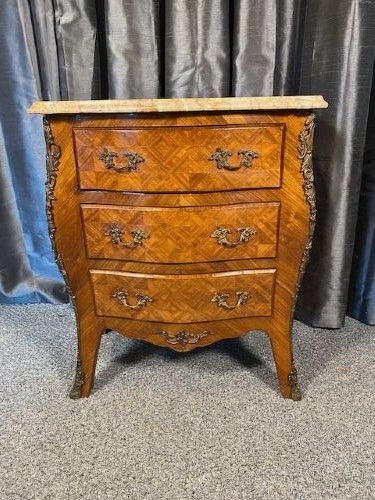
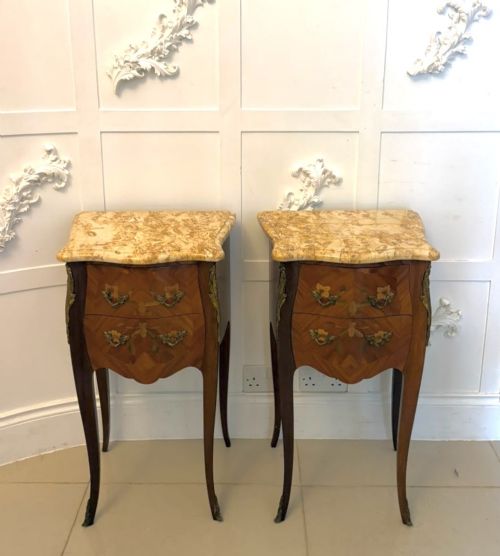
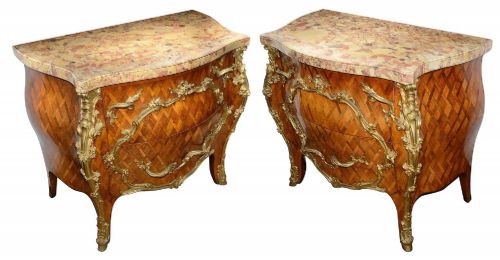
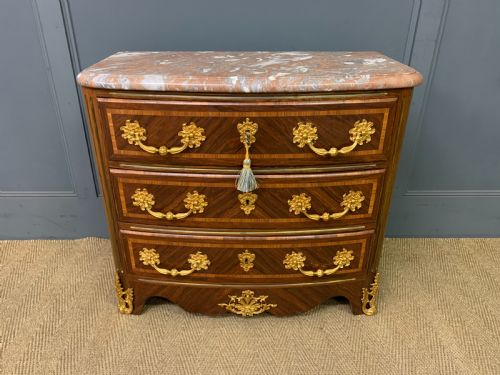
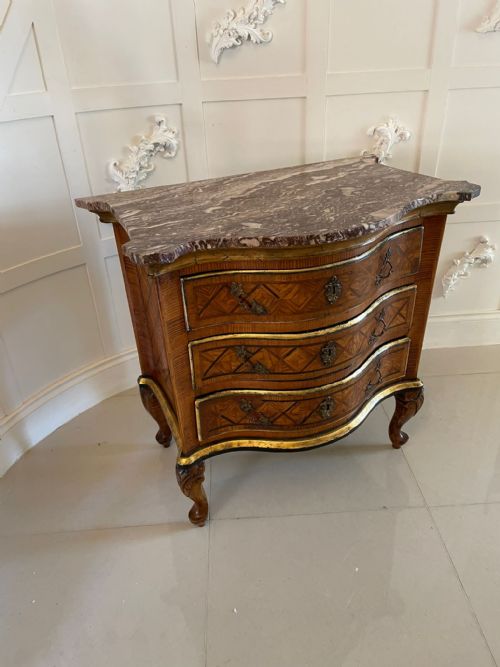
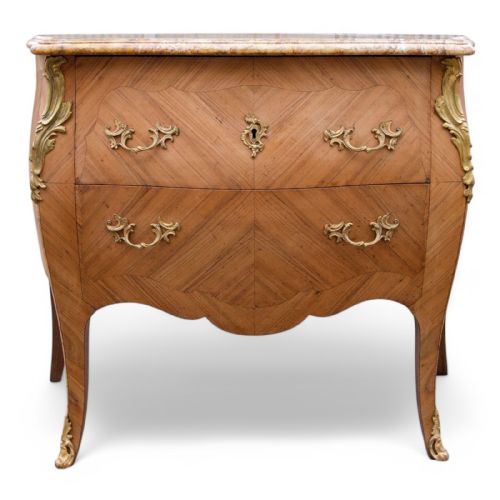
When you search for kingwood serpentine drawers, you encounter a selection of sophisticated case furniture, predominantly French commodes and bedside cabinets from the eighteenth and nineteenth centuries. These pieces display undulating fronts paired with the distinctive grain and deep hues of kingwood, often enhanced by marquetry or parquetry patterns.
Materials and construction
Cabinetmakers utilised kingwood veneers applied in intricate marquetry or geometric parquetry patterns over secondary woods, shaping the carcasses to create the characteristic serpentine and bombe contours. Marble slabs were precisely cut and polished to fit the undulating tops of these chests.
Gilt bronze and ormolu mounts were cast and chased to accentuate the corners, handles, and apron mounts of the commodes. Brass details and occasional Vernis Martin panels further enrich the surface decoration of these cabinets.
The listings span pieces from the eighteenth century up through the 1930s, featuring materials such as kingwood, marble, ormolu, and rosewood.
Evaluating the craftsmanship
The distinction between tiers of quality rests upon the precision of the veneer work and the crispness of the bronze casting. Finer examples display seamless alignment of parquetry across curved drawer fronts alongside heavily chased ormolu mounts with deep relief.
Structural integrity of the serpentine carcass and the authenticity of the marble top significantly influence the standing of a piece. Earlier eighteenth-century originals carry historical weight, while nineteenth-century revival pieces rely heavily on the fidelity of their French craftsmanship.
The Kingwood Serpentine Drawers Glossary
- Serpentine
- A furniture front or top curving inward in the centre and outward at the ends, creating a gentle wave shape. This contour requires precise woodworking skills to execute successfully across multiple drawers.
- Commode
- A low chest of drawers originating in France, commonly used in bedrooms and principal rooms. These pieces often feature decorative marble tops and elaborate metal mounts.
- Kingwood
- A dense, dark exotic timber with contrasting golden and violet-brown zones, highly prized for French cabinetmaking veneers. It takes a high polish and shows distinctive grain patterns.
- Ormolu
- Gilded bronze applied to furniture as decorative mounts, feet, and handles. The technique involves coating bronze with a gold-mercury amalgam and heating it.
- Parquetry
- Geometric patterns formed by small veneer pieces inlaid into a wooden surface. This technique showcases the natural grain variations of timbers like kingwood and walnut.
Kingwood Serpentine Drawers: Frequently Asked Questions
How do I care for kingwood veneer?
Keep these pieces away from direct sunlight and radiators to prevent the timber veneers from drying out or splitting. Dust gently with a dry cloth and avoid modern silicone polishes.
Apply a microcrystalline wax occasionally to nourish the wood surface and maintain the natural sheen of the kingwood without damaging the historical finish.
Are marble tops original?
Many eighteenth and nineteenth century commodes feature heavy marble tops cut specifically to match the serpentine or bombe contours of the wooden carcass below. Scagliola and coloured marbles are typical of the period.
Inspect the underside of the marble and the top edge of the wooden frame to verify proper seating and consistent wear patterns between the stone and wood.
How do I distinguish eighteenth century from revival pieces?
Eighteenth-century commodes exhibit construction methods, timber ageing, and hand-cut joinery consistent with the period of their origin. Revival pieces from the nineteenth and early twentieth centuries often use standardised fixings.
Look closely at the style of the ormolu mounts and the internal secondary woods, which offer reliable clues to dating the manufacture of the piece.