



Kingwood Secretaire
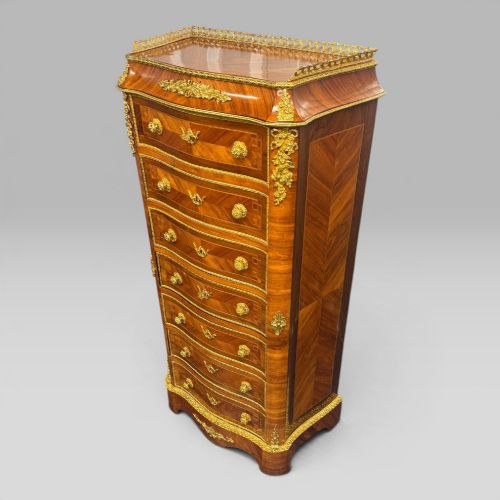
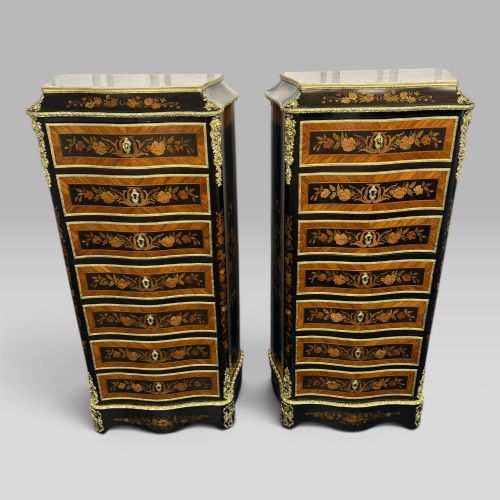
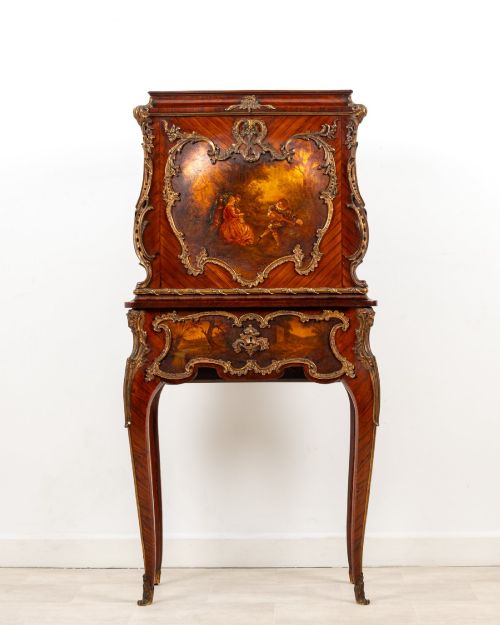
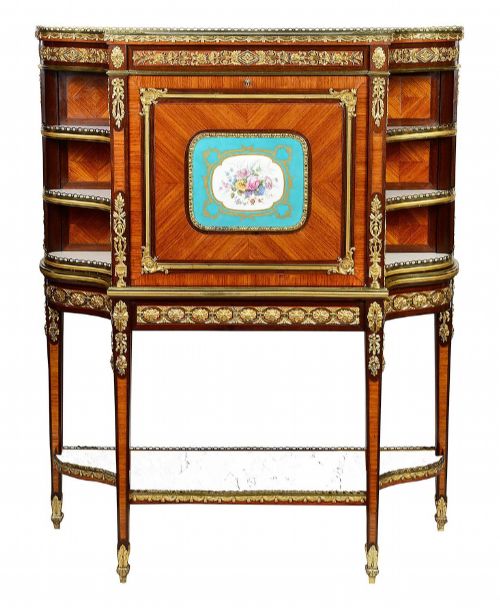
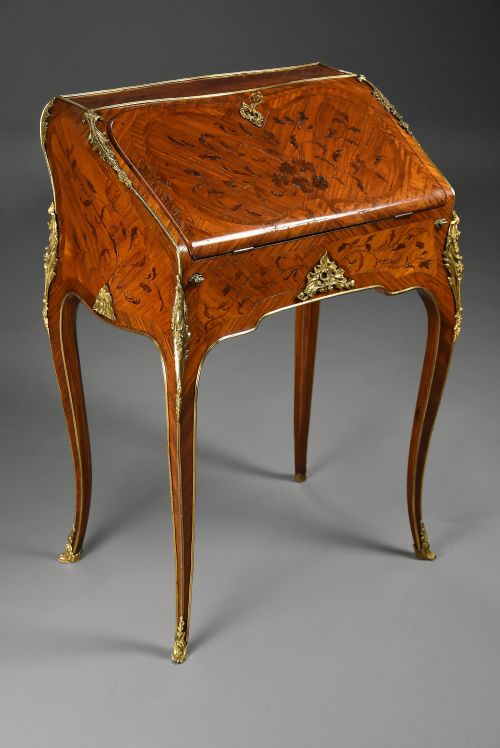
These kingwood secretaire writing pieces bring magnificent French revival craftsmanship and rich marquetry into a room.
Kingwood Secretaire
A kingwood secretaire is a refined writing desk or cabinet featuring a drop-down writing flap, widely produced across the nineteenth century in various French revival styles. Buyers searching for a kingwood secretaire encounter elaborate writing furniture designed for domestic studies and elegant reception rooms.
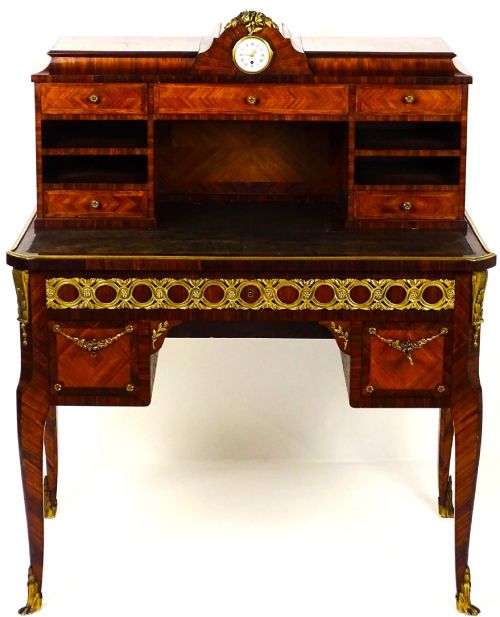
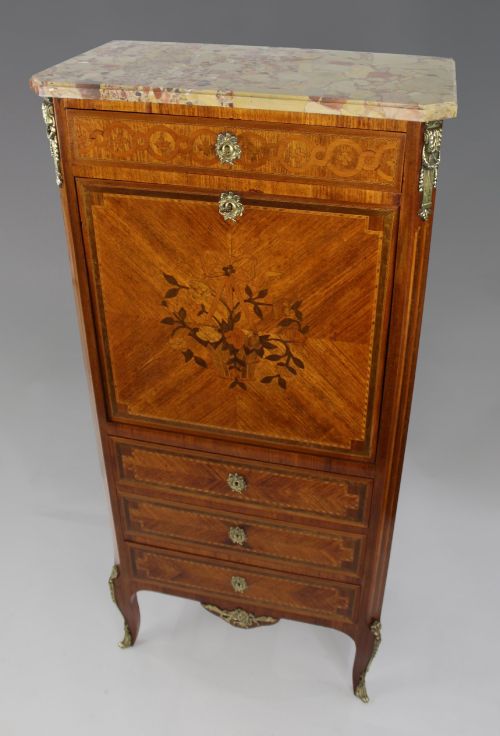
The selection here encompasses several distinct forms, from upright secretaire chests and abattant cabinets to compact bonheur du jour desks and slope-front escritoires. Most examples draw upon Louis XV and Louis XVI designs, displaying serpentine fronts or straight architectural lines.
Origins heavily lean towards French workshops of the 1880s and 1890s, alongside mid-eighteenth-century pieces and later twentieth-century iterations. Buyers regularly find pieces paired with marble tops and fitted interior compartments.
What varies in quality
The refinement of the ormolu mounts dictates much of the visual hierarchy, where crisply chased bronze work surpasses simpler, softer castings. The precision of the marquetry cutting and the depth of the timber grain selection similarly separate standard production from superior cabinetmaking.
Interior execution reveals the artisan's standard, particularly in the dovetailing of small drawers and the smooth mechanical action of the drop-front writing flap. Original components, including marble slabs and leather inserts, elevate the integrity of the piece.
Kingwood Secretaire Retail Price Guide 2026
Typical asking prices for kingwood secretaire among the pieces listed under this phrase on Sellingantiques today, from the lower quarter to the upper quarter. They describe what is for sale here now, not the wider market.
Listings feature nineteenth-century French revival pieces incorporating kingwood, tulipwood, ormolu, and marble.
Paul Sormani·Blake London·BVRB
The Kingwood Secretaire Glossary
- Kingwood
- A dense, richly grained Brazilian timber utilised for luxury veneering throughout the eighteenth and nineteenth centuries. It typically displays dark brown and violet stripes.
- Ormolu
- Gilt bronze mounts applied to furniture for decorative accentuation and edge protection. The technique involves treating brass or bronze with a gold amalgam.
- Secrétaire à abattant
- An upright tall cabinet featuring a vertical front panel that hinges downward to form a writing surface. It conceals pigeonholes and small drawers within.
- Marquetry
- The art of applying small pieces of veneer to a structure to form decorative patterns and pictorial scenes. Craftsmen carefully cut contrasting timbers together to ensure tight joints.
- Vernis Martin
- A type of simulated Japanese lacquer developed in France during the eighteenth century. It employs multiple layers of resin varnish to achieve a glossy, translucent finish.
Kingwood Secretaire: Frequently Asked Questions
What is a kingwood secretaire?
A kingwood secretaire is a decorative writing cabinet or desk characterised by its distinctive violet-striped timber veneer and a hinged writing flap.
These pieces typically open to reveal a fitted interior of small drawers and pigeonholes designed for correspondence.
How do I use a secretaire abattant?
The vertical front panel unlocks and folds down into a horizontal position, supported by internal wooden brackets or side arms.
This creates a sturdy writing surface while keeping stationery and writing implements neatly concealed behind the closed panel when not in use.
Where were these desks made?
The majority of these pieces originate from French cabinetmaking workshops, particularly active in Paris during the nineteenth century.
They often reinterpret earlier Louis XV and Louis XVI royal furniture styles for contemporary domestic interiors.
How do I care for marble top desks?
Marble surfaces require gentle cleaning with a damp cloth and mild soap, avoiding acidic substances that can etch the polished stone.
The timber frame benefits from regular dusting and occasional application of appropriate furniture wax to protect the veneer.