



Kashmiri Lacquer Lamp
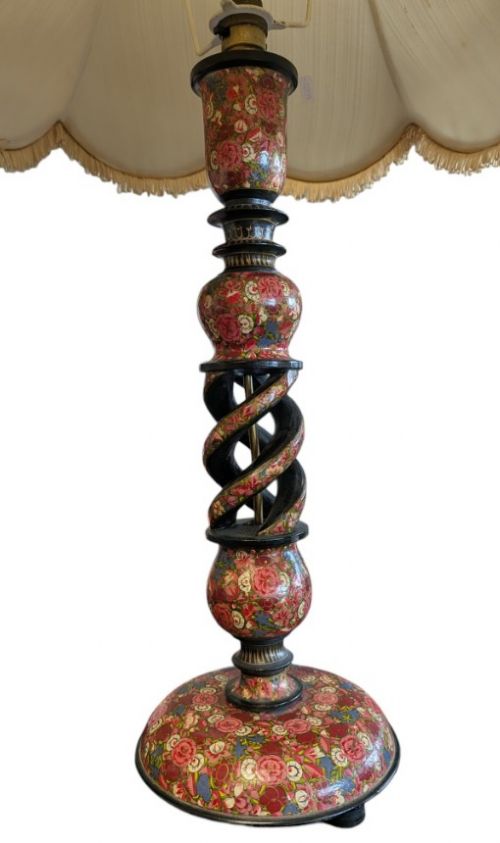
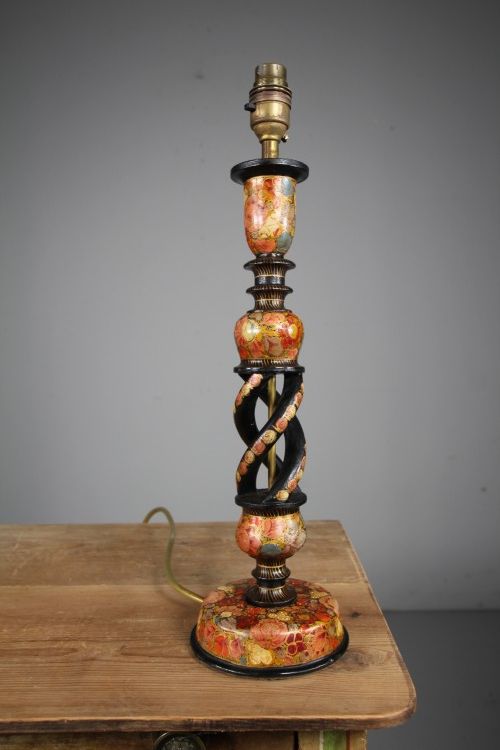
These kashmiri lacquer lamp examples bring vibrant hand-painted colour and intricate folk patterns directly into your interior.
Kashmiri Lacquer Lamp
When you search for kashmiri lacquer lamp, you find decorative table lamps originating from the Kashmir region, often showcasing traditional hand-painted motifs. The pieces available here span from the late nineteenth century through to the early twentieth century, encompassing items dated around 1880, 1900, 1920, and 1930.
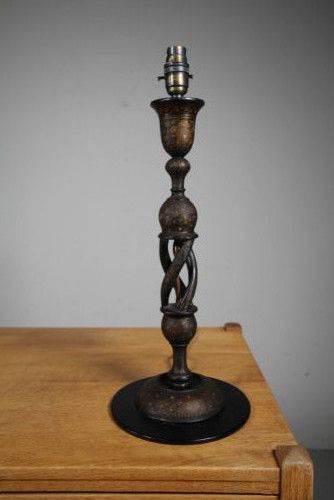
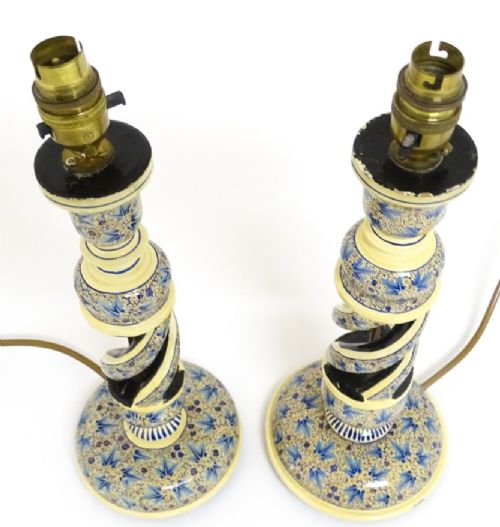
You will encounter various distinct forms among these listings, including tall twist table lamps, pairs, and enormous antique table lamps, alongside related items such as hand-painted candlesticks lamps. The dominant styles recorded are Kashmiri, Kashmiri Folk Art, and Anglo-Indian, reflecting both local craftsmanship and colonial-era taste.
Most examples function as table lamps designed to light a room while serving as striking decorative objects. The forms range from standard upright bodies to slender twisted columns and larger statement pieces.
How they were made
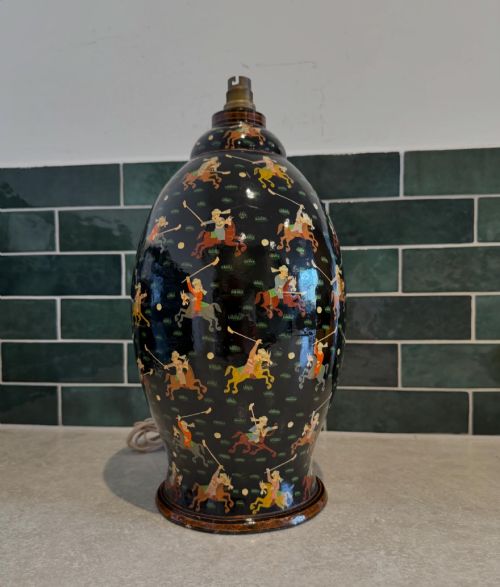
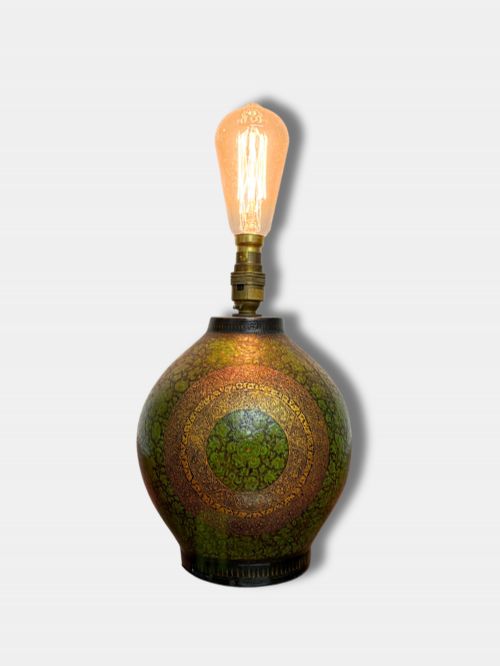
Makers utilised wood, carved wood, and papier-mache as the primary foundational materials for these bodies, often applying lacquer over the surface. The technique relies on skilled hand-painting to build up detailed patterns in gilt gold, green, cream, and other pigments.
Brass components frequently appear in the mountings and lamp holders, providing structural stability and contrast to the lacquered surfaces. Some pieces are paired with fabric elements, completing the construction for domestic lighting use.
Kashmiri Lacquer Lamp Retail Price Guide 2026
Typical asking prices for kashmiri lacquer lamp among the pieces listed under this phrase on Sellingantiques today, from the lower quarter to the upper quarter. They describe what is for sale here now, not the wider market.
Some tall twist table lamps manage to look surprisingly lively, as though caught mid-dance while illuminating the room.
What varies in quality
The sophistication of the hand-painted decoration determines much of the visual appeal, with finer lines and more complex colour palettes distinguishing superior examples. The crispness of carved details on wooden bases and twist columns also marks the distinction between standard production and finer craftsmanship.
Condition plays a significant role in the overall integrity of the piece, particularly regarding the preservation of the delicate lacquered finish and painted surfaces over the decades. The presence of original materials alongside modern rewiring efforts balances historical preservation with practical domestic utility.
The Kashmiri Lacquer Lamp Glossary
- Papier-mache
- A composite material made from paper pulp or reinforced paper sheets, moulded and dried before being lacquered and painted.
- Anglo-Indian
- A style reflecting the aesthetic exchange between British taste and Indian craftsmanship during the colonial period.
- Twist column
- A structural wooden form carved into a spiral twist shape, frequently utilised for tall table lamp bodies.
- Gilt gold
- A decorative application of gold leaf or gilt paint used to highlight intricate patterns against a coloured lacquer background.
Kashmiri Lacquer Lamp: Frequently Asked Questions
What periods do these lamps come from?
The pieces span from the nineteenth century through the early twentieth century, with many examples dated around the 1920s and 1930s.
Earlier nineteenth-century items also appear, alongside pieces created around 1900 and 1880, showing consistent regional craftsmanship over several decades.
Are these lamps safe to use today?
Many antique examples have been rewired to meet modern standards, ensuring they function safely as table lamps in a contemporary home.
Checking the wiring details in individual listings helps confirm whether a piece has been updated for modern electrical use.
What materials are used to make them?
The bodies are typically constructed from wood, carved wood, or papier-mache, finished with a durable lacquer coating.
Brass and fabric components also feature prominently in the construction of the lamp holders and overall presentation.
How do I identify Kashmiri folk art styles?
These styles are characterised by distinctive hand-painted motifs, often featuring vibrant colour combinations such as gilt gold and green or cream.
The integration of traditional regional patterns defines the aesthetic of both the lamps and related candlesticks.