



Kangxi Dynasty Vases
These kangxi dynasty vases and vessels bring seventeenth and eighteenth century kiln mastery directly to your room.
Kangxi Dynasty Vases
When you search for kangxi dynasty vases, you encounter ceramics spanning actual seventeenth and eighteenth century imperial production alongside later nineteenth century revivals. The objects range from covered jars and yen-yen shapes to brush pots and gu-shaped beaker vases, capturing the shift in Chinese export and domestic ceramics.
The version you are most likely to meet on this page is the nineteenth century interpretation, often bearing apocryphal marks to the base and executed in cobalt blue and white porcelain. These pieces reference the earlier aesthetics of the Qing Dynasty, combining traditional floral or figural motifs with the manufacturing methods of later decades.
Authentic period examples from the late seventeenth and early eighteenth century appear alongside pieces made during the Regency era and the late nineteenth century. Each form, whether a double gourd vessel or a square famille verte vase with taotie rings, reflects the enduring influence of the Kangxi aesthetic across multiple periods.
How they were made
The primary material underpinning these vessels is porcelain, shaped into forms like ovid jars, bottle vases, and cylindrical brush holders. Artisans applied cobalt blue underglaze to the ceramic body before firing, achieving the characteristic tonal depth seen in the blue and white pieces.
Overglaze enamel appears on select decorative vessels, introducing polychrome palettes such as the famille verte style alongside the dominant cobalt glaze. Potters utilised precise throwing and moulding techniques to create structured profiles, from flared yen-yen mouths to faceted square bodies.
Kangxi Dynasty Vases Retail Price Guide 2026
Typical asking prices for kangxi dynasty vases among the pieces listed under this phrase on Sellingantiques today, from the lower quarter to the upper quarter. They describe what is for sale here now, not the wider market.
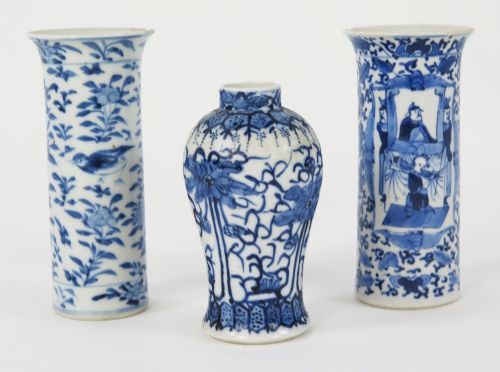
Cranes stride across porcelain bottles while figural ladies gaze out from nineteenth-century jars, bringing centuries of quiet company to your shelf.
What varies in quality
The clarity and depth of the cobalt underglaze set the finer vessels apart from standard production, showing controlled brushwork rather than flat, uniform washes. Superior pieces exhibit crisp definition in motifs like figural ladies and cranes, where the pigment interacts cleanly with the porcelain body and transparent glaze.
The execution of the form itself determines the standing of an object, with well-balanced proportions in shapes like the gu beaker or double gourd vase indicating careful potting. Period accuracy in style and the crispness of moulded details, such as taotie rings on square vases, distinguish ambitious interpretations from simpler commercial wares.
The Kangxi Dynasty Vases Glossary
- Cobalt Underglaze
- Pigment applied to the unglazed ceramic body before the application of a clear glaze and high-temperature firing. This technique protects the blue decoration from wear over centuries.
- Famille Verte
- A palette of overglaze enamels dominated by green, used alongside other colours to create vibrant pictorial designs on porcelain. It translates from French as green family.
- Gu
- An archaic-style ritual beaker form with a flaring mouth, constricted centre, and splayed foot, adapted in later porcelain production. These vessels were often used for display or as flower holders.
- Yen-Yen
- A large trumpet-necked vase form with an expansive flared mouth and a baluster body, typical of seventeenth-century production. The shape is also known as fengweizun or phoenix-tail beaker.
- Bitong
- A cylindrical brush pot used on a scholar's desk for holding writing implements. These ceramic or porcelain containers often feature carved or painted landscape and figural scenes.
Kangxi Dynasty Vases: Frequently Asked Questions
What is a yen-yen vase?
A yen-yen vase is a distinct vessel shape featuring a wide, trumpet-like mouth, a central baluster section, and a splayed base. It gained popularity during the seventeenth century for large-scale floral and narrative decoration.
The form derives from ancient bronze rituals but found new life in porcelain kilns, where the generous surface area allowed painters to display elaborate landscape and figurative scenes.
How do I spot a later copy?
Later copies often reveal themselves through mechanical brushwork in the cobalt underglaze and a lighter, more modern feel to the porcelain body. Nineteenth-century makers frequently reproduced earlier styles and applied period marks to honour the original aesthetic rather than to deceive.
Examining the footrim and the interaction between the glaze and the clay helps distinguish nineteenth-century revival pieces from seventeenth-century originals.
What are four character marks?
Four character marks on the base of these ceramics typically indicate a reign period or a commendation mark wishing good fortune. They serve as historical references rather than absolute guarantees of manufacturing date.
Many nineteenth-century pieces bear Kangxi marks to pay homage to the high quality of earlier imperial kilns, making the style and material essential corroborating evidence.
Where were brush pots used?
Brush pots, or bitong, were essential items on the desk of a scholar or literati member in traditional China. They held ink brushes upright to dry and keep the bristles from damage.
These cylindrical vessels became canvases for delicate blue and white painting or carved porcelain designs, reflecting the refined tastes of their owners.