

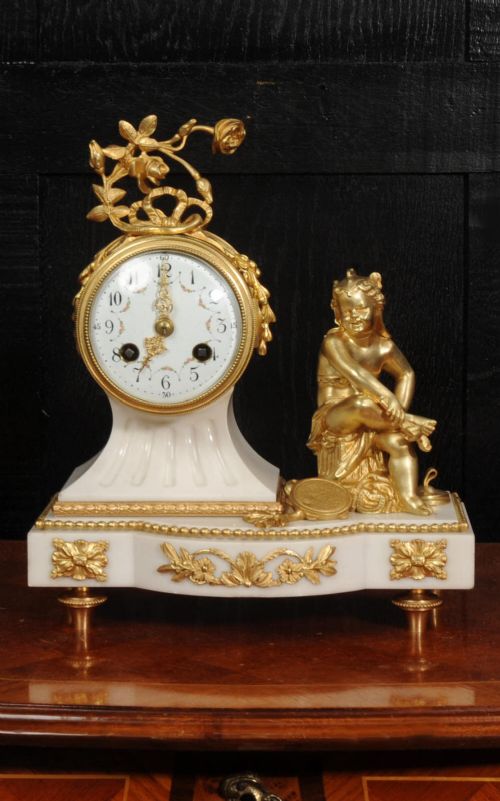


Japy Clock
These japy clock examples are nineteenth-century French timepieces driven by reliable movements, bringing classical elegance and fine metalwork to any mantelpiece.
Japy Clock
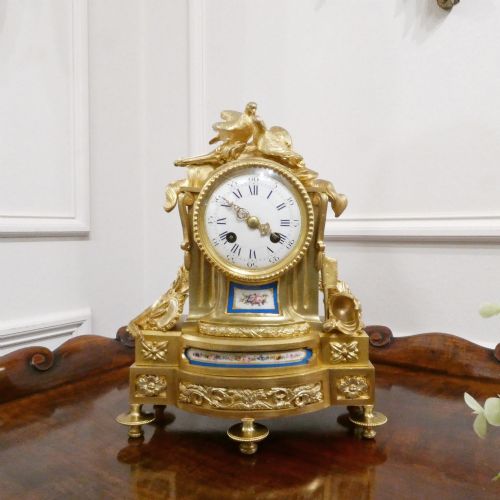
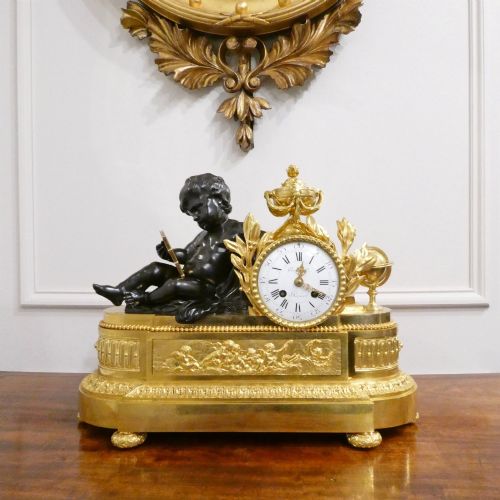
A japy clock is a nineteenth-century French timepiece typically encountered as a mantel clock or clock garniture set. These clocks frequently span the Second Empire and Louis XVI revival styles, combining substantial architectural forms with decorative metalwork.
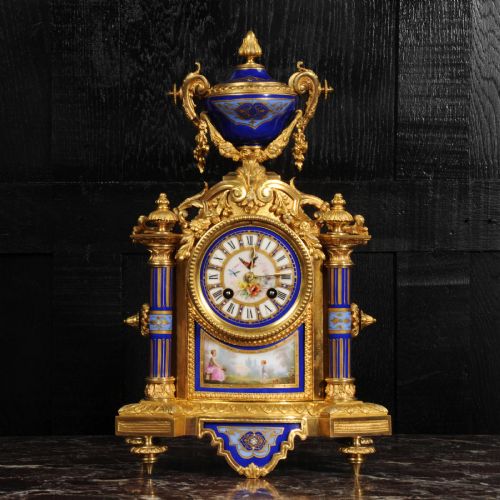
The most common versions on this page are mantel clocks featuring gilt bronze, ormolu, and porcelain panels. Many examples incorporate classical architectural motifs and figural elements rooted in French design traditions from the eighteen-sixties onwards.
How they were made
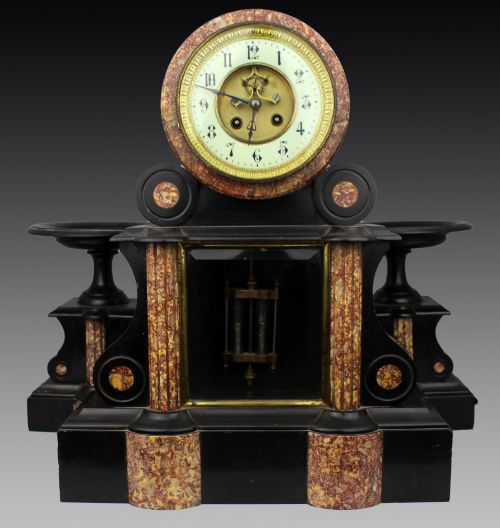
Maker workshops constructed these timepieces using cast gilt bronze, ormolu, and heavy black slate or variegated marble bases. Movements were paired with enamelled dials and painted porcelain elements, often in the Sèvres style.
Metal components underwent precision casting and fire gilding or ormolu treatment to achieve a durable, lustrous finish. Enamel dials were kiln-fired and hand-painted with numerals, then housed behind glazed bezels.
Japy Clock Retail Price Guide 2026
Typical asking prices for japy clock among the pieces listed under this phrase on Sellingantiques today, from the lower quarter to the upper quarter. They describe what is for sale here now, not the wider market.
Gold medal awards proudly stamped on nineteenth-century movements prove that industrial clockmakers loved a bit of bragging hardware.
What varies in quality
The sophistication of the bronze casting and the crispness of the chased detail separate standard production from finer work. Superior examples display deeply undercut ornamentation, clean gilding, and finely painted porcelain plaques without fading.
Movement execution and the integration of the garniture components also dictate the grade of the piece. High-grade items feature well-finished mechanisms paired with matching side urns or candelabra executed in harmonious materials.
Japy Freres·Japy Fils
The Japy Clock Glossary
- Ormolu
- Gilded bronze produced by applying a mercury and gold amalgam to a bronze base and heating it until the mercury vaporised. This technique created a durable, rich golden surface characteristic of fine French decorative arts.
- Clock garniture
- A set comprising a central clock accompanied by matching decorative side pieces such as urns or candelabra. These matched suites were designed to create a balanced display across a mantelpiece.
- Gilt bronze
- Metal cast in bronze and subsequently coated with a layer of gold leaf or a gold wash. It provides the bright metallic finish seen on many nineteenth-century French clock cases.
- Black slate
- A dense, dark stone frequently used for nineteenth-century clock bases and architectural cases. It offered a heavy, stable foundation that contrasted sharply with bright ormolu mounts.
Japy Clock: Frequently Asked Questions
How do I wind a japy clock?
Use the appropriate key on the winding squares located on the dial face, turning gently until resistance is felt. Take care not to overwind the mainspring.
Ensure you follow the specific instructions for striking or time-only trains depending on the movement layout of your particular clock.
Where should I place a clock garniture?
Position the main clock centrally on a sturdy mantelpiece or console table, placing the matching side pieces symmetrically on either side. Ensure the supporting surface is level and capable of bearing the heavy marble or bronze weight.
Keep the set away from direct heat sources and strong sunlight to protect the gilding and enamel dials from damage.
How do I identify a Louis XVI style clock?
Look for symmetrical architectural lines, classical urn motifs, ribbon bows, and straight tapered legs rather than the asymmetrical scrolls of earlier periods. These pieces often incorporate gilt bronze mounts alongside white enamel dials.
Design elements typically reference ancient Greek and Roman architecture, reflecting the neoclassical revival tastes of nineteenth-century France.
What maintenance do these movements need?
Periodic professional servicing is recommended to clean old oils and check the suspension spring and escapement. Regular dusting with a soft, dry cloth helps preserve the metal surfaces.
Avoid using liquid cleaners or polishes on gilt bronze or ormolu, as abrasive substances can strip the fine gold finish.