




Japanning Chair
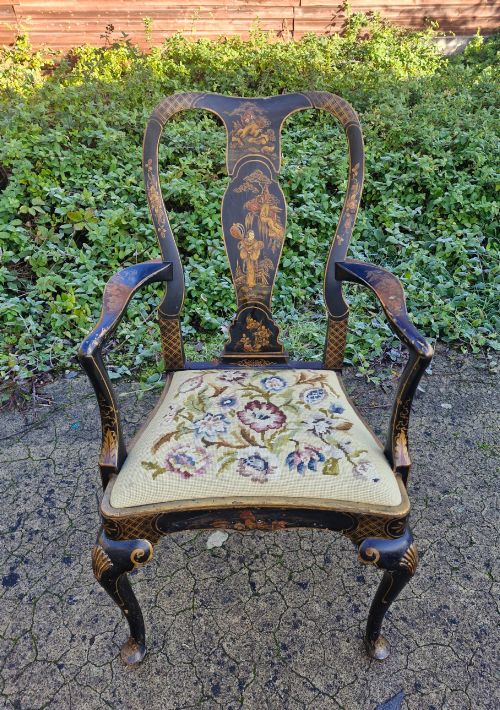
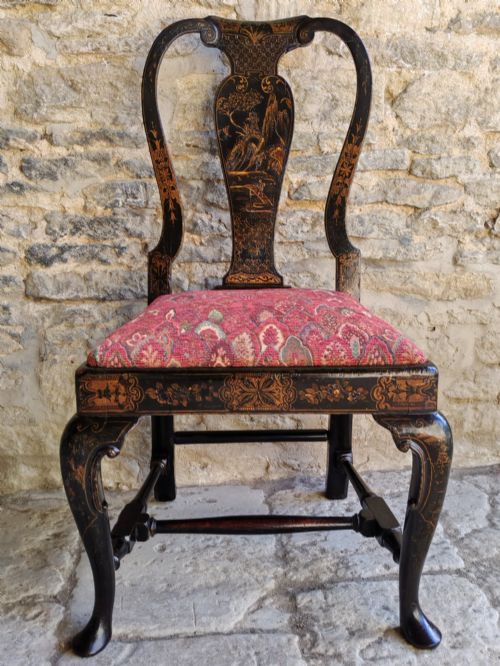
A japanning chair brings Orientalist raised lacquer and gilt decoration into the British interior, offering an ornate focal point that draws the eye in any room.
Japanning Chair
When you search for a japanning chair, you encounter seating finished in European lacquerwork imitating Asian exports, spanning periods from seventeen hundred through the Victorian era and into the early twentieth century.
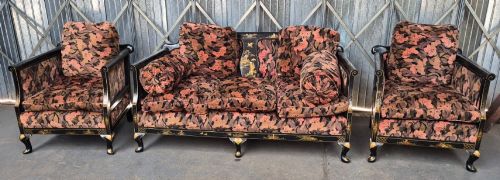
The selections here comprise diverse forms including side chairs, dining chairs, rocking chairs, armchairs, and complete three piece suites alongside matching bedroom furniture.
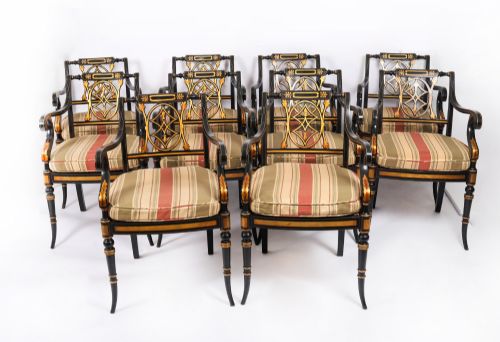
You are most likely to meet Edwardian Chinoiserie examples and Regency Revival interpretations alongside eighteenth century Dutch lacquered pieces and Victorian painted seating.
Materials and construction
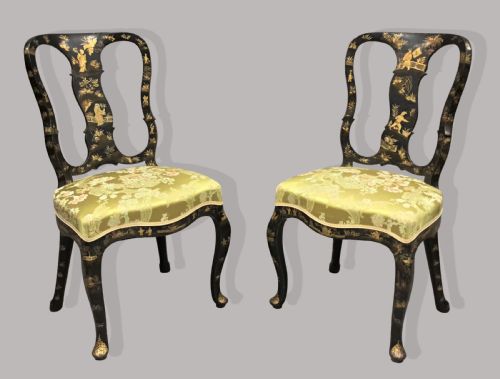
These pieces utilise wood as a base material, often shaped into solid frames, pierced splat backs, or faux bamboo structures ready to receive decorative finishes.
Surface treatment relies upon lacquer, paint, and gilt, building up layered Orientalist motifs in black, red, or neutral grounds enhanced by parcel gilt highlights and fabric upholstery.
Japanning Chair Retail Price Guide 2026
Typical asking prices for japanning chair among the pieces listed under this phrase on Sellingantiques today, from the lower quarter to the upper quarter. They describe what is for sale here now, not the wider market.
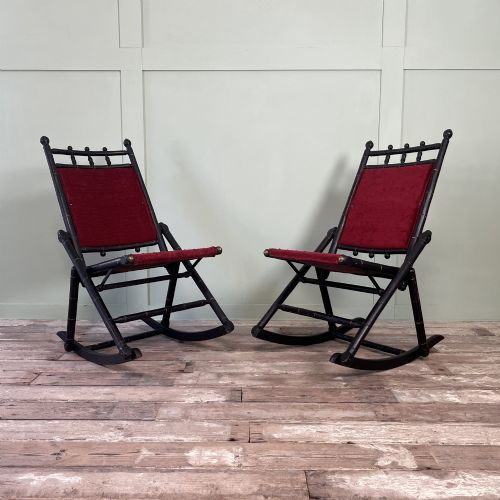
A folding rocking chair finished in faux bamboo brings unexpected Victorian leisure to traditional Orientalist lacquerwork.
Distinctions in quality
The standard of a japanning chair rests in the crispness and survival of its gilt decoration and lacquered surface, where finer examples retain intricate detail across the woodwork.
Construction integrity distinguishes simpler utility items from superior seating such as Regency Revival pierced splat back dining chairs or early eighteenth century forms.
The Japanning Chair Glossary
- Japanning
- European imitation of East Asian lacquerwork, created by building up resin layers and metallic dust on wooden furniture. This finish produces a glossy, dark surface often decorated with raised motifs.
- Chinoiserie
- European artistic style reflecting Chinese and East Asian motifs, prominent in decorative arts and furniture design. It incorporates whimsical landscapes, figures, and pavilions into Western forms.
- Splatted Back
- A chair back featuring a central vertical wooden slat, often pierced or shaped for decorative effect. This structural component provides both support and visual interest.
Japanning Chair: Frequently Asked Questions
What periods do these chairs date from?
The inventory spans from the early eighteenth century through Victorian interpretations up to Edwardian revivals and the twentieth century.
Early pieces show seventeenth and eighteenth century origins, while later examples demonstrate revivalist interest around nineteen hundred and nineteen ten.
How do I identify a japanning chair?
Look for dark lacquered wood surfaces decorated with gilt motifs inspired by East Asian art.
These chairs often feature black or painted wood grounds with raised metallic decoration depicting figures, pagodas, or floral scenes.
Where were these chairs used historically?
They served as principal seating in formal parlours, dining rooms, and bedrooms where fashionable decoration mattered.
Matching suites and side chairs allowed homeowners to coordinate sophisticated Orientalist schemes across domestic interiors.
Are these chairs suitable for daily use?
Many examples function well for gentle seating, though older fragile pieces require careful placement.
Upholstered suites and sturdy dining chairs handle normal sitting, while delicate antique surfaces benefit from protection against heavy wear.