


Japanned Bamboo Stand
These japanned bamboo stand examples bring lightweight utility and striking black-and-gold decoration to any interior.
Japanned Bamboo Stand
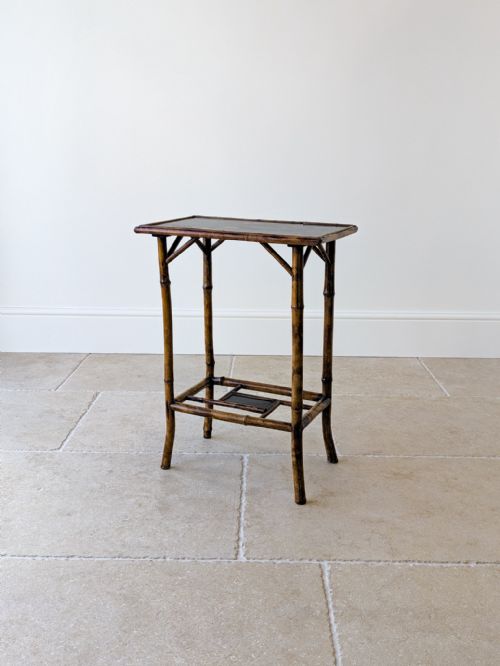
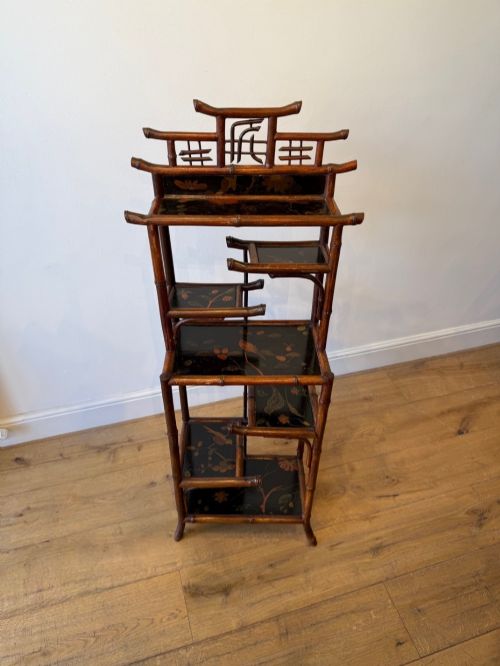
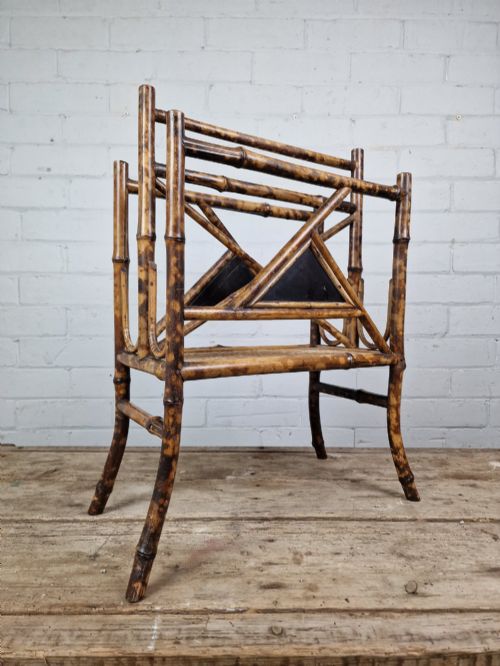
When you search for a japanned bamboo stand, you are looking at nineteenth-century furniture that combines orientalist surface decoration with natural cane frameworks. These pieces range from low occasional tables and multi-tiered display shelves to magazine racks and hall stands.
The versions you are most likely to meet on this page date from the Victorian era and the Aesthetic Movement of the 1880s and 1890s. They often incorporate lacquer panels, mirror glass, or painted surfaces within the bamboo framework.
What varies in quality
Quality rests upon the crispness of the japanned surface decoration and the structural integrity of the bamboo joints. Pieces featuring detailed hand-painted scenes on their lacquer panels sit at the upper end of the scale compared to plain variants.
The complexity of the form also dictates the standard, with multi-tiered display shelves, integrated magazine racks, and larger hall stands demanding greater joinery skill than simple side tables.
Listings for a japanned bamboo stand span the Victorian period, the 1880s, the 1890s, and even earlier Regency pieces.
The Japanned Bamboo Stand Glossary
- Aesthetic Movement
- A late nineteenth-century design style that valued art for art's sake and drew heavy inspiration from Japanese art and culture. This ethos heavily influenced the production of bamboo and lacquer furniture.
- Canterbury
- A low wooden or bamboo stand featuring vertical partitions, originally designed for holding sheet music or loose folios. In nineteenth-century interiors, these evolved to serve as convenient magazine racks.
- Tole
- Painted or lacquered sheet metal, typically iron, used for decorative trays and vessels. A tole tray on a stand often serves as an occasional table.
Japanned Bamboo Stand: Frequently Asked Questions
What is a japanned bamboo stand?
It is a piece of nineteenth-century furniture built from natural cane and finished with dark, glossy lacquer decoration.
These items were popular during the Victorian Aesthetic Movement and include side tables, display shelves, and magazine racks.
How do I clean japanned bamboo?
Dust the bamboo gently with a dry microfiber cloth to prevent dirt from settling in the natural joints and crevices.
Avoid using harsh chemical polishes or excessive water, which can damage the delicate lacquered surfaces.
Are these stands sturdy enough for daily use?
Most pieces are surprisingly robust for their light weight, but they are designed for moderate domestic tasks rather than heavy loads.
Positioning them away from direct heat sources and heavy dampness will keep the bamboo and lacquer stable.
How do I identify Aesthetic Movement bamboo pieces?
Look for dark japanned finishes, hand-painted details, and structural combinations of cane, lacquer, and occasionally mirror glass.
These characteristics typically point to late nineteenth-century British production inspired by Japanese design.