


Japanese Table Cabinet
These Japanese table cabinets bring intricate Meiji period lacquerwork and parquetry directly to your tabletop, offering compact storage with extraordinary visual depth.
Japanese Table Cabinet
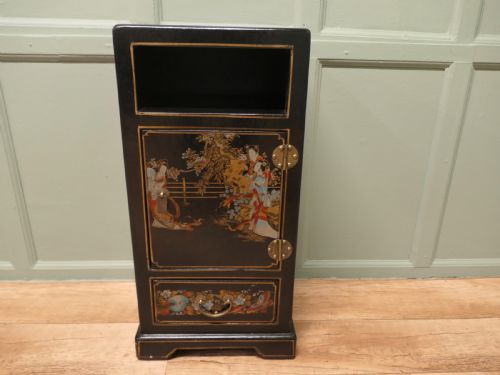
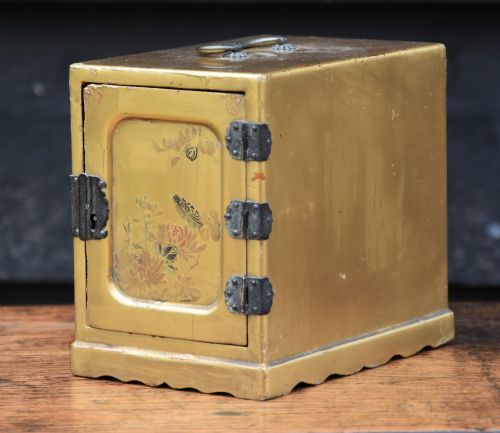
A Japanese table cabinet sits on a larger surface, providing small drawers, cupboards, and compartments for precious items. These pieces frequently date from the nineteenth century, including the Meiji period, alongside early twentieth-century examples.
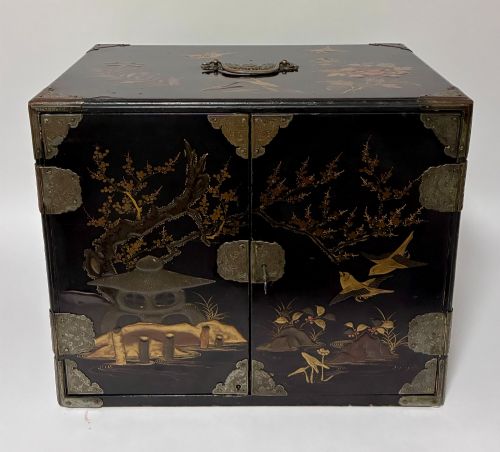
The evidence shows various forms, from traditional kodansu and shodana cabinets to side cabinets and jewellery boxes. Lacquered wood and hardwood dominate the selection, often enriched with brass, bronze, and gold leaf.
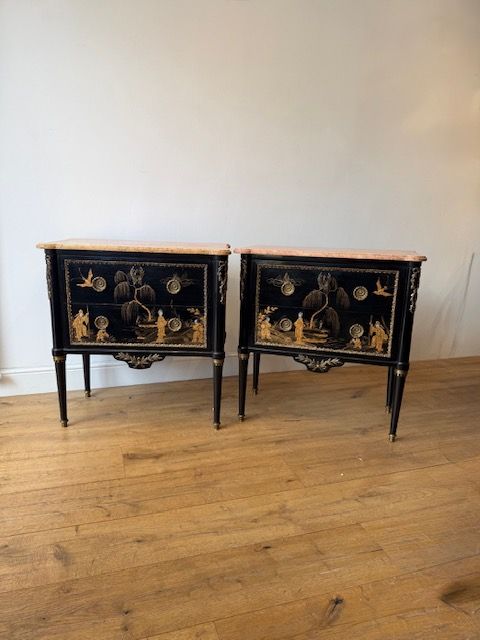
Makers and designers working in European aesthetic movements also drew inspiration from these imports, creating Anglo-Japanese and Chinoiserie interpretations. You will encounter both authentic imported pieces and Western pieces shaped by Japanese design principles.
Materials and Technique
Wood serves as the core structure, utilising both native hardwoods and softer timbers finished with multiple coats of black, red, or gilt lacquer. Artisans applied gold leaf and intricate metallic powder techniques to build up layered pictorial scenes on the surface.
Parquetry construction demonstrates precise woodworking, assembling small geometric wood tiles into complex mosaic patterns. Metal elements such as brass mounts, hinges, and bronze animal decorations provide structural reinforcement and decorative contrast.
Listings span the nineteenth and early twentieth centuries, featuring materials such as brass, bronze, cinnabar lacquer, and hardwood alongside traditional black lacquer.
Judging Quality
Quality rests on the depth of the lacquerwork and the precision of the parquetry. Superior examples display crisp detail in gold leaf and securely fitted miniature drawers that move smoothly within their housings.
The complexity of the internal arrangement and the integration of specialised elements like Shibayama inlay or bronze mounts elevate certain pieces above standard production models. Materials like hardwood and cinnabar lacquer indicate ambitious workshop output.
Gabriel Viardot·E W Godwin
The Japanese Table Cabinet Glossary
- Kodansu
- A small Japanese portable chest of drawers traditionally used for holding documents, seals, or personal valuables. These miniature cabinets feature multiple internal tiers and delicate hardware.
- Shodana
- A type of Japanese display cabinet featuring asymmetrical shelving and small cupboards designed for ornamental objects. They reflect the refined taste of Japanese interior arrangement.
- Shibayama
- A decorative technique utilising inlaid pieces of ivory, shell, and coral to create raised pictorial motifs. Artisans set these materials into a lacquer or wood ground.
- Parquetry
- A geometric mosaic of wood strips fitted together to create patterned surfaces on furniture. Cabinetmakers use contrasting timber tones to build up the design without paint.
- Meiji Period
- The era of Japanese history lasting from 1868 to 1912, characterised by the opening of trade with the West. Cabinets from this period often combine traditional craftsmanship with export-oriented design.
Japanese Table Cabinet: Frequently Asked Questions
What were Japanese table cabinets used for?
These cabinets served as desktop storage for letters, writing instruments, and personal valuables like jewellery. Their small scale allowed owners to keep prized possessions close at hand in domestic spaces.
They also functioned as display pieces for small curiosities, reflecting the Victorian and Edwardian fascination with exotic imported goods. The internal compartments provided secure organisation for delicate items.
How do I identify a Meiji period piece?
Meiji period pieces typically date between 1868 and 1912, often featuring dense black or red lacquer combined with gold leaf decoration. Look for fine pictorial scenes depicting landscapes, flora, and fauna.
Parquetry construction and metal mounts are also common markers of this export era. Many retain subtle signatures or brass hardware characteristic of nineteenth-century Japanese workshops.
Are Western copies considered authentic?
Western interpretations from the Aesthetic Movement or Anglo-Japanese style are distinct from Japanese imports but represent a valid collecting category. Makers like Gabriel Viardot and E W Godwin adapted these Eastern motifs for European interiors.
Examining the construction methods and timber choices helps differentiate a British or French cabinet from an Edo or Meiji period import. Both styles reflect the strong global exchange of design during the late nineteenth century.
How should I care for lacquered wood?
Keep lacquered surfaces away from direct sunlight and steady heat sources to prevent the finish from drying out or cracking. Dust gently with a soft, dry cloth without applying modern chemical polishes.
Maintaining stable room humidity preserves both the wood substrate and the delicate lacquer layers. Avoid placing damp items directly onto the polished cabinet tops.