


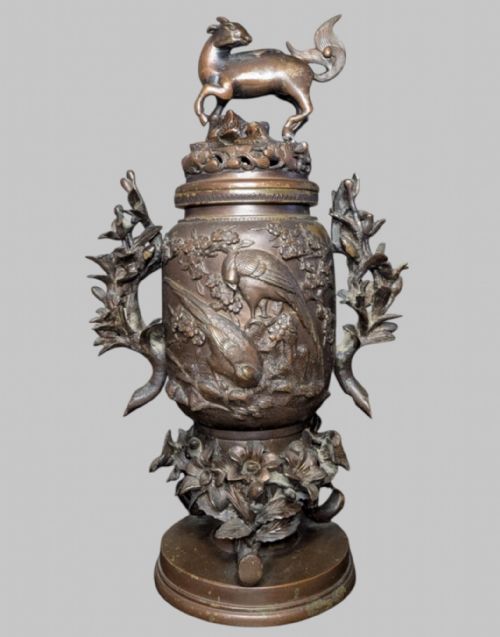


Japanese Relief Carved Bronze
Japanese relief carved bronze pieces bring intricate cast metalwork into a room, offering tactile depth and historic metalcraft from the Meiji and Edo periods.
Japanese Relief Carved Bronze
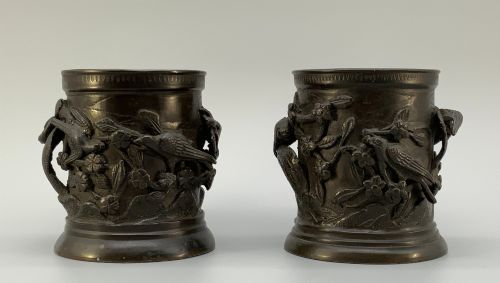
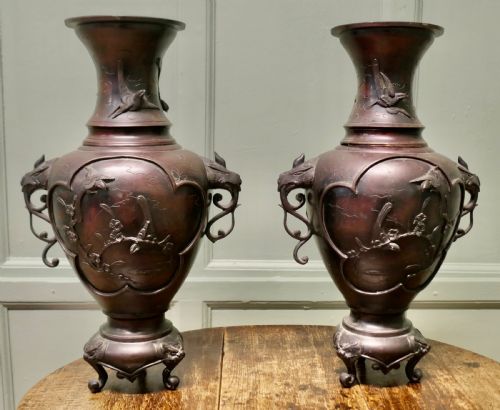
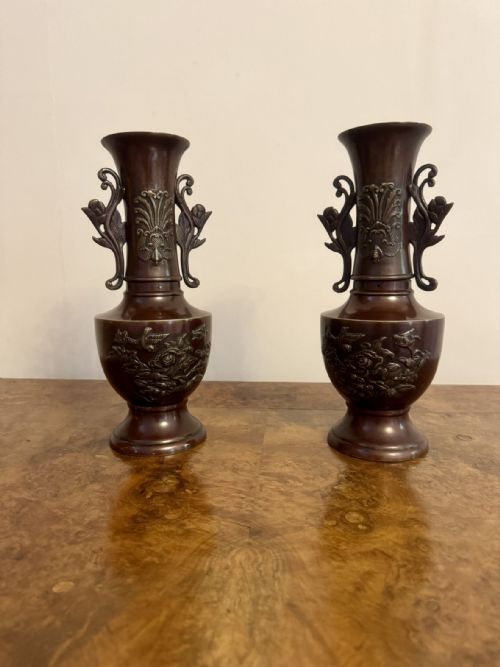
Japanese relief carved bronze objects encompass a range of decorative metalwork, with vases and jardinières forming the most common encounters on this page. These pieces date predominantly from the nineteenth century and the Meiji period, reflecting the decorative arts of Japanese metalworkers during that era.
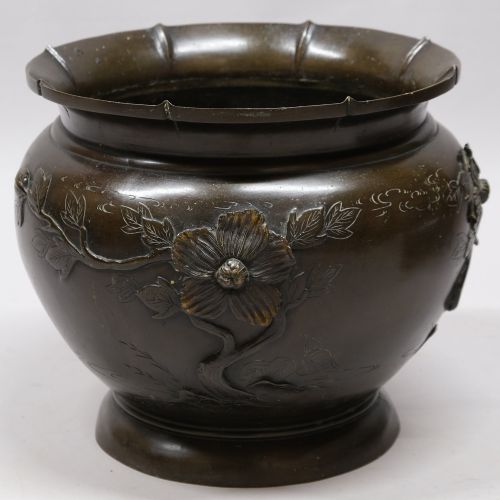
Buyers will also find table lamps, incense burners, and kettles alongside the standard baluster vases and large planters. The forms draw on traditional motifs such as birds, blossom, dragons, and figures, rendered in high relief upon cast metal bodies.
Originating largely from the Edo and Meiji periods, these items span from smaller stem vases up to very large presentation vessels and garden planters. The selection represents the varied output exported during the opening of Japanese trade in the late Victorian age.
Methods and Materials
Makers utilised bronze as the primary structural material, often applying patinated finishes to achieve dark brown, green, or metallic surface tones. Certain pieces incorporate gold gilding or enamel highlights to accentuate specific motifs within the cast designs.
Relief decoration was achieved through skilful casting and subsequent chiselling or carving of the bronze surface, allowing complex details like dragon scales or feathers to stand proud. Individual items might also combine brass, iron, or steel components, particularly in functional objects like kettles and tsuba.
Materials documented across the available inventory include patinated bronze, cast iron, brass, steel, and gold gilding applied to decorative vessels.
Measures of Quality
Quality rests upon the crispness of the cast relief and the depth of the chisel work applied to the metal surface. Finer examples display meticulous attention to anatomical details in animals and natural textures in foliage.
The sophistication of the bronze patina and the presence of artist signatures or specific workshop attributions distinguish exceptional pieces from standard decorative wares. Balanced proportions and heavy, solid casting further separate the superior items.
Kibundo·Genryusai Seiya
The Japanese Relief Carved Bronze Glossary
- Meiji Period
- The era in Japanese history spanning from 1868 to 1912, noted for a surge in metalwork production destined for international markets. This period accounts for the majority of decorative bronze vases and jardinières seen today.
- Jardiniere
- A large ornamental pot or bowl designed to hold plants or flowers. In bronze, these heavy planters often feature raised dragon or floral motifs around the exterior body.
- Koro
- A traditional Japanese incense burner, typically featuring a fitted lid and standing on small feet or supports. These vessels frequently incorporate animal finials such as goats.
- Tsuba
- A guard at the end of the grip of a Japanese sword, often fashioned from bronze or iron with intricate high relief carving. They represent miniature works of metal art.
- Patinated Bronze
- Metal treated with chemical solutions or heat to alter its surface colour and appearance. This process creates stable tones ranging from deep chocolate brown to mottled green.
Japanese Relief Carved Bronze: Frequently Asked Questions
How do I identify a Meiji period bronze?
Meiji period bronzes are typically identified by their association with the 1868 to 1912 timeframe, combined with characteristic manufacturing techniques of the era. The presence of naturalistic motifs, patinated finishes, and occasionally artist signatures point directly to this period of Japanese metalworking.
Many pieces were created specifically for export following the opening of trade, displaying a high standard of sculptural relief. Comparing the weight, casting clarity, and decorative style helps separate them from later reproductions.
What was a bronze jardiniere used for?
A bronze jardiniere functioned as a decorative indoor planter or bowl, designed to hold potted plants or floral arrangements within a home. Their heavy metal construction provided stability for large displays in nineteenth-century interiors.
Beyond utilitarian planting, these large vessels served as prominent decorative centerpieces in an entrance hall or drawing room. Their elaborate relief carvings allowed them to function as sculptural art even when empty.
How should I clean antique bronze?
Antique bronze should be dusted gently with a soft, dry cloth to prevent the accumulation of dirt within the recessed relief carving. Avoid using harsh chemical polishes or abrasive cleaners, which can strip away the original historical patina.
If the metal requires more attention, a light application of microcrystalline wax can help protect the surface and enhance the colour. Professional conservation is recommended if active corrosion or structural damage appears.
Are these bronzes solid or hollow?
Japanese decorative bronzes of this period were produced using traditional casting methods that resulted in hollow interiors with varying wall thicknesses. This technique kept the weight manageable for vessels like large vases and incense burners while maintaining structural integrity.
Despite being hollow, quality pieces possess a substantial and reassuring heft due to the density of the bronze alloy used. The base often reveals the inner casting texture or core material.