





Japanese Carved Desk
A Japanese carved desk brings intricate Meiji craftsmanship and dense hardwood into a study, offering a distinctive anchor for writing.
Japanese Carved Desk
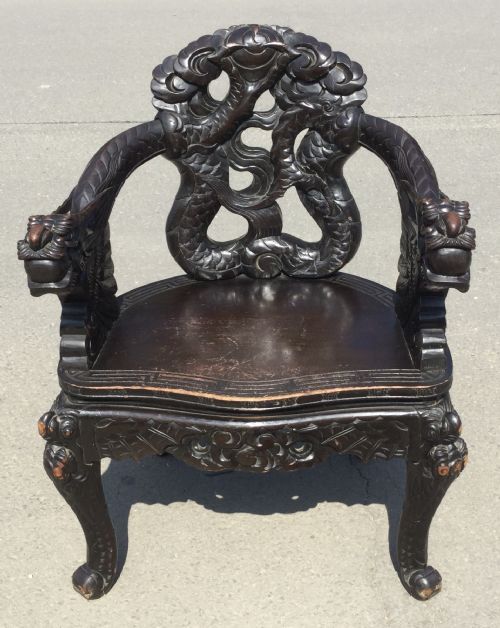
A Japanese carved desk is a functional writing surface defined by deep relief carving in dense hardwoods, frequently emerging from the Meiji period and the later nineteenth century. These pieces combine traditional cabinet-making with elaborate ornamentation, showcasing motifs derived from nature and folklore.
Buyers encountering this selection will find writing tables and cylinder desks alongside related hardwood forms bearing distinct Anglo-Japanese or Aesthetic Movement influences. The materials span traditional timber to sophisticated marquetry techniques such as yosegi.
Originating largely from the late nineteenth and early twentieth centuries, these writing furniture items reflect the heavy cross-cultural exchange between British retail firms and Japanese artisans. They serve as both practical writing stations and dense decorative statements.
Materials and Construction
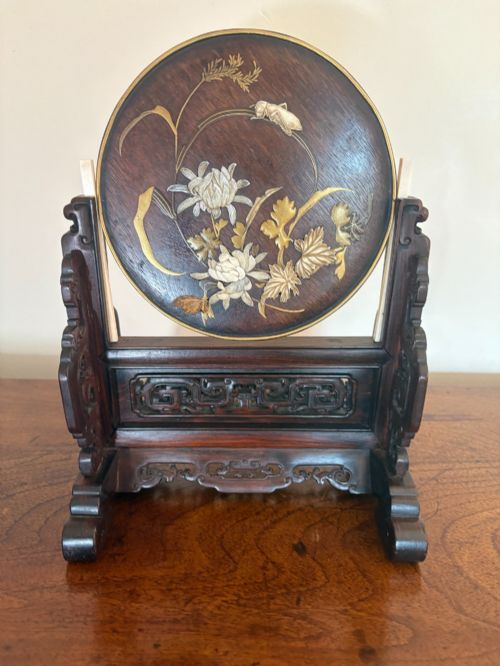
These desks rely on heavy hardwoods, selected for their stability and capacity to hold crisp, deep-relief carving without splintering. Artisans utilised contrasting organic elements like bone and mother-of-pearl inlay to highlight specific details within the wooden panels.
Joinery methods combined traditional framing with applied carved elements, creating robust structures capable of supporting intricate surface decoration. Specialist techniques such as yosegi geometric parquetry were also employed on select cylinder surfaces to demonstrate technical mastery.
Japanese Carved Desk Retail Price Guide 2026
Typical asking prices for japanese carved desk among the pieces listed under this phrase on Sellingantiques today, from the lower quarter to the upper quarter. They describe what is for sale here now, not the wider market.
Several makers hid monkeys stealing the moon within their intricate carvings, ensuring a playful narrative waits inside the study.
Judging Quality and Execution
The distinction between standard commercial output and superior craftsmanship lies in the depth and undercut of the carving. Lesser examples present shallow, machine-assisted stamping, whereas finer pieces exhibit sharp, hand-tooled relief where every feather, leaf, and facial expression retains distinct definition.
Material selection further separates the tiers of production, particularly in the precision of the parquetry and the integration of delicate inlays. Desks retaining tight, seamless joints and unblemished inlay work demonstrate superior workshop standards from the period.
Blyth and Son·Liberty
The Japanese Carved Desk Glossary
- Meiji Period
- The era in Japanese history spanning from 1868 to 1912, characterised by rapid modernisation and an explosion of decorative arts destined for export. Pieces from this time often display exceptional naturalistic carving.
- Yosegi
- A traditional Japanese wood mosaic technique using various natural wood species to create complex geometric patterns. It appears on superior cylinder desks and tabletop surfaces.
- Aesthetic Movement
- A late nineteenth-century British design movement that promoted art for art's sake and heavily incorporated Japanese motifs into domestic furniture. This style often bridged European form with Eastern ornamentation.
- Shibayama
- A decorative technique involving the inlay of precious materials like mother-of-pearl, ivory, and tortoiseshell into a lacquered or wooden ground. It creates a colourful, slightly raised pictorial surface.
- Hardwood
- Dense timber derived from broad-leaved trees, chosen for antique furniture due to its durability and dark grain. It forms the primary structural body of these desks.
Japanese Carved Desk: Frequently Asked Questions
How do I date a Japanese carved desk?
Dating relies primarily on the style of the carving, the hardware, and the construction methods used in the frame. Nineteenth-century pieces frequently align with the Meiji period or the British Aesthetic Movement.
Examine the timber species and any retailer labels attached to the underside or within the drawers. These clues help establish whether the piece is a Victorian export or a later twentieth-century interpretation.
What is yosegi work?
Yosegi is a meticulous form of wood mosaic where different natural tree varieties are glued together to form precise geometric patterns. Craftsmen then shave thin veneers from this block to adorn surfaces.
This technique requires immense patience and steady hands, making it a hallmark of higher-quality Japanese cabinet-making from the era.
How should I care for a carved hardwood desk?
Maintain a stable room humidity to prevent the dense hardwoods from shrinking or splitting along the carved grain. Keep the desk away from direct sunlight and artificial heat sources.
Dust the deep recesses regularly with a soft, dry brush to prevent dirt accumulation in the intricate carvings. Avoid modern liquid polishes that can build up in the fine grain.
Are these desks suitable for daily writing use?
Many of these pieces were built as functional writing tables or cylinder desks and remain entirely suitable for contemporary work. Their robust hardwood construction handles normal daily use without difficulty.
Consider adding a custom leather or felt blotter to protect the main writing surface from ink spills and deep scratches.