




Jacobean Style Oak Bureau
These jacobean style oak bureau pieces bring seventeenth-century gravity and practical writing space into a modern room.
Jacobean Style Oak Bureau
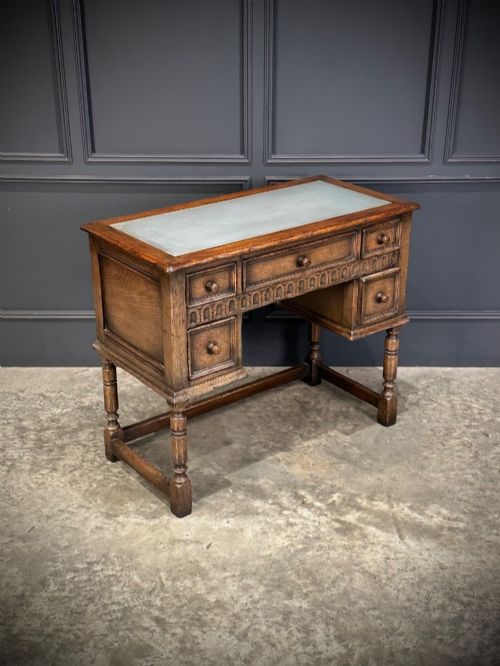
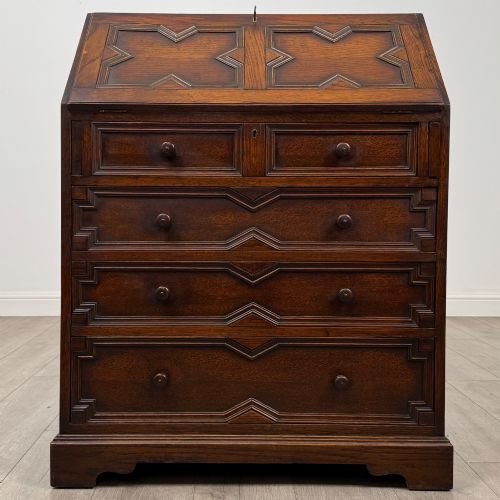
A jacobean style oak bureau combines a hinged writing flap with drawers or a bookcase upper section, following the heavy geometric forms of the seventeenth century. Most pieces you meet on this page date from the Edwardian era and the 1920s, reflecting a major revival of earlier styles alongside occasional examples from the eighteenth century.
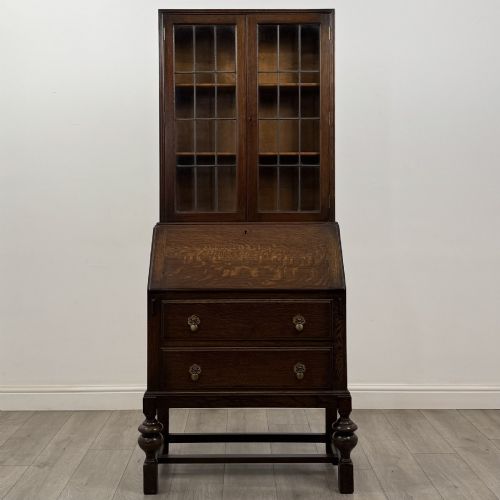
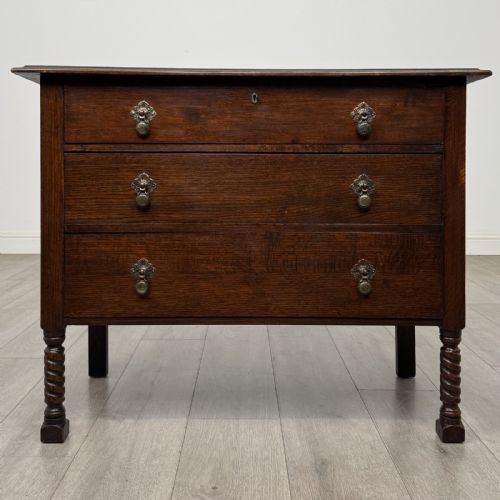
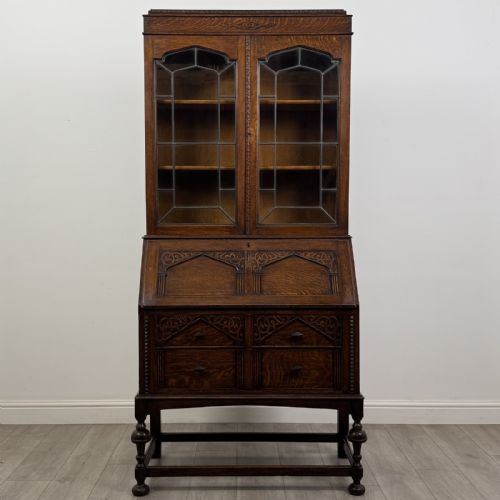
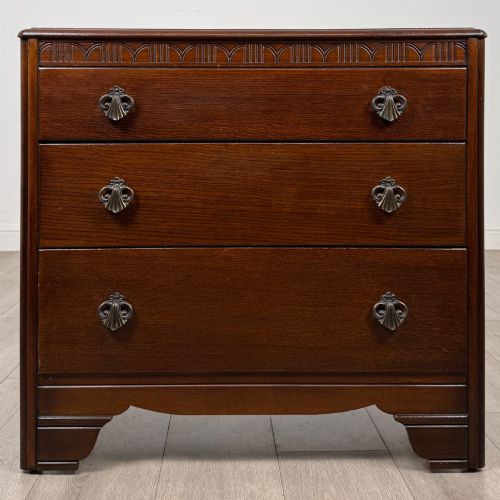
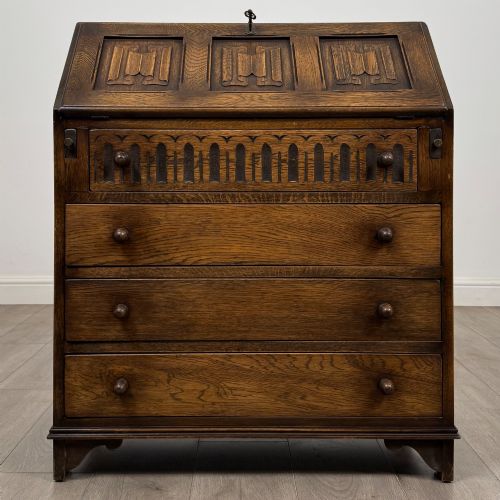
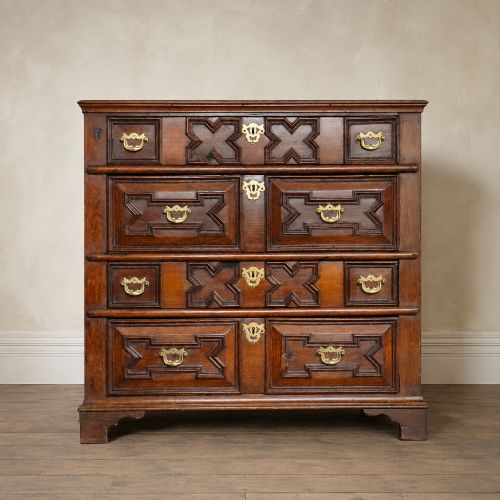
The layout ranges from simple writing desks with two drawers to towering bureau bookcases featuring glazed upper doors. While standard writing bureaux dominate the selection, related forms like geometric moulded chests of drawers and linenfold cabinets appear frequently across the listings.
Materials and construction
Solid oak provides the structural foundation for nearly every piece, often finished in dark or light tones that highlight the timber grain. Wood inlay and geometric mouldings add surface depth, while brass handles and hinges provide functional contrast against the dark wood.
Joinery relies on traditional methods suited to heavy timbers, paired with glass for glazed bookcase variants and iron or metal fittings on internal compartments. Carved panels, such as linenfold motifs, demonstrate the hand-finished details applied during the Edwardian period and the 1920s.
Jacobean Style Oak Bureau Retail Price Guide 2026
Typical asking prices for jacobean style oak bureau among the pieces listed under this phrase on Sellingantiques today, from the lower quarter to the upper quarter. They describe what is for sale here now, not the wider market.
Materials recorded across the inventory include oak, brass, glass, iron, metal, and wood inlay.
Distinctions in quality
Quality reveals itself in the crispness of the geometric mouldings and the depth of the timber carving rather than the mere presence of decoration. Pieces with balanced proportions between the lower bureau and upper bookcase sections tend to show superior cabinet-making.
The choice of timber figure and the weight of the brass hardware distinguish standard production items from finer workshop pieces. Smooth action in the drop-front writing flap and fitted interior drawers separates better-executed desks from simpler utility items.
Wylie & Lochhead
The Jacobean Style Oak Bureau Glossary
- Jacobean Revival
- A nineteenth and twentieth-century style copying the architectural and furniture designs of the early seventeenth-century reign of James I. It relies heavily on dark oak and geometric panelling.
- Bureau bookcase
- A writing cabinet featuring a sloping desk flap below a set of shelved storage shelves enclosed by doors. The upper doors often incorporate glass panes.
- Linenfold
- A style of wood carving representing folded parchment or linen, commonly used on panelled cupboard doors and bureau fronts during revival periods. It creates a textured, fabric-like surface.
- Geometric moulded
- A form of surface decoration utilising raised mouldings applied in rectilinear patterns to drawer fronts and doors. This technique originates in the seventeenth century.
- Writing bureau
- A desk featuring a hinged writing slope that folds down to reveal small drawers and pigeonholes. Below the flap sit horizontal drawers for paperwork.
Jacobean Style Oak Bureau: Frequently Asked Questions
How do I use a bureau desk?
The sloping front folds down to create a horizontal writing surface while revealing internal pigeonholes and small drawers for stationery.
Closing the flap conceals your papers and keeps the room tidy when the desk is not in use.
Are these pieces from the seventeenth century?
Most examples on this page date from the Edwardian period and the 1920s, produced during revivals of earlier seventeenth-century designs.
Earlier eighteenth-century pieces appear occasionally alongside these twentieth-century interpretations.
What is a bureau bookcase?
A bureau bookcase combines a drop-front writing desk at the base with an enclosed shelving unit on top.
These taller hybrid pieces offer both concealed workspace and display storage behind glazed or solid doors.
How do I maintain oak furniture?
Keep oak furniture away from direct heat sources and sudden temperature changes to prevent the timber from splitting.
Applying natural wax polish occasionally preserves the finish and maintains the lustre of the dark wood.