



Jacobean Style Nightstands
Jacobean style nightstands bring sturdy oak timber and historic revival character straight into the bedroom.
Jacobean Style Nightstands
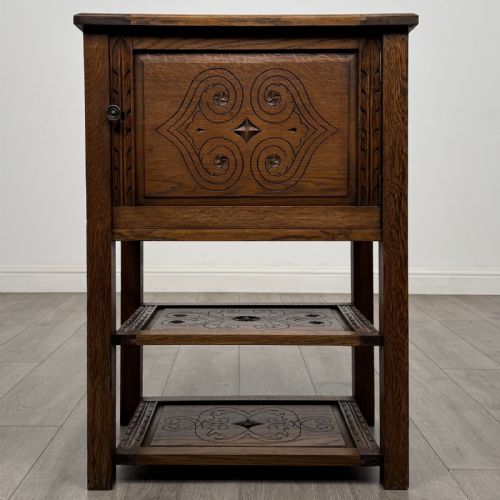
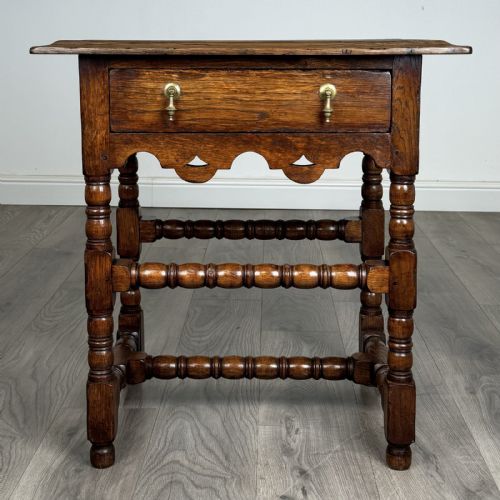
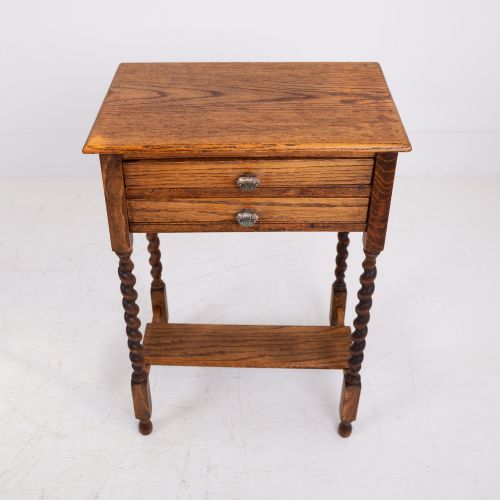
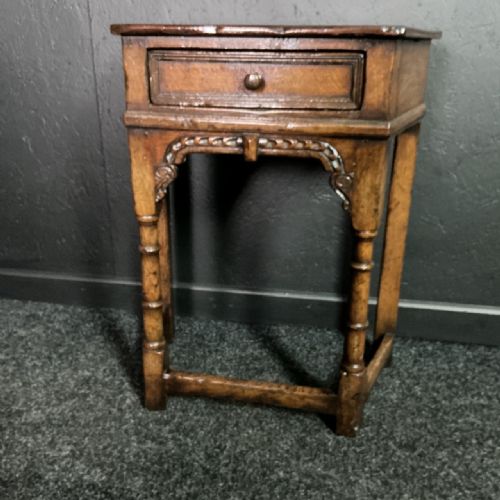
Jacobean style nightstands draw directly on early seventeenth-century English design principles, translated primarily through the revival furniture of the Edwardian era and the nineteen-twenties. Buyers seeking this look encounter compact bedside cabinets, small side tables, side cupboards, and lamp tables designed to hold a bedside lamp and nighttime essentials.
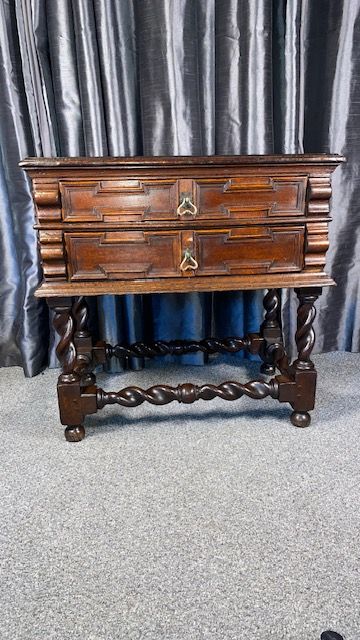
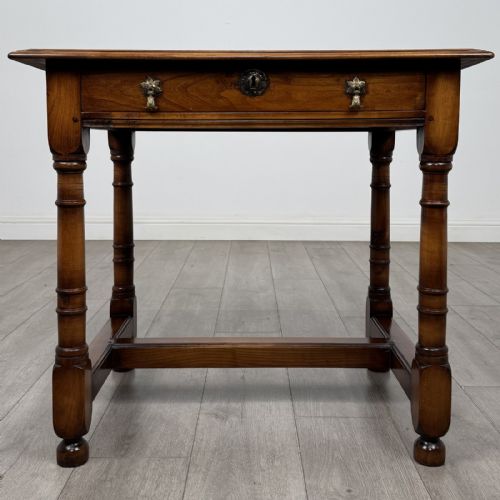
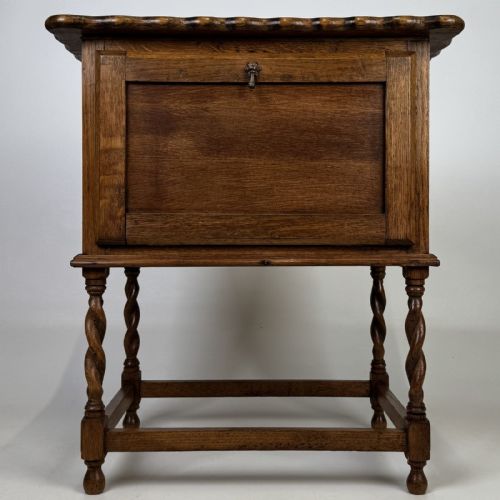
The pieces appearing on this page span the Edwardian period, the nineteen-twenties, and the nineteen-thirties, reflecting a sustained domestic interest in heavy timber and traditional craftsmanship. Most examples adopt the form of small oak side tables and bedside cabinets, often fitted with drawers or lower cupboards.
Makers of these items focused on domestic utility, producing sturdy bedroom storage that echoed the architectural details of old manor houses without the immense scale of original period furniture. This makes them practical additions to modern bedrooms while maintaining a distinct historical aesthetic.
How they were made
These items rely entirely upon solid oak construction, providing the heavy, durable carcass required for practical bedside use. Workshops shaped this timber using traditional joinery methods, incorporating carved friezes and fielded panels to add architectural depth to small cabinet doors and drawer fronts.
Turning forms a central part of the construction, with makers utilising lathes to produce characteristic barley twist legs and bobbin turned supports. Metal elements remain functional and restrained, appearing as brass or iron handles and hinges that contrast against the dark tones of polished oak.
Jacobean Style Nightstands Retail Price Guide 2026
Typical asking prices for jacobean style nightstands among the pieces listed under this phrase on Sellingantiques today, from the lower quarter to the upper quarter. They describe what is for sale here now, not the wider market.
Every single piece on this page wears oak like a suit of armour, proving that twentieth-century joiners took their historic revivals very seriously.
What varies in quality
The standard of carving distinguishes standard production from finer examples, with hand-chiselled detailing on friezes and panels showing far greater depth and articulation than machine-routed decoration. Crisp edges on turned legs and well-fitted drawer boxes indicate a higher level of cabinetmaking skill in the original workshop.
Proportion and scale also separate the better pieces, as smaller bedside cabinets require careful balancing of heavy timber frames so they do not appear clumsy. The integrity of the oak grain and the depth of the polished finish determine the visual richness of the surface.
The Jacobean Style Nightstands Glossary
- Barley Twist
- A cylindrical furniture leg or support carved in a helical, spiral shape resembling a twist of barley. This decorative turning method appeared frequently on seventeenth-century English furniture and saw a major revival in the Edwardian period.
- Bobbin Turned
- A form of woodturning where the lathe creates a series of spherical or oval shapes resembling spools or bobbins strung along a line. It provides strong textural interest on the legs and supports of side tables.
- Bedside Cabinet
- A small enclosed piece of furniture designed to stand next to a bed, typically featuring a door concealing a cupboard space or a combination of a drawer and a cupboard. It keeps nighttime items neatly out of sight.
- Jacobean Revival
- A nineteenth and twentieth-century design movement that imitates the heavy, dark oak furniture styles of the reign of King James the First. It emphasises robust construction, turned legs, and panelled woodwork.
Jacobean Style Nightstands: Frequently Asked Questions
What counts as a jacobean style nightstand?
These pieces generally comprise Edwardian and interwar oak bedside cabinets, small cupboards, and side tables built with historical revival details.
They utilise turned supports and heavy timber to recreate seventeenth-century aesthetics within a compact bedroom footprint.
How do I date these oak cabinets?
Dating relies on examining construction methods, timber preparation, and hardware styles alongside general stylistic markers from the Edwardian era through the nineteen-thirties.
Most surviving examples date from the interwar period, specifically the nineteen-twenties, when revival furniture enjoyed widespread popularity in British homes.
Are these pieces made of solid oak?
The listings on this page consist entirely of oak construction, ensuring the weight and durability characteristic of the revival style.
Workshops utilised this native hardwood for both the structural frames and the visible exterior surfaces, often finishing the timber with a warm polish.
How do I style a bedside cabinet?
These compact cabinets suit traditional and transitional bedroom schemes where their dark timber tones can anchor lighter surrounding decor.
Their top surfaces provide practical space for a reading lamp, while enclosed cupboards and drawers keep personal items neatly stored away.