

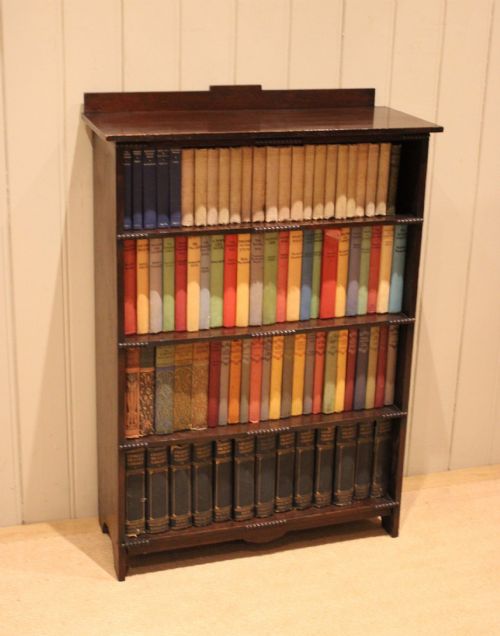


Jacobean Revival Shelf
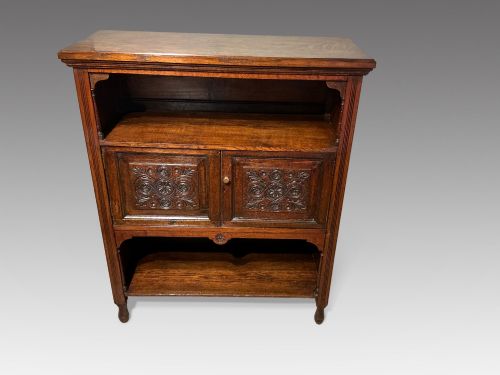
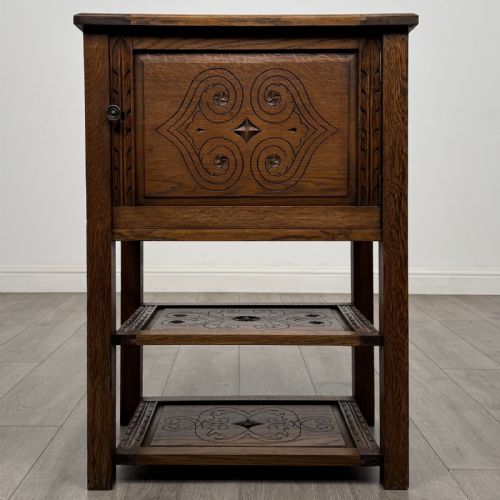
A jacobean revival shelf brings heavy carved timber and deep dark finishes to a room, offering both practical storage and strong period character.
Jacobean Revival Shelf
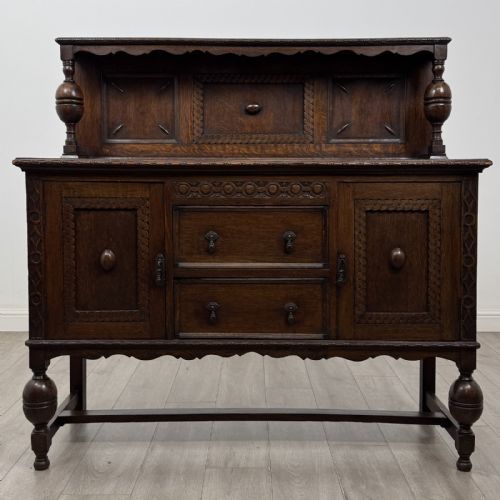
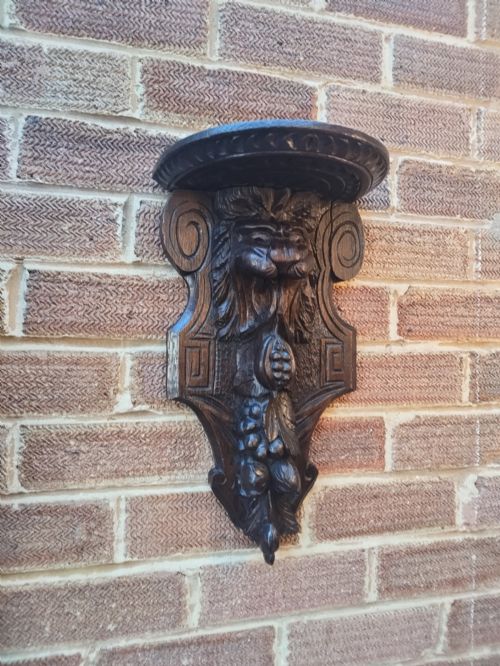
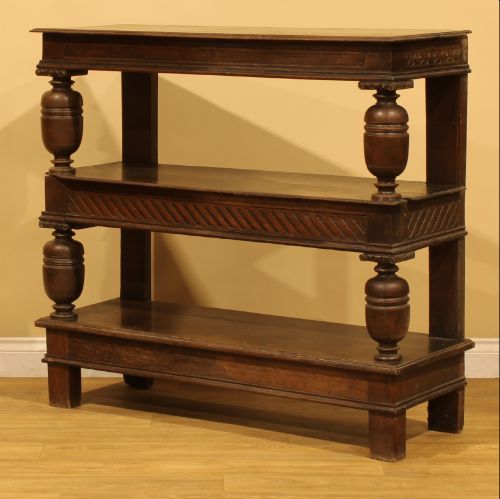
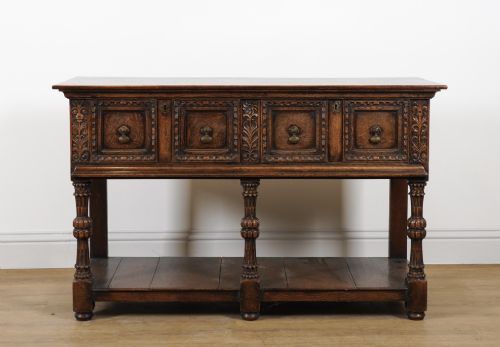
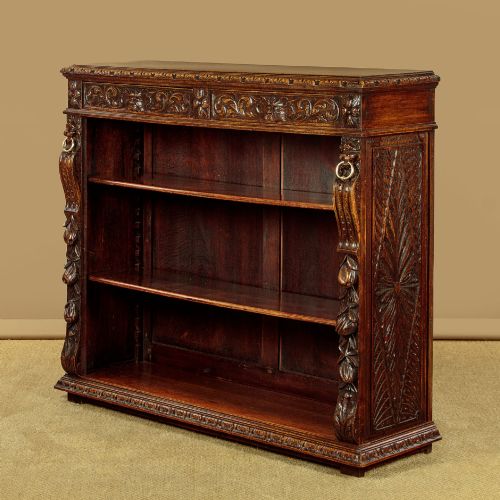
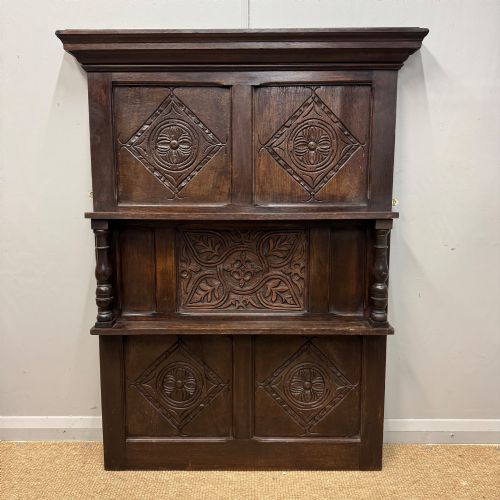
A jacobean revival shelf draws upon the robust architectural forms of the seventeenth century, translated through later Victorian, Edwardian, and interwar craftsmanship. These pieces often appear as wall shelves, open bookcases, and overmantel panels designed to anchor a traditional interior.
The versions most commonly found here are solid oak wall shelves and open bookcases dating from the late nineteenth century through the nineteen-twenties. They provide sturdy display space for books and ornaments while carrying the distinctive carved friezes and dark patination characteristic of the style.
Evaluating quality and execution
Quality rests principally in the depth and crispness of the timber carving, where hand-tooled details surpass mechanical shaping. The choice of stock timber matters significantly, with dense, well-figured oak holding a superior colour and finish.
Proportion and structural integrity separate standard utility pieces from finer examples. Well-balanced shelving boards and carefully fitted joints ensure the piece bears weight properly over decades of use.
Jacobean Revival Shelf Retail Price Guide 2026
Typical asking prices for jacobean revival shelf among the pieces listed under this phrase on Sellingantiques today, from the lower quarter to the upper quarter. They describe what is for sale here now, not the wider market.
Listings span periods from the seventeenth century to the nineteen-twenties, dominated heavily by Victorian and Edwardian interpretations in solid oak.
The Jacobean Revival Shelf Glossary
- Jacobean Revival
- A nineteenth and twentieth century design movement that reinterprets the heavy oak furniture and architectural ornamentation of the early seventeenth century. It emphasises dark finishes, strapwork, and geometric mouldings.
- Overmantel
- A decorative wooden panel, mirror, or shelf designed to be mounted on the wall directly above a fireplace opening. These fixtures served to frame the hearth and display small ceramic or metal objects.
- Beaded edge
- A narrow, rounded moulding profile run along the corner or shelf edge to soften the intersection of timber planes. This detail adds a subtle linear shadow line to the woodwork.
Jacobean Revival Shelf: Frequently Asked Questions
How do I hang a heavy oak shelf securely?
Heavy oak wall shelves require direct fixing into masonry or timber wall studs using appropriate steel screws and plugs. The substantial weight of the solid wood demands robust load-bearing support rather than standard plasterboard anchors.
Ensure the mounting brackets or internal screw points are anchored firmly before placing any books or heavy ceramic items on the display surface.
How do I clean dark oak furniture?
Dust the timber regularly with a dry, soft cloth to prevent grit accumulation in the carved recesses. Avoid modern silicone polishes that build up a hazy film over the dark finish.
Apply a traditional beeswax sparingly once or twice a year to nourish the dry oak and maintain a soft, natural lustre across the carved surfaces.
Are these shelves from the seventeenth century?
Most pieces associated with this style date from the Victorian, Edwardian, and interwar periods rather than the original seventeenth-century Jacobean era. Makers during the late nineteenth and early twentieth centuries revived these archaic forms for contemporary homes.
Examination of the tool marks, screw types, and timber seasoning helps determine whether a piece belongs to the original period or the later revival.
What rooms suit a dark oak shelf?
These dark wood pieces naturally complement libraries, studies, and dining rooms furnished with traditional textiles and heavy upholstery. The strong vertical lines and deep finish anchor lighter wall colours effectively.
In contemporary spaces, a single wall-mounted shelf provides a striking contrast against plain plaster, grounding the room with historic texture.