


Jacobean Dining Set
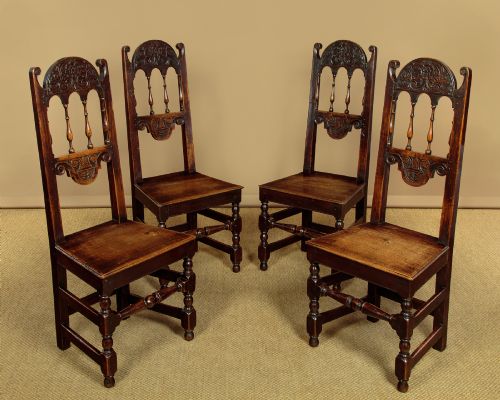
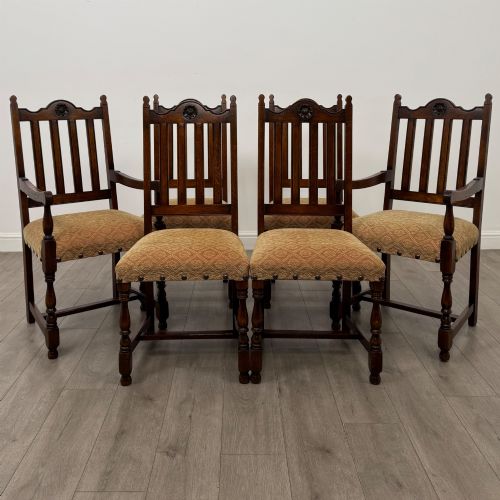
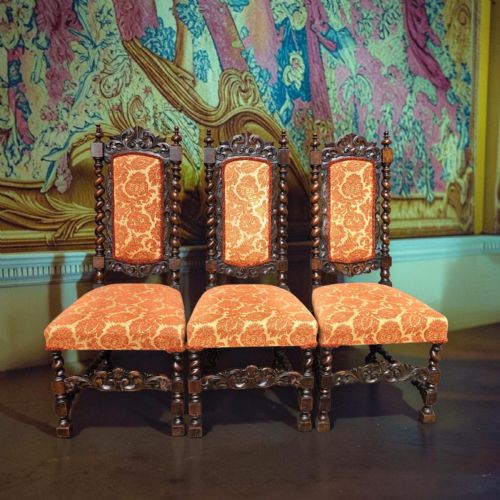
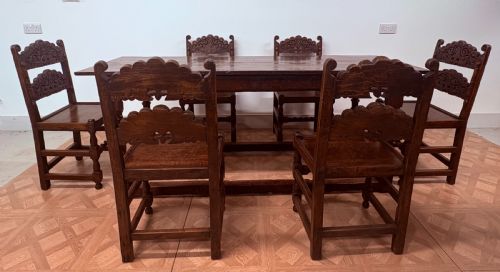
These jacobean dining set pieces bring heavy timber presence and high-backed gravity to a room, built for long sittings around substantial refectory boards.
Jacobean Dining Set
A jacobean dining set brings together sturdy timber seating and heavy tables inspired by seventeenth-century proportions. Buyers seeking this aesthetic often find matched groups of highback chairs alongside draw leaf tables or refectory boards.
Most examples encountered on this page date from later revival periods like the Edwardian era and the nineteen-twenties, interpreting earlier styles through early twentieth-century manufacturing. Original seventeenth-century formats appear alongside Victorian gothic revivals and deliberate antique reproductions.
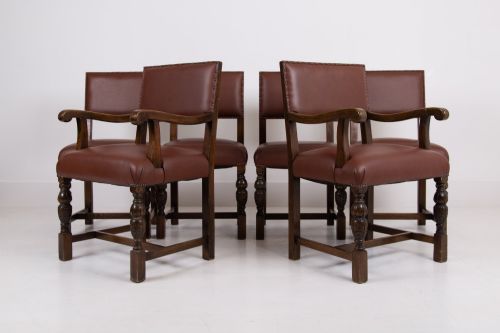
Sets commonly comprise four to ten chairs, frequently including carvers with arms alongside standard side chairs. Complete dining suites occasionally incorporate matching sideboards and side tables alongside the primary seating.
Materials and construction
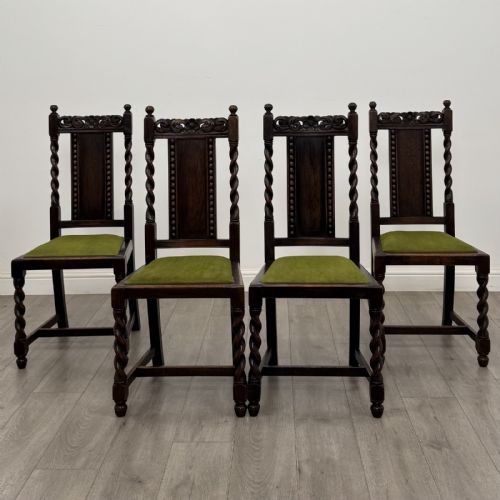
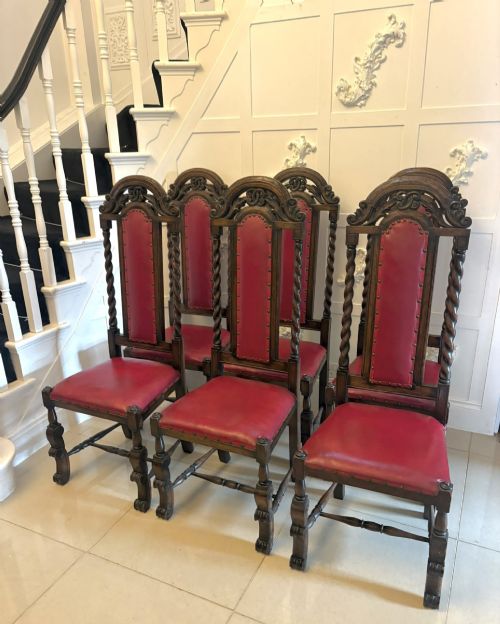
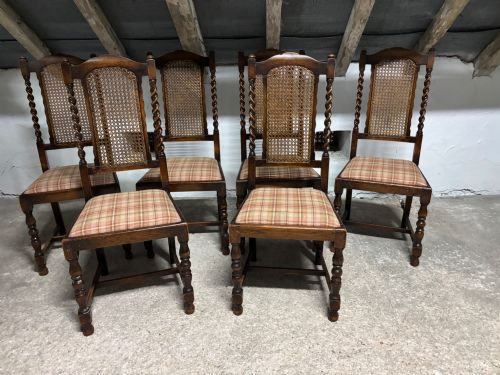
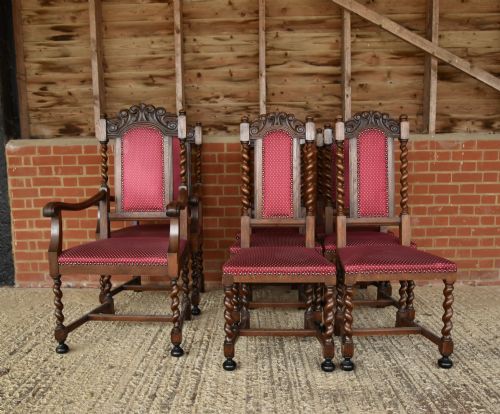
Oak forms the structural foundation of these tables and chairs, chosen for its density and capacity to take deep carved decoration. Timber elements are frequently joined using traditional methods and shaped into barley twist supports.
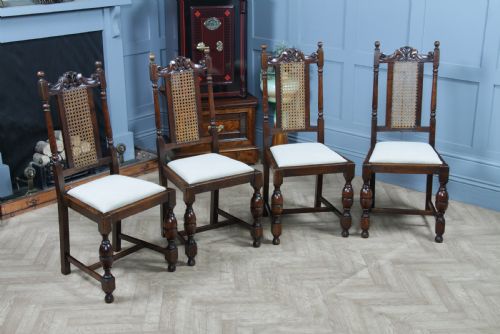
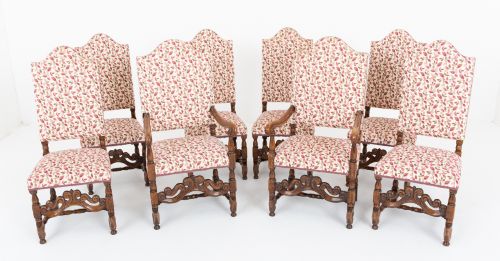
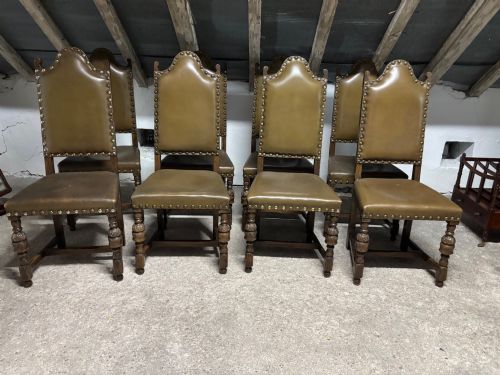
Seating surfaces utilise leather, cane, fabric, and velvet to provide comfort within rigid wooden frames. Brass studding and upholstery elements secure these materials to the heavy oak frameworks.
Jacobean Dining Set Retail Price Guide 2026
Typical asking prices for jacobean dining set among the pieces listed under this phrase on Sellingantiques today, from the lower quarter to the upper quarter. They describe what is for sale here now, not the wider market.
Listings span periods from the seventeenth century through Edwardian revivals to nineteen-thirties oak designs, incorporating leather, cane, and brass details.
Judging construction and execution
The depth and crispness of carved top rails and crestings distinguish finer examples from simpler production. Hand-tooled detailing on highback frames requires significant skill compared to shallow machine routing.
The integrity of the underlying timber framework and the tightness of joints determine structural longevity. Original caning or quality leather upholstery properly integrated into the frame elevates the piece above standard revival output.
The Jacobean Dining Set Glossary
- Carver
- An armchair with wooden armrests designed to sit at the head of a dining table. These usually match the smaller side chairs in a set.
- Draw leaf table
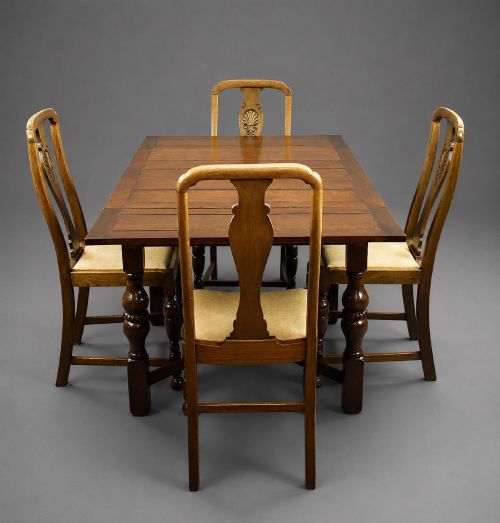
- A table with pull-out leaves hidden beneath the main top that extend outward to seat additional guests. This mechanism preserves surface utility while expanding capacity.
- Barley twist
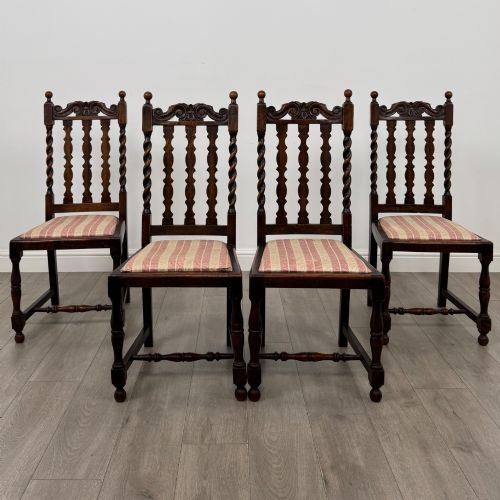
- A spiral turning carved into table legs or chair stretchers resembling twisted barley sugar. Popularised in the seventeenth century, it reappeared frequently in nineteenth and twentieth-century revivals.
- Refectory table
- A long, narrow dining table traditionally used in monastic dining halls. These sturdy surfaces feature heavy stretchers running low between substantial legs.
- Farthingale chair
- A wide, armless chair with a padded seat and back produced during the seventeenth century. The open sides accommodated wide hoop skirts fashionable at the time.
Jacobean Dining Set: Frequently Asked Questions
How do I care for antique oak dining furniture?
Feed dry oak timber occasionally with quality wax to maintain moisture levels in heated rooms. Protect surfaces from hot dishes and excessive moisture to preserve the polished finish.
Vacuum upholstered leather or fabric sections gently using soft brush attachments. Avoid placing heavy sets directly next to active heat sources that might warp old joints.
How do I spot a true seventeenth century set?
Examine construction marks, tool signatures, and timber weathering for signs of period hand-working. Seventeenth-century originals display hand-riven boards and pegged mortise and tenon joints.
Revival pieces from the Edwardian period or the nineteen-twenties show machine-cut uniformity and modern fixings. Compare hardware and wood patination carefully against known museum examples.
Are these chairs comfortable for daily use?
Highback dining chairs provide upright support suited to formal meals and structured seating. Padded leather, velvet, and cane variations offer differing degrees of give.
Adding discreet squab cushions can improve comfort during extended sittings without altering the visual silhouette. Consider seat heights relative to your existing table clearance.
What is a Derbyshire chair?
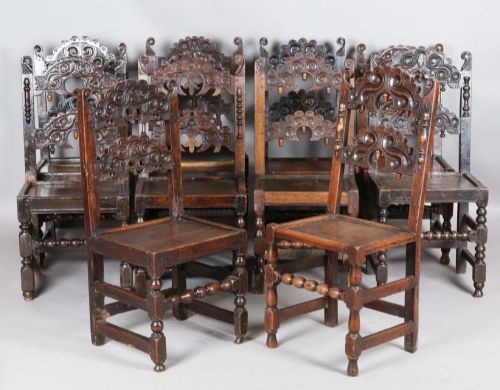
Derbyshire chairs are seventeenth-century English chairs featuring carved wooden backs and turned uprights. They originated in the Midlands and gained popularity through later Victorian revivals.
These pieces typically lack upholstery, relying on carved crest rails and geometric panels for decoration. They serve as striking accent pieces within a larger dining arrangement.