






Jacobean Cane Back Chair
A jacobean cane back chair brings dramatic seventeenth century revival carving and textured woven seating into a room.
Jacobean Cane Back Chair
A jacobean cane back chair brings heavy timber frames and woven seating together, drawing on seventeenth century models. Buyers seeking a jacobean cane back chair will find that the majority of examples date from revival periods in the nineteenth and early twentieth centuries rather than the original seventeenth century.
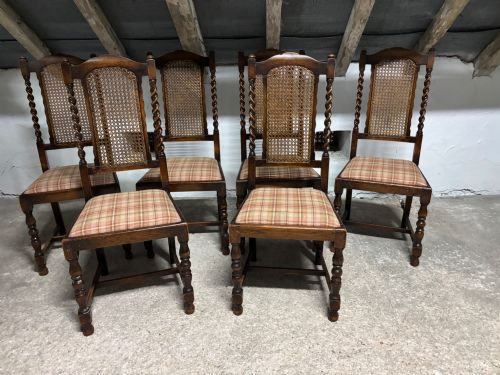
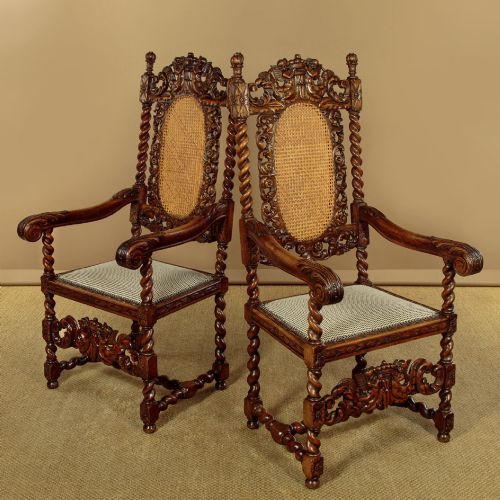
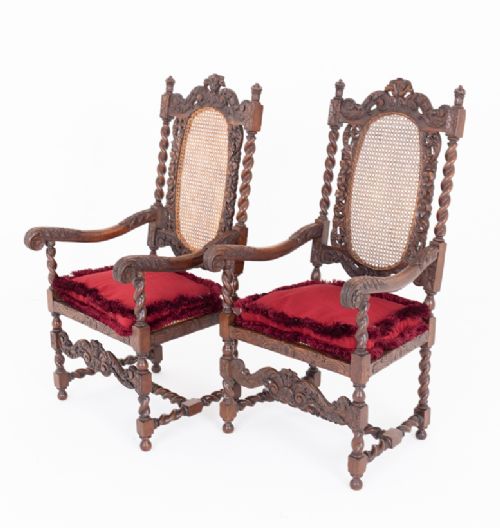
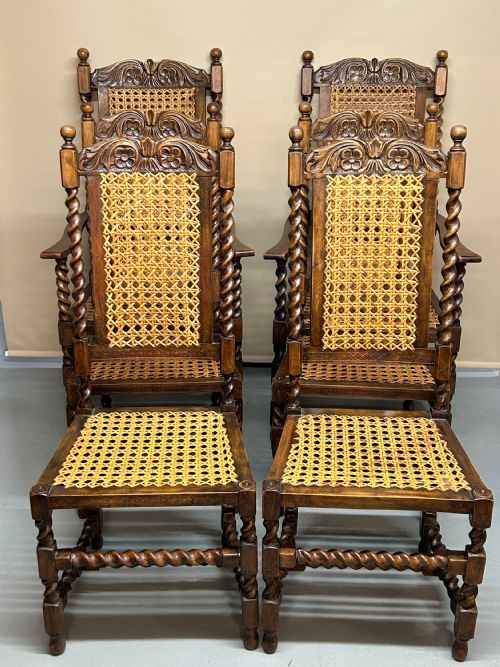
The selection includes single armchairs, large throne chairs, and sets of dining chairs. These pieces span various revival aesthetics such as Carolean, Cromwellian, and Renaissance Revival alongside traditional Jacobean styles.
Materials and construction
Carpenters constructed these frames primarily in solid oak and walnut, occasionally utilising beech. Woodcarvers worked the timber to create elaborate relief patterns along the crest rails, stiles, and stretchers.
Workers wove cane, rattan, or rattan cane into the open wooden frames of the backs and seats. Frame construction frequently incorporates turned elements such as barley twist legs to support the heavy wooden structure.
Jacobean Cane Back Chair Retail Price Guide 2026
Typical asking prices for jacobean cane back chair among the pieces listed under this phrase on Sellingantiques today, from the lower quarter to the upper quarter. They describe what is for sale here now, not the wider market.
Primary frame materials recorded across the inventory are oak, walnut, and beech, paired with cane, rattan, fabric, and velvet.
Assessing quality and craftsmanship
Quality reveals itself in the depth and sharpness of the hand carving across the wooden frame. Crisp, deeply undercut foliage and scrolls distinguish superior examples from simpler, softer mouldings.
The integrity of the woven cane work and the sturdiness of the joined timber frame dictate the structural standard. Sets that retain matching frames and uniform cane panels command greater cohesion than assembled groups.
The Jacobean Cane Back Chair Glossary
- Cane
- Material woven from peeled rattan stems to form a durable, patterned mesh insert for chair backs and seats. It provides both structural support and decorative openwork.
- Barley twist
- A type of woodturning shaped to resemble a twisted rope or column. This decorative feature appears frequently on the vertical legs and stretchers of revival seating.
- Carolean
- A seventeenth century style associated with the reign of Charles II, featuring exuberant scrollwork and elaborate carving. Revivals of this aesthetic heavily influenced later nineteenth century chair design.
- Bergere
- An upholstered or caned armchair with enclosed sides, offering a substantial silhouette. These pieces often feature prominent wooden frames framing the woven panels.
- Stile
- The upright vertical side member of a chair back frame. Carvers often embellish these structural posts with detailed relief work.
Jacobean Cane Back Chair: Frequently Asked Questions
Are these chairs from the seventeenth century?
The vast majority of examples available date from later revival periods spanning the nineteenth and early twentieth centuries, mimicking earlier seventeenth century forms.
Original pieces from the sixteen hundreds appear very rarely and usually display the distinct wear and construction methods of that early period.
How do I care for cane seating?
Cane requires moderate humidity to prevent the natural fibres from becoming brittle and snapping under pressure.
Avoid placing these chairs near direct heat sources and occasionally wipe the woven surface with a slightly damp cloth to maintain flexibility.
What is the difference between a side chair and an armchair?
Side chairs feature a compact frame without armrests, making them well suited for placement around a dining table.
Armchairs incorporate structural arm supports and generally offer a wider seat, designed for use as standalone accent pieces or fireside seating.
How can I identify a revival piece?
Revival pieces often display nineteenth or early twentieth century hardware, machine sawn timber marks, and standardised turning techniques.
Stylistic cues mix elements from several eras, such as combining seventeenth century carving motifs with Victorian proportions.