




Jacobean Arm Chair
A jacobean arm chair brings centuries of heavy timber and deep carving straight into a room.
Jacobean Arm Chair
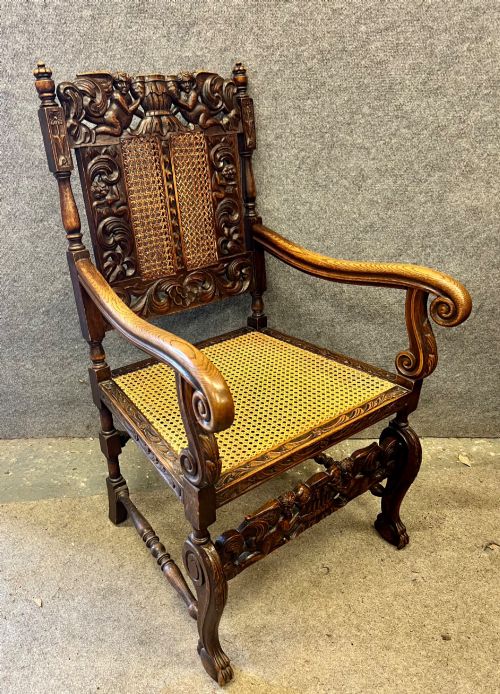
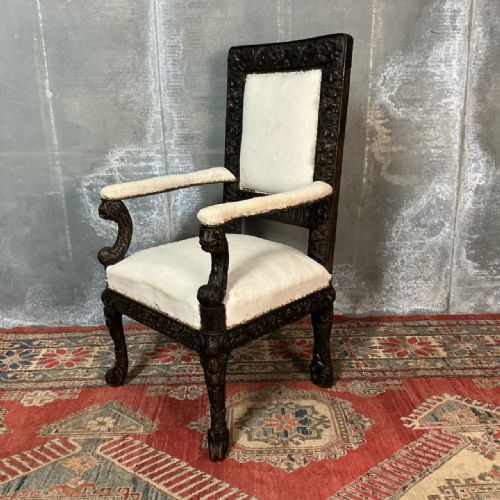
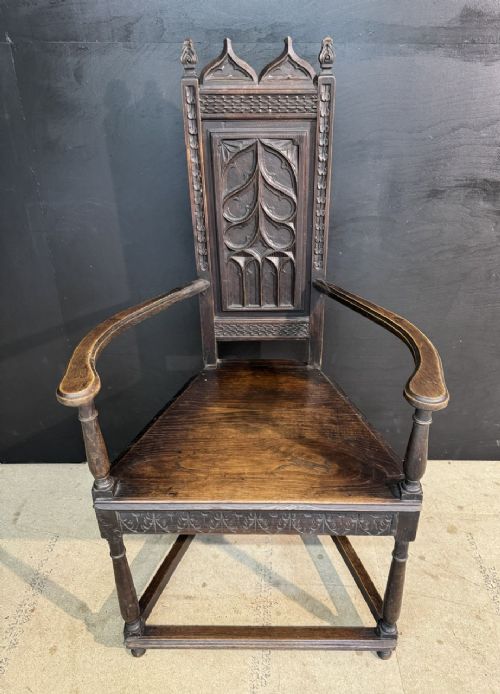
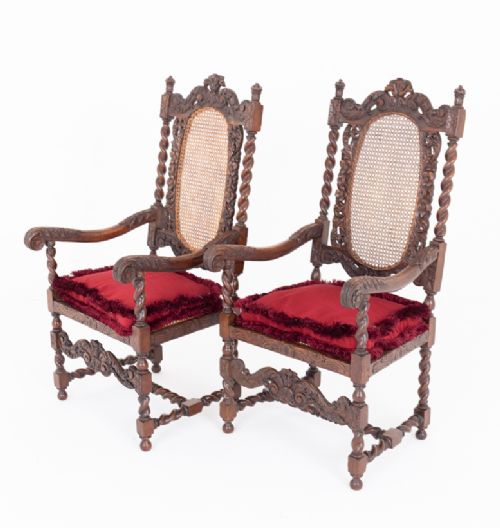
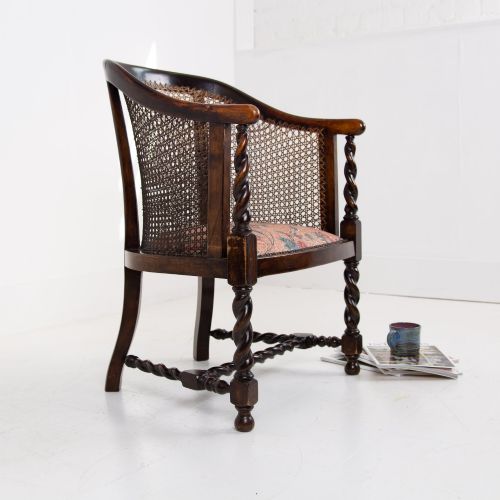
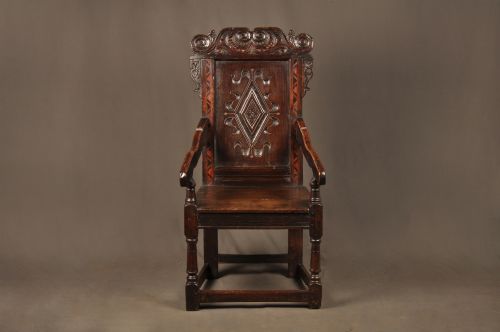
When searching for a jacobean arm chair, buyers encounter solid timber seating spanning from the seventeenth century through to later revival periods. The listings here present substantial pieces, frequently taking the form of wainscot chairs with panelled backs, alongside later nineteenth and twentieth century revivals incorporating barley twist supports.
Original seventeenth century examples share the floor with nineteenth century revival pieces that emulate the heavy carving and dark timber of earlier decades. Makers across these periods relied on oak as the primary structural material, fashioning armchairs, desk chairs, and hall chairs designed to command attention.
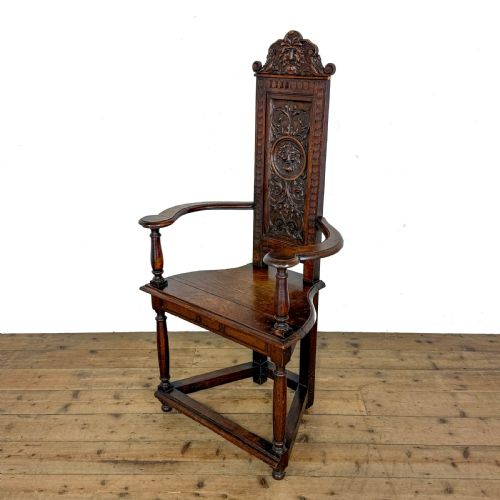
The form typically involves high backs, sturdy armrests, and rigid timber seats, occasionally softened with leather, cane, or textile inserts. Buyers are most likely to meet nineteenth century revival interpretations, though genuine seventeenth century Welsh, Scottish, and English wainscot chairs also appear.
Materials and construction methods
Joiners built these armchairs primarily from sturdy oak, utilising mortise and tenon joints secured with wooden pegs to handle the heavy daily load. Master craftsmen carved intricate geometric patterns, strapwork, and floral motifs directly into the dense grain of the timber.
Later revival pieces introduced turned components like barley twist legs and supports, adding visual movement to the rigid frames. Upholstery, cane work, rattan, and leather additions appeared across different eras, fastened with brass studs to provide seating comfort.
The listings span from seventeenth century originals through to twentieth century revival pieces, demonstrating enduring interest in heavy carved oak forms.
Distinctions in quality
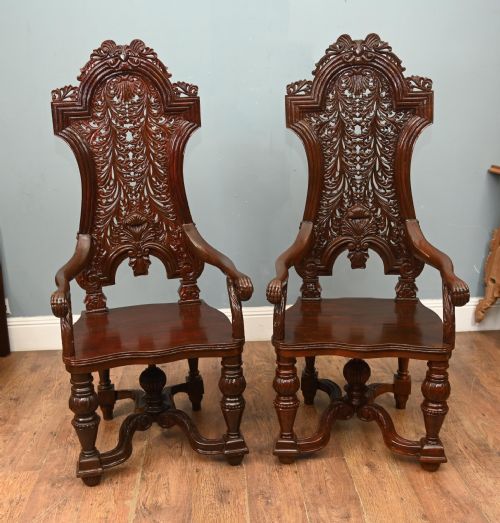
The distinction between ordinary and exceptional pieces lies in the depth and crispness of the hand carving across the crest rails and panelled backs. Timbers selected for finer chairs display tighter grain patterns and greater structural uniformity, whereas lesser examples utilise plainer boards.
Original period pieces hold greater interest through their age-related patina and untouched joinery compared to later revival items. The integration of period-appropriate seating materials, whether cane, leather, or woven textile, dictates the overall coherence of the design.
The Jacobean Arm Chair Glossary
- Wainscot chair
- A heavy wooden armchair dating from the seventeenth century, constructed with panelled backs and solid timber seats. These pieces were often reserved for the head of the household.
- Carolean
- Pertaining to the reign of King Charles the Second, a style marked by rich carving, scrolling foliage, and flamboyant design elements. This aesthetic heavily influenced later nineteenth century revival furniture.
- Barley twist
- A decorative turning technique resembling a twisted rope, commonly found on the legs and stretchers of revival armchairs. This feature added ornamental flair to otherwise utilitarian frames.
- Throne chair
- A large, high-backed armchair designed to impart authority, frequently incorporating elaborate carved crests and substantial armrests. Such pieces functioned as focal points in halls and libraries.
- Elbow chair
- A traditional term for an armchair, describing a seat fitted with defined armrests for supporting the arms. These chairs often served desk or dining purposes.
Jacobean Arm Chair: Frequently Asked Questions
How do I identify a true seventeenth century chair?
Authentic seventeenth century pieces display hand-cut joinery secured with wooden pegs, deep patination acquired over centuries, and construction entirely from regional oak. The wear patterns on the seat and arms reflect genuine historical use.
Revival pieces from the nineteenth and twentieth centuries often feature machine-tooled elements, brighter timber tones beneath the finish, and construction methods characteristic of later Victorian workshops.
Where were these armchairs used historically?
These sturdy wooden chairs primarily occupied the principal rooms of manor houses and prosperous farmhouses, where the head of the home would sit. They also appeared in grand halls and council chambers as symbols of status.
Over time, many found their way into libraries, studies, and hallways as decorative yet functional seating arrangements.
How should I care for antique oak furniture?
Maintain the timber by keeping the chair away from direct heat sources and strong sunlight, which can dry out and split the ancient oak. Occasional application of appropriate wax polish helps preserve the finish and nourish the grain.
Avoid using modern liquid cleaning sprays, as these can penetrate open joints and soften historic wax layers built up over generations.
What is the difference between Jacobean and Carolean styles?
Jacobean design, spanning the early seventeenth century, focuses on architectural stiffness, geometric panelling, and strapwork carving. The overall aesthetic is severe, heavy, and strictly symmetrical.
Carolean design emerges later in the seventeenth century with greater flamboyance, introducing putti, elaborate scrollwork, and dynamic barley twist turnings influenced by continental Baroque trends.