

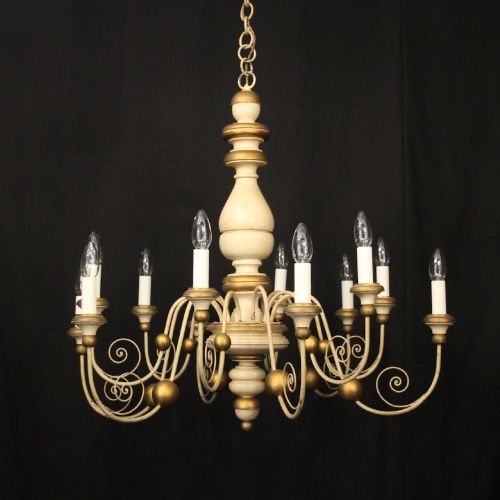


Italian Style Chandelier
An italian style chandelier brings dramatic presence to a room, drawing the eye upwards with cascading glass, crystal, and gilded metal.
Italian Style Chandelier
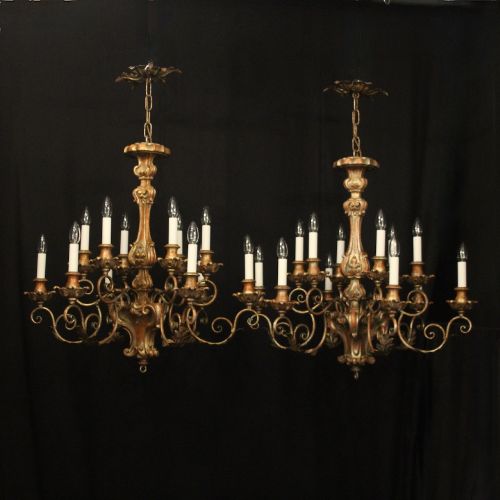
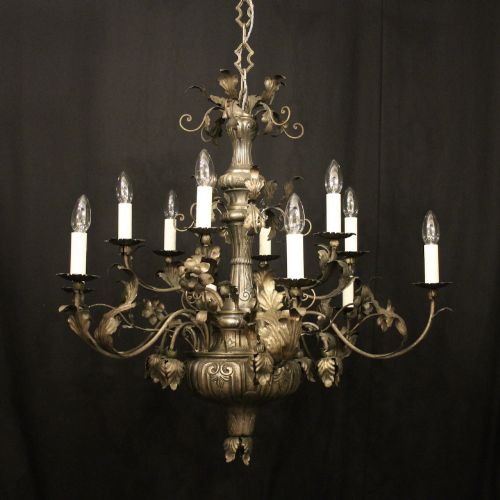
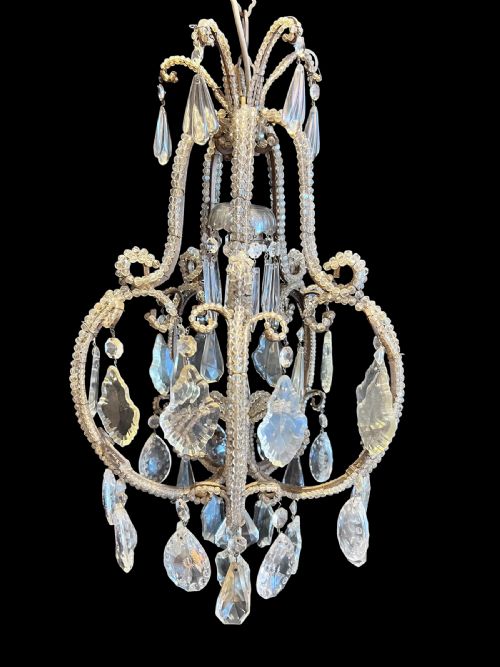
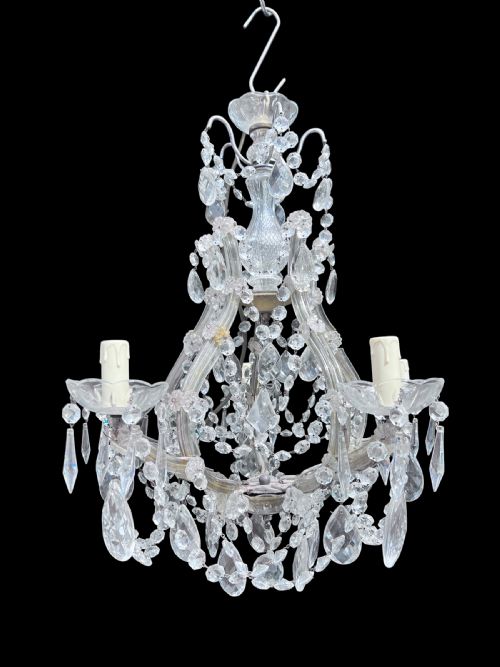
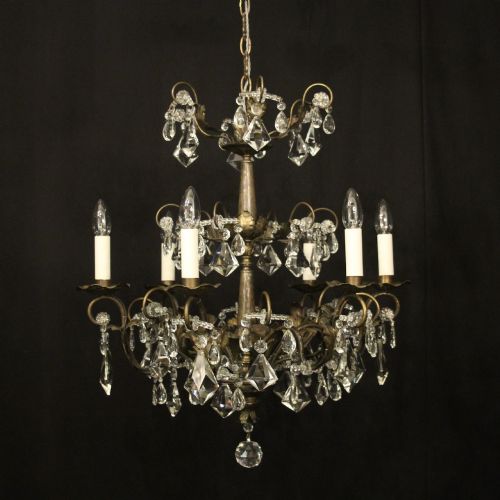
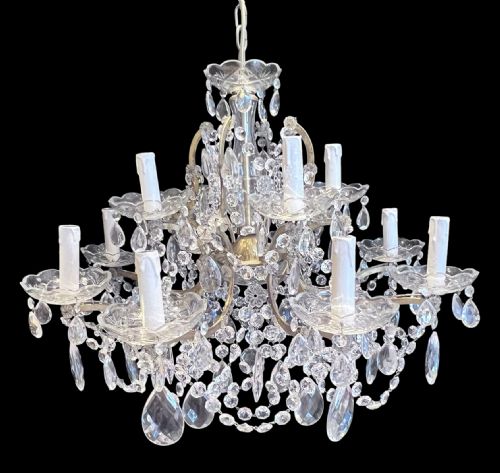
An italian style chandelier typically takes the form of multi-tiered fixtures, floral arrangements, or birdcage frames that light up a space from above. Buyers searching for an italian style chandelier encounter pieces dating from the eighteenth century through to the 1930s.
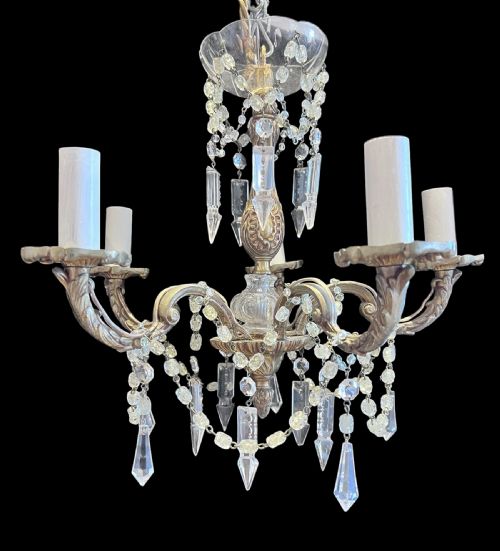
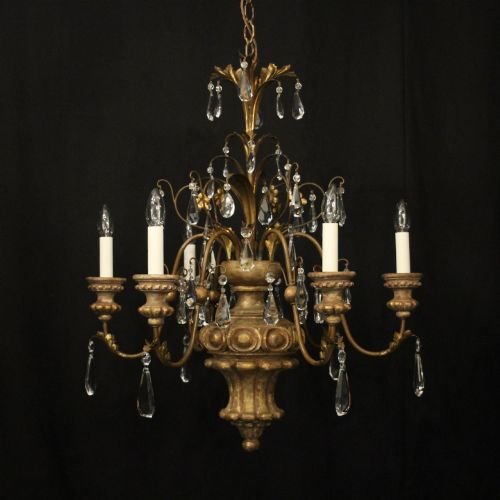
The selection ranges from grand eighteen-light polychrome designs to smaller five-light brass and crystal variations. Florentine and Baroque influences dominate the aesthetic, often incorporating carved giltwood, polychrome finishes, and hanging glass beads.
Ceiling lights and hanging lanterns supplement the core collection of chandeliers. These fixtures reflect historic regional centres such as Genoa and Venice through distinctive regional decorative traditions.
Materials and Construction
Makers utilised cast and forged metals including brass, iron, gilt metal, and gilded bronze to form the structural armatures and frames. Gold leaf and polychrome paint added rich surface decoration to carved wood and metal components.
Glass and crystal elements, sometimes in coloured varieties, were shaped and strung as beads or drops to catch and refract the light. Frames were constructed in single or double tiers to support up to eighteen lights per fixture.
Italian Style Chandelier Retail Price Guide 2026
Typical asking prices for italian style chandelier among the pieces listed under this phrase on Sellingantiques today, from the lower quarter to the upper quarter. They describe what is for sale here now, not the wider market.
Some birdcage chandeliers feature so many crystal drops they practically jingle when someone walks past too quickly.
Assessing Quality
The skill of the carver and metalworker determines the crispness of detail in giltwood and bronze components. Hand-applied polychrome finishes and genuine gold leaf display depth and variation absent in flat modern paints.
The clarity and cut of the crystal or glass drops dictate how brilliantly the fixture refracts light across the room. Structural integration of heavy double-tiered frames requires robust internal engineering to ensure the piece hangs true.
The Italian Style Chandelier Glossary
- Polychrome
- Painted in several colours, often seen on Florentine wooden frames to simulate natural flora and ornamentation.
- Giltwood
- Wood that has been treated with gold leaf or a gold-coloured finish, common in Baroque and eighteenth-century frames.
- Birdcage
- A wire or metal frame enclosing lights and drops, resembling the shape of an aviary, popular in early twentieth-century Italian lighting.
- Maria Theresa
- A distinct style of chandelier characterised by flat metal arms covered in glass strips and secured with rosette pins.
Italian Style Chandelier: Frequently Asked Questions
What periods do these chandeliers come from?
The pieces span from the eighteenth century up to the 1930s, encompassing various revivals.
Earlier examples often feature carved giltwood, while twentieth-century pieces lean towards Florentine polychrome and multi-tiered crystal designs.
How many lights do these fixtures usually have?
Light counts vary widely depending on the scale and tiering of the individual piece.
You can find intimate single-light pendants alongside monumental eighteenth and nineteenth-century designs boasting up to eighteen lights.
Where were these chandeliers made?
They originate from Italy, with specific regional aesthetics tied to centres such as Venice and Genoa.
Florentine workshops are particularly well represented through carved and gilded floral motifs.
What materials are most common?
Glass and crystal dominate the hanging elements, paired with brass, gilt metal, iron, and carved wood frames.
Gold leaf and polychrome paint finish many of the surfaces.