



Italian Revival Chairs
These Italian revival chairs bring the drama of the Renaissance and Baroque into a room through rich carving and solid timber.
Italian Revival Chairs
When buyers search for italian revival chairs, they encounter heavy wooden seating designed to mimic older forms. These pieces draw directly on Renaissance Revival and Italian Baroque Revival styles, translating historical grandeur into domestic furniture.
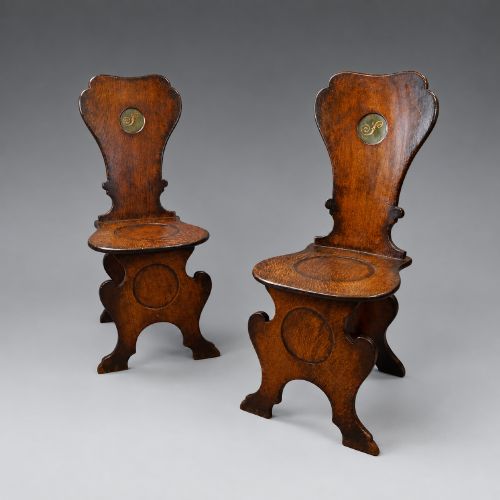
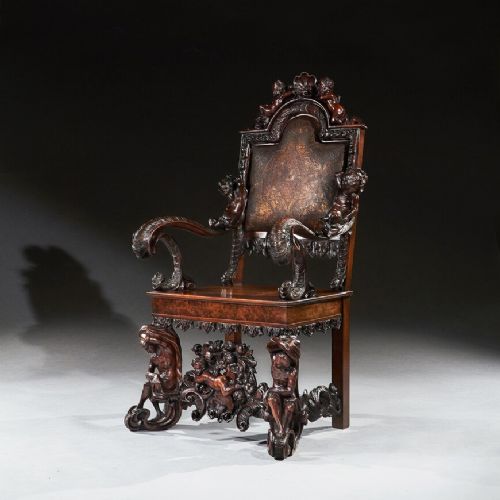
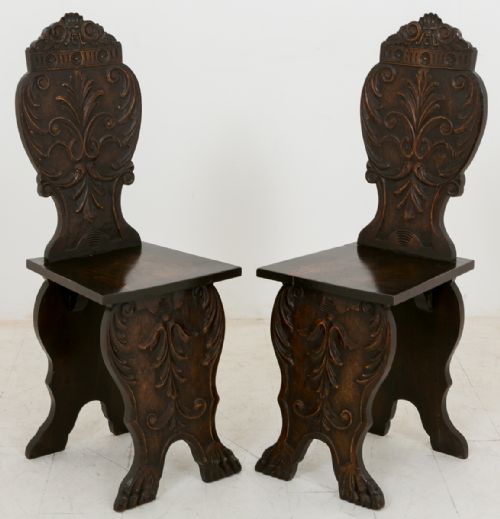
The selections available here range from sturdy hall chairs and sgabello forms to carved walnut armchairs and X-framed stools. Many pieces originate from the nineteenth century, adopting historical motifs like figural carvings and bone inlay.
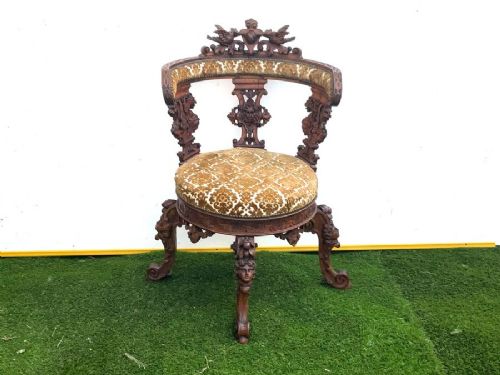
Armchairs, hall benches, and corner chairs make up the primary offerings on this page. Walnut and oak dominate the construction, often paired with textiles such as velvet and damask.
How they were made
Cabinetmakers constructed these pieces primarily using solid walnut and oak, occasionally incorporating lime wood and wood paint. Master carvers worked the timber deeply to achieve the intricate figural scenes and bold patterns characteristic of revivalist workshops.
Upholstered items featured traditional textiles such as leather, velvet, and damask secured to the frames. Structural elements like X-frames provided stability alongside decorative impact, while bone inlay added fine surface detail.
Italian Revival Chairs Retail Price Guide 2026
Typical asking prices for italian revival chairs among the pieces listed under this phrase on Sellingantiques today, from the lower quarter to the upper quarter. They describe what is for sale here now, not the wider market.
Some nineteenth-century artisans incorporated bone inlay into their chairs, adding intricate pale details to dark walnut frames.
What varies in quality
The depth and crispness of the timber carving separate standard production from exceptional pieces. Workshop execution dictates whether figural details and relief work appear sharp and expressive or soft and hurried.
Choice of materials also marks the division in quality. Selected walnut with rich grain and substantial thickness sits above lighter timbers, while robust joinery ensures stability across armchairs and hall benches.
White, Allom and Co
The Italian Revival Chairs Glossary
- Sgabello
- A light wooden chair with a high back and trestle supports instead of legs. These pieces typically served as decorative hall seating in grand residences.
- Savonarola chair
- A folding armchair constructed from multiple curved wooden slats forming a distinctive X-shape. The design originates from Renaissance Italy.
- Renaissance Revival
- A nineteenth-century design movement that reinterpreted sixteenth-century architectural and decorative motifs. Furniture from this style employs heavy carving and classical symmetry.
- Bone inlay
- A decorative technique where small pieces of carved bone are embedded into a wooden surface to create geometric or floral patterns. This meticulous work enhances the visual depth of the timber.
- X-framed stool
- A seating form supported by intersecting curved or straight wooden members that create an X shape from the side profile. These sturdy supports often carry detailed relief carving.
Italian Revival Chairs: Frequently Asked Questions
What are italian revival chairs?
These pieces are nineteenth-century interpretations of earlier Renaissance and Baroque seating designs. They rely on heavy timber and deep carving to recreate historical grandeur.
Craftsmen produced various forms, including sgabellos, X-framed stools, and substantial armchairs, using materials like walnut, oak, and decorative textiles.
How were sgabello chairs used?
Sgabellos functioned primarily as hall chairs rather than everyday seating for long periods. Their narrow wooden seats and rigid backs suited entryways and formal reception rooms.
Guests would sit briefly while waiting to be received by the household owner, making visual display more important than physical comfort.
Where should I place these chairs?
These substantial seats command attention in entrance halls, studies, or large living spaces. Their dark walnut frames and carved details anchor a room when paired with simpler modern furnishings.
Due to their historical weight and decorative presence, they work best against plain walls where the silhouette remains visible.
How do I identify nineteenth-century pieces?
Nineteenth-century revival pieces display the technical skill of Victorian carvers working in historical idioms. Examining the timber grain, joinery methods, and the crispness of the relief carving reveals the period's manufacturing standards.
Makers often combined traditional Renaissance forms with contemporary upholstery materials like velvet and damask.