

Italian Lighting Fixtures
These Italian lighting fixtures bring together glass, crystal and gilded metal across chandeliers, wall lights and girandoles.
Italian Lighting Fixtures
When searching for italian lighting fixtures, collectors encounter a diverse range of forms spanning chandeliers, wall lights, ceiling lights, table lamps, wall sconces, girandoles, pendant lights and hanging lanterns. These pieces originate from various historical periods including the eighteenth and nineteenth centuries, alongside twentieth century decades such as 1900, 1910, 1920, 1930 and 1960. Styles frequently draw upon Florentine, Italian Rococo, Baroque, Neoclassical and Marie Theresa traditions.
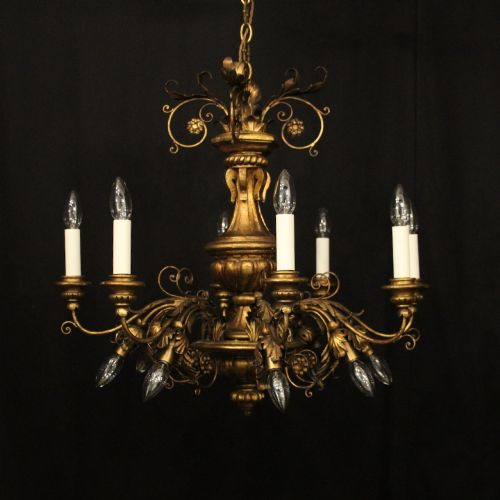
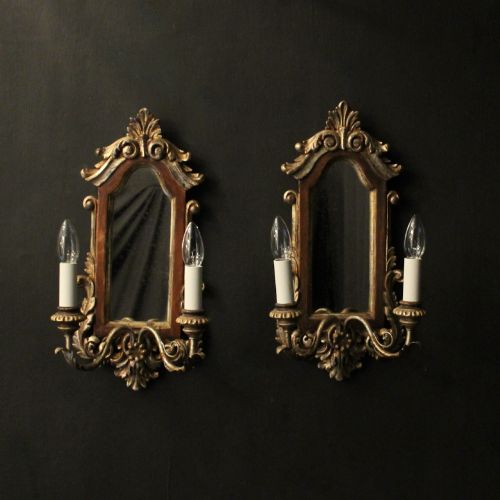
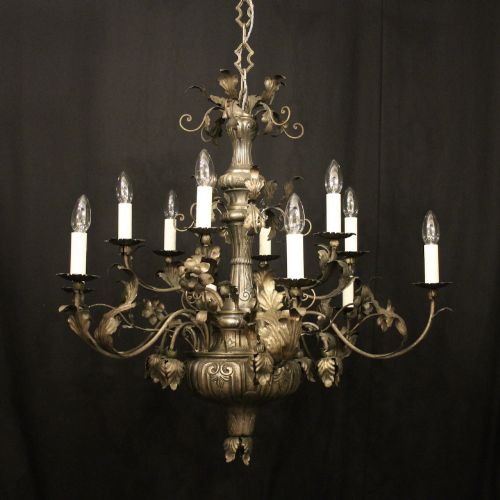
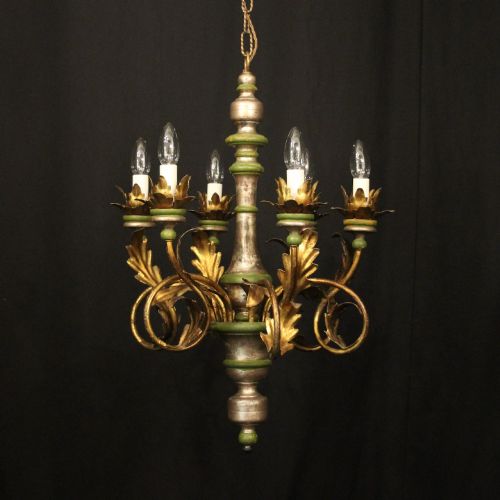
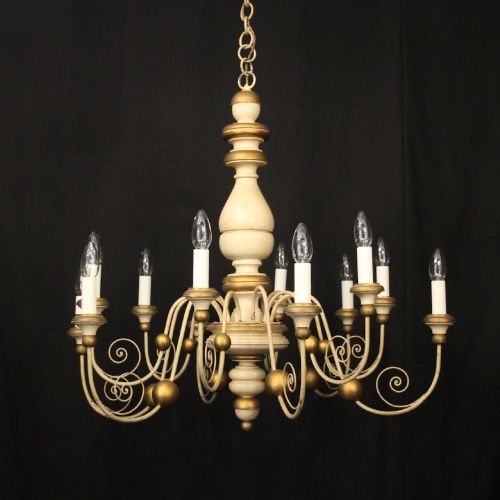
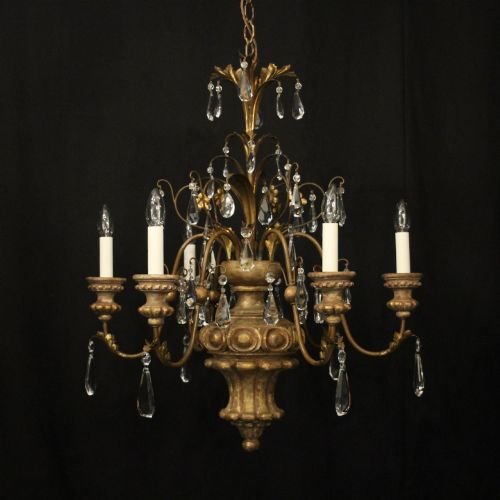
The most common versions met on this page are multi-light chandeliers and paired wall lights dating from the 1920s and 1930s. These often display Florentine giltwood frames, silvered gilding or elaborate crystal drops, reflecting regional craftsmanship from centres such as Genoa and Venice. Alongside these, distinct forms such as galleon chandeliers and fruit-hung iron fixtures appear with coloured crystal grapes and apples.
Materials and Construction
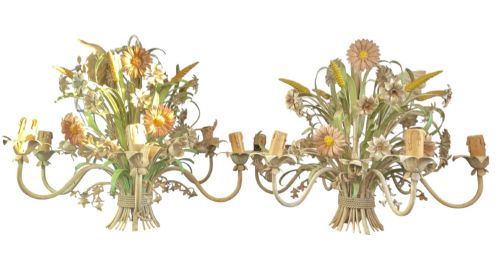
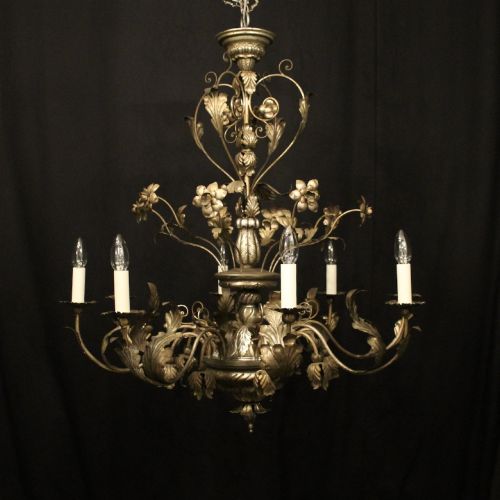
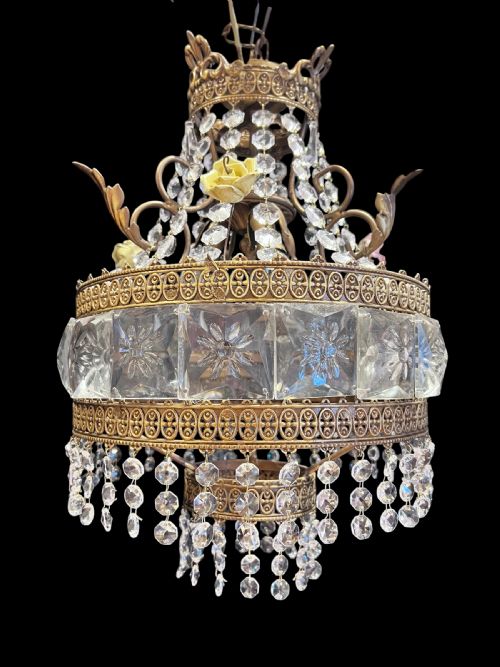
Maker construction relies heavily on combinations of glass, crystal, brass, gilt metal and wrought iron. Wooden elements are frequently carved into giltwood or ebonised frames, particularly within Florentine workshops. Metal armatures support cascading drops of clear or coloured crystal, while specific pieces incorporate porcelain flowers, toleware or cast bronze.
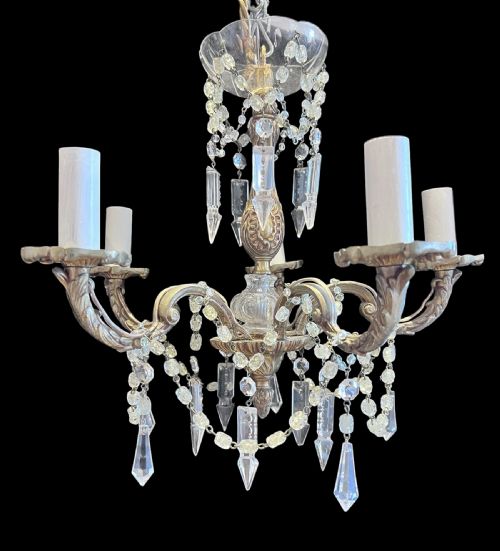
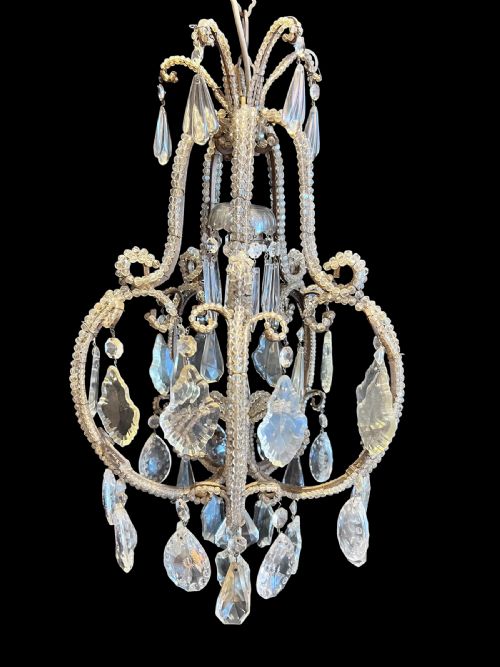
Surface decoration employs traditional gilding techniques, polychrome paintwork and silvering to catch and refract light. Crystal prisms and fruits are wire-hung from metal branches, allowing movement and dynamic reflection. Hand-blown Murano glass forms specialised lamps and sculptural components.
Italian Lighting Fixtures Retail Price Guide 2026
Typical asking prices for italian lighting fixtures among the pieces listed under this phrase on Sellingantiques today, from the lower quarter to the upper quarter. They describe what is for sale here now, not the wider market.
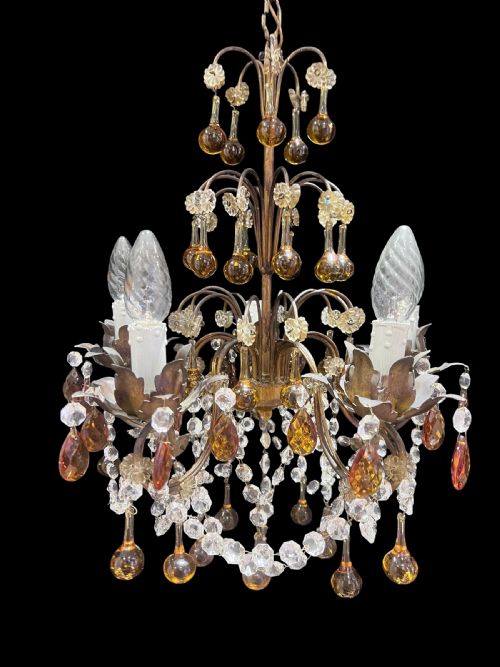
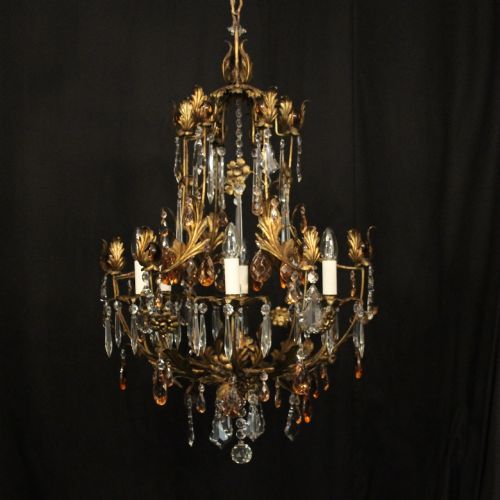
Several iron chandeliers come loaded with coloured glass fruits, hanging heavy with crystal grapes, apples and pears.
Assessing Quality and Execution
Quality in these fixtures rests upon the depth of the carving in giltwood elements and the clarity of the crystal components. Superior examples exhibit finely detailed metal casting, rich polychrome gilding and complete sets of matched crystal drops rather than replacement glass. The structural integrity of multi-tiered armatures and the precision of the wiring channels also distinguish finer productions.
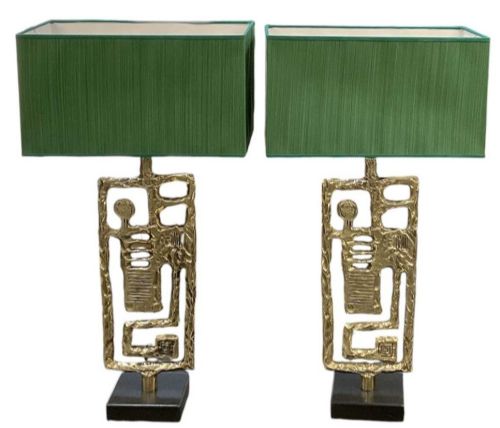
The sophistication of the design dictates the upper tier of the range, seen in monumental sculptural lamps by makers such as Angelo Brotto or large double-tiered Venetian chandeliers. Lesser examples rely on simpler stamped brass frames and minimal glass adornment without the nuanced hand-finishing found on archival-grade pieces.
Angelo Brotto for Esperia
The Italian Lighting Fixtures Glossary
- Girandole
- A branched wall light or candle sconce fitted with mirrors or crystal drops to multiply reflected light. These fixtures frequently appear in pairs with carved giltwood frames.
- Marie Theresa
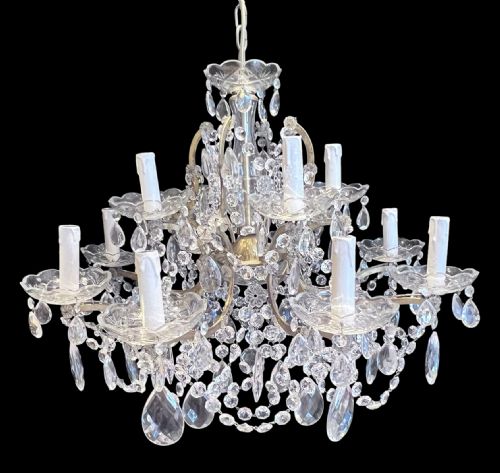
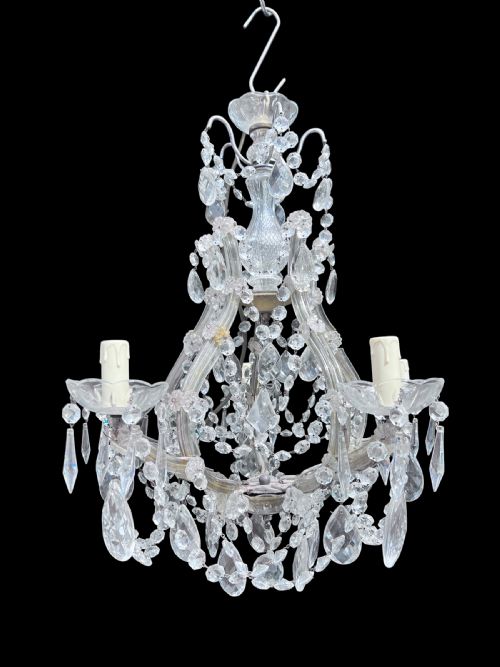
- A specific style of flat-arm chandelier characterised by glass strapwork covering the metal frame and an abundance of crystal prisms and pendants. They are frequently multi-light fixtures dating from the early twentieth century.
- Giltwood
- Timber that has been coated with a thin layer of gold leaf or gold paint, extensively utilised in Florentine wall lights and chandeliers. This material provides a warm, reflective surface suited to ornate carving.
- Toleware
- Painted or enamelled sheet metal items that introduce colourful floral or decorative motifs to wall sconces and lighting fixtures. They often appear alongside gilded wood elements in early twentieth century Italian pieces.
- Murano Glass
- Hand-blown glass produced on the Venetian island of Murano, known for inventive forms such as grape lamps and coloured fruit decorations. This material represents traditional Venetian glassmaking expertise.
Italian Lighting Fixtures: Frequently Asked Questions
What periods do these Italian lights come from?
The pieces span from the eighteenth and nineteenth centuries into the twentieth century. Key decades represented include the 1900s, 1910s, 1920s, 1930s and 1960s.
Victorian era examples also feature alongside earlier classical revivals, showing enduring traditional designs across centuries.
How were these chandeliers traditionally used?
These fixtures served as principal light sources in grand reception rooms, salons and dining halls. Their reflective crystals and gilded surfaces maximised candle or early electric light.
Paired wall lights and girandoles were positioned flanking mirrors or doorways to distribute illumination evenly throughout tall spaces.
How do I identify a Marie Theresa chandelier?
Marie Theresa chandeliers are distinguished by flat glass arms that conceal the central metal framework. They are heavily adorned with cascading crystal garlands and drops.
These fixtures often include coloured crystal accents and create a glittering, layered visual effect.