



Italian Grand Tour Plaque
An italian grand tour plaque brings home the classical architecture and Roman antiquity that travellers collected on their travels across Europe during the nineteenth century.
Italian Grand Tour Plaque
An italian grand tour plaque encompasses decorative items collected during nineteenth-century European travels, featuring classical subjects rendered in stone, glass and marble. These pieces include wall art, decorative plaques, relief panels and framed tablets produced across Italy.
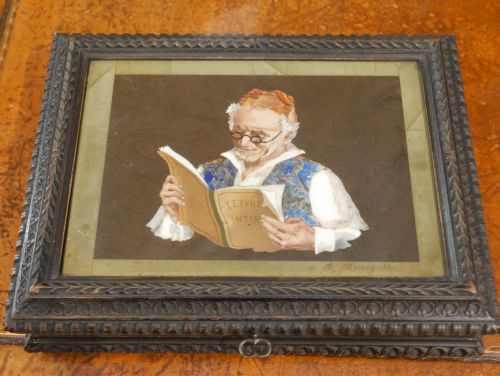
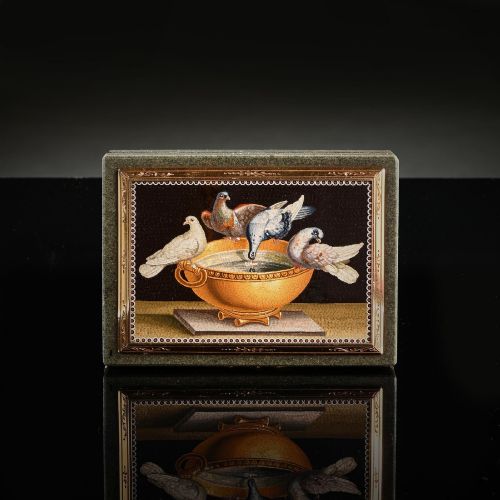
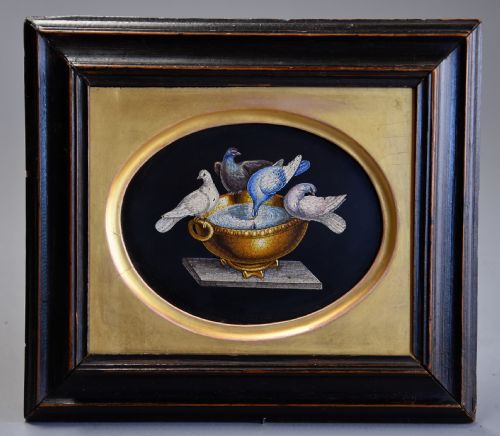
The version most commonly encountered on this page is the nineteenth-century specimen, often set into black marble or framed in ebonised wood. Subjects range from profile portraits of Roman emperors and literary figures like Virgil and Dante to architectural icons and birds after classical mosaics.
Makers and workshops in Italy produced these souvenir items to satisfy the demands of foreign visitors seeking portable mementos of antiquity. The formats vary from small cartouche-shaped paperweights to large wall panels and heavy chargers.
Materials and construction
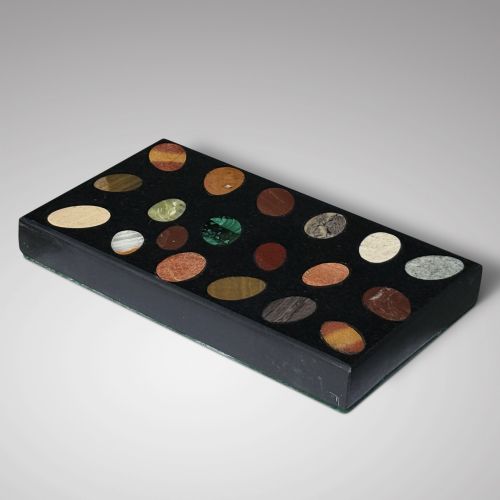
The construction of these works relies on specialised stonework and glass techniques developed in Italian workshops. Pietra dura employs inlaid semi-precious stones fitted meticulously together into marble grounds to form pictorial compositions of shepherd boys or geometric specimens.
Micromosaic work utilises tiny coloured glass tesserae fused together to create intricate miniature pictures set within gold mounts, snuff boxes or central marble panels. Carved marble and slate provide heavy supports for bas-relief profile portraits and classical subjects like the St Mark's lion.
Italian Grand Tour Plaque Retail Price Guide 2026
Typical asking prices for italian grand tour plaque among the pieces listed under this phrase on Sellingantiques today, from the lower quarter to the upper quarter. They describe what is for sale here now, not the wider market.
Listings feature items from the eighteenth and nineteenth centuries, including the decades 1850, 1860, and 1870.
Distinctions in execution
The standard of an italian grand tour plaque depends on the precision of the stonework and the fineness of the glass tesserae. Tighter joints in pietra dura inlay and smaller, more uniform glass rods in micromosaic panels distinguish superior pieces from simpler souvenir work.
Material selection also dictates quality, with deep black marble, sienna marble, jasper, and gold mountings indicating higher status. The depth and definition of carved bas-relief profiles in marble indicate the skill of the carver.
Gioacchino Barberi
The Italian Grand Tour Plaque Glossary
- Pietra Dura
- An Italian term for hardstone inlay using cut and fitted polished semi-precious stones to create pictorial designs. This technique produced detailed pictures of figures and specimen marble tops.
- Micromosaic
- A method using microscopic glass tesserae assembled into detailed pictorial panels. These miniature works frequently decorated snuff boxes, frames and paperweights.
- Grand Tour
- The traditional journey of Europe undertaken by upper-class young European men of means to accumulate art and culture. Souvenirs from this trip formed the basis of many nineteenth-century collections.
- Tessera
- A small block of stone, tile or glass used in the construction of a mosaic. In micromosaic work, these are drawn out into extremely fine threads before being sliced.
- Bas-relief
- A sculptural technique where the figures project slightly from the background plane, rather than standing free. This method appears on marble profile plaques of Roman emperors.
- Comport
- A decorative dish raised on a pedestal or foot, used for serving fruit or display. Examples incorporate pietra dura mounted brass and alabaster.
Italian Grand Tour Plaque: Frequently Asked Questions
What is an italian grand tour plaque?
These items are souvenir artworks purchased by travellers visiting Italy during the nineteenth century. They capture classical motifs, historical figures and architectural landmarks in durable media.
Craftsmen in Italian workshops produced them using local stones, glass and marble to cater to foreign visitors. They served both as portable reminders of travel and as decorative objects for domestic display.
How were these plaques used originally?
Travellers brought these objects home to display in studies, libraries and drawing rooms as proof of their cultural education. Many served as tabletop paperweights, wall panels, snuff boxes or framed pictures.
Their small scale allowed wealthy visitors to transport delicate works of art across Europe safely. They functioned simultaneously as conversation pieces and tangible connections to ancient Rome.
How do I date a nineteenth-century piece?
Dating relies on stylistic clues, framing methods, and the specific materials utilised in the construction. Pieces often reflect Neoclassical or Renaissance Revival aesthetics popular during the nineteenth century.
Comparative study of subjects, such as profile portraits or micromosaic doves, helps narrow down the decade of production. Documentation or signatures from makers like Gioacchino Barberi also provide specific chronological anchors.
How do I care for marble and mosaic pieces?
Maintenance requires gentle dusting with a soft, dry cloth to prevent abrasion on delicate glass tesserae or carved stone surfaces. Avoid moisture and chemical cleaning agents, which can damage the historic cement or polish.
Keep them away from direct sunlight and extreme temperature fluctuations to protect ebonised wood frames and mounted stones. Proper placement ensures the stability of both the backing and the intricate surface work.