





Italian Drug Jar
An italian drug jar brings the rich history of historic apothecary dispensaries straight into a modern interior.
Italian Drug Jar
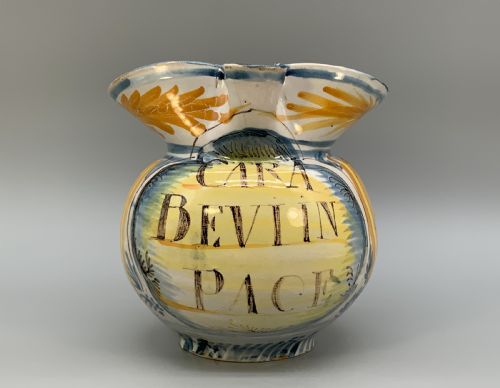
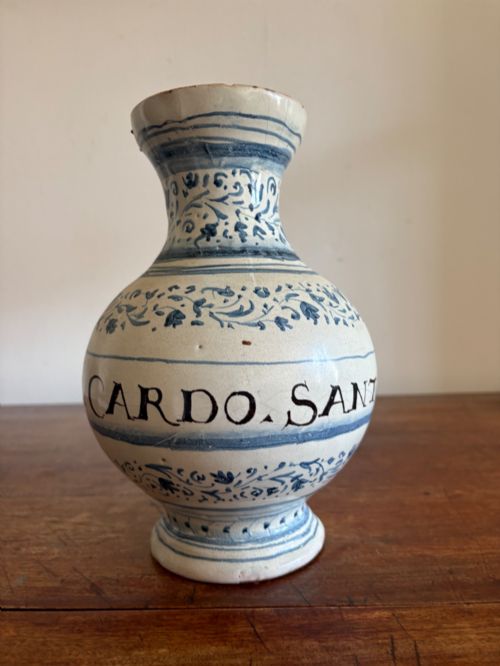
When searching for an italian drug jar, a collector encounters ceramic vessels designed for holding medicines, syrups, and dry herbs in historical apothecaries. These pieces span the seventeenth, eighteenth, and nineteenth centuries, emerging from major ceramic centres across Italy.
The most common forms found here include the cylindrical albarello and the handled pharmacy jug, often created for wet or dry substances. Examples range from traditional blue and white designs to vibrant polychrome palettes featuring manganese and yellow pigments.
Originating from workshops in regions such as Savona and Naples, these vessels reflect the evolution of Italian majolica and faience production over three distinct centuries. Each surviving piece carries the functional heritage of historic European dispensaries.
Materials and Manufacture
These vessels are fashioned from earthenware, utilising a porous clay body that required a protective coating to hold liquids securely. Potters applied an opaque tin glaze over the ceramic surface to create a smooth, white ground suitable for painted decoration.
Pigments were brushed directly onto the unfired tin glaze, allowing the metallic oxides to absorb into the surface during the firing process. This technique produced the characteristic glossy finish seen on majolica and faience pharmacy wares.
Italian Drug Jar Retail Price Guide 2026
Typical asking prices for italian drug jar among the pieces listed under this phrase on Sellingantiques today, from the lower quarter to the upper quarter. They describe what is for sale here now, not the wider market.
Some seventeenth-century jars were labelled for exotic ingredients like powdered viper, reflecting historical medical practices.
Assessing Quality and Execution
The distinction between standard utility wares and exceptional pieces rests upon the precision of the painted decoration and the complexity of the palette. Mastery of cobalt blue brushwork or multi-coloured polychrome schemes elevates the visual impact of the form.
Proportion and potting technique also define the upper tier of these vessels, particularly in the symmetry of waisted albarelli and the attachment of handles on wet drug jugs. The clarity of the tin glaze and the control shown during the high-temperature firing distinguish finer regional workshops.
The Italian Drug Jar Glossary
- Albarello
- A cylindrical earthenware jar designed for holding apothecary ointments and dry drugs. This distinct hourglass or straight-sided shape originated in the Middle East before becoming a staple of Italian majolica production.
- Majolica
- Italian tin-glazed earthenware decorated with opaque metallic oxide colours on a white background. It represents a primary medium for historical apothecary vessels.
- Faience
- Tin-glazed pottery produced in Europe, closely related to Italian majolica traditions. The term often describes wares sharing similar glazing and pigment techniques.
- Tin Glaze
- A ceramic glaze made opaque by the addition of tin oxide, providing a white canvas for painted decoration. This coating seals the porous earthenware body beneath.
Italian Drug Jar: Frequently Asked Questions
What were italian drug jars used for?
These ceramic vessels served as storage containers for dried herbs, medicinal powders, and liquid syrups in historical apothecary shops and monastic dispensaries. Their opaque tin-glazed walls protected sensitive contents from light and moisture.
Pharmacists and physicians relied on these jars to organise their shelves efficiently, often labeling the exterior with the specific contents so remedies could be identified quickly during preparation.
How do I display an albarello?
An albarello suits open shelving, mantelpieces, or dedicated display cabinets where its cylindrical form and painted decoration remain visible. Pairing single jars or matched pairs creates a strong focal point in a room.
Because these historical ceramics benefit from stable indoor environments, keeping them away from direct sunlight and damp areas helps preserve the integrity of the tin glaze.
How can I tell a wet jar from a dry jar?
Wet drug jars typically feature a pouring spout and a fitted handle, allowing pharmacists to dispense liquid syrups and oils smoothly. They often include a designated mouth for pouring alongside the main body.
Dry jars, such as the standard albarello, lack handles and spouts because they were intended for solid substances and powders. These vessels were originally sealed at the top with paper or fabric ties rather than fitted ceramic lids.
What is the difference between majolica and faience?
Majolica specifically refers to tin-glazed earthenware produced in Italy, rooted in Renaissance and Baroque decorative traditions. The term highlights the distinct regional styles developed by Italian ceramic artists.
Faience is a broader term encompassing similar tin-glazed pottery traditions across Europe. While the underlying technique of applying tin oxide over earthenware remains identical, regional kiln practices create subtle differences in the finished surface.