





Islamic Wood Inlay
Islamic wood inlay furniture and decorative objects bring intricate geometric patterns and shimmering mother-of-pearl to any interior.
Islamic Wood Inlay
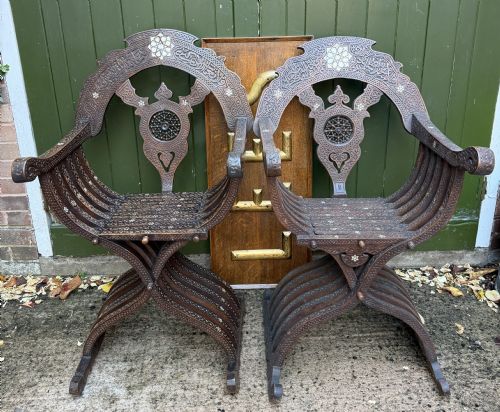
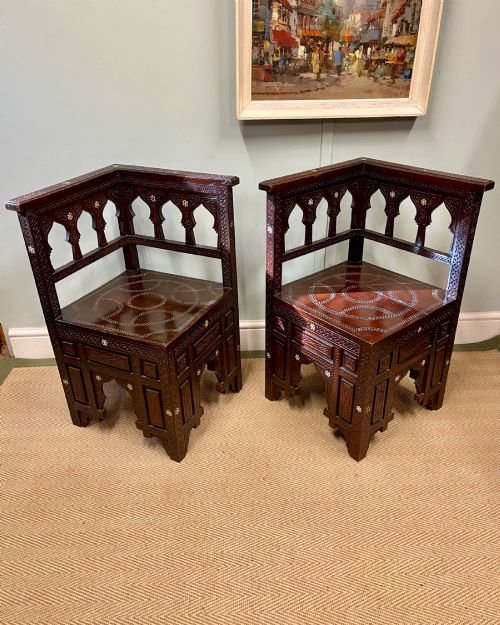
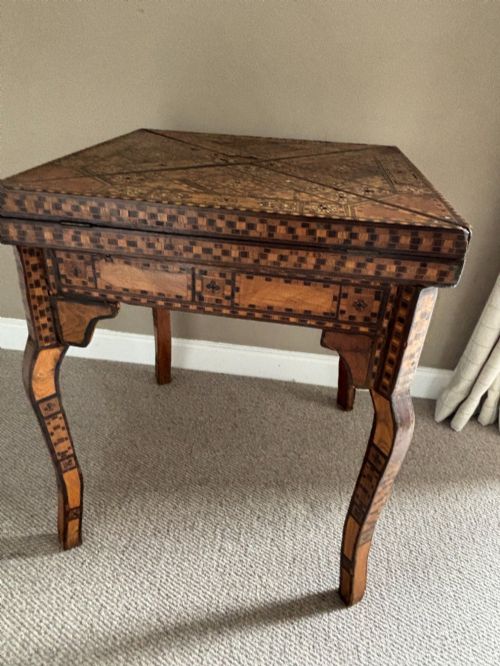
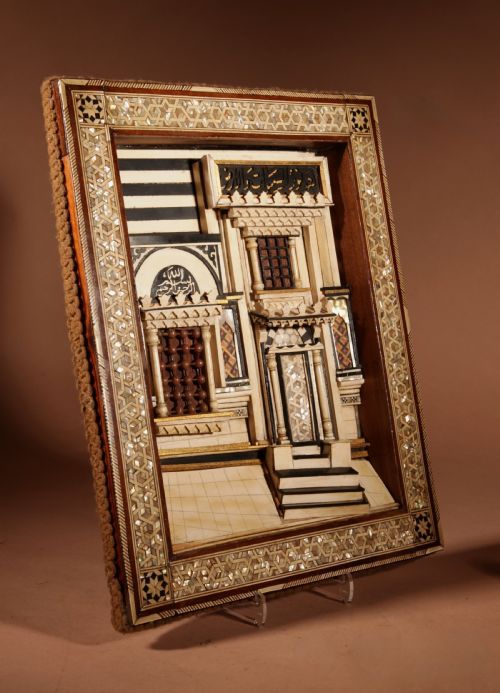
When you examine islamic wood inlay pieces, you encounter a diverse range of furniture and decorative objects shaped by traditions spanning the nineteenth and early twentieth centuries. Side tables, wall mirrors, and folding chairs form the backbone of these selections, alongside cabinets, games tables, architectural dioramas, and occasional firearms.
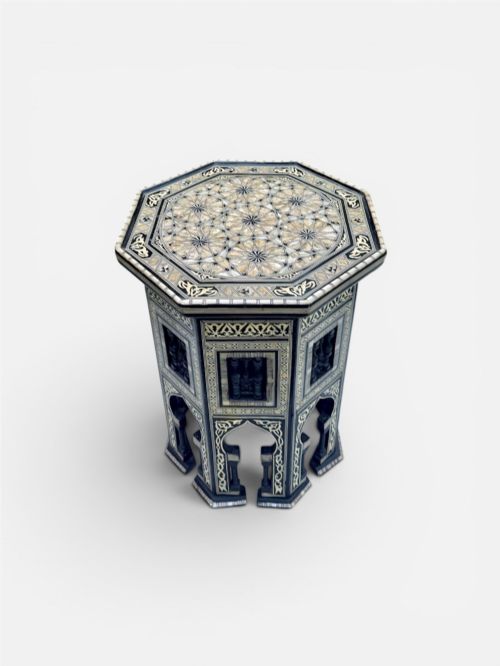
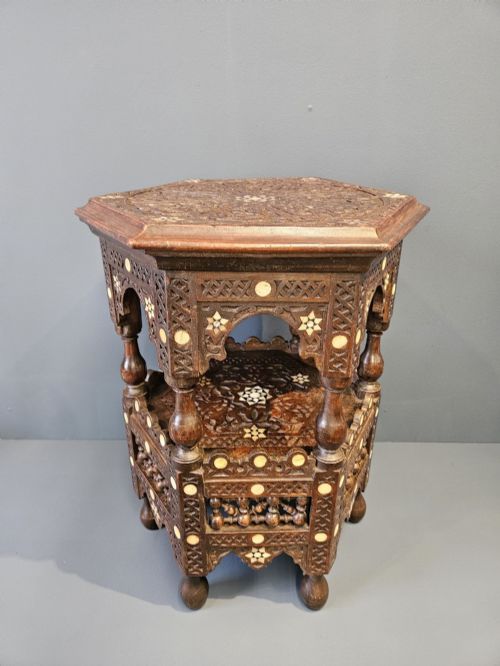
Octagonal and hexagonal side tables dominate the available forms, often featuring intricate geometric surfaces that draw upon Moorish, Ottoman, and Syrian design vocabularies. These tables frequently incorporate cupboards or intricate panel construction, offering functional forms that display elaborate surface decoration.
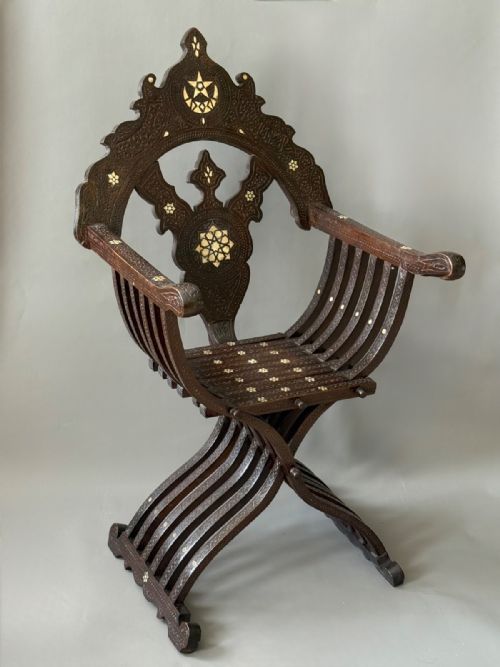
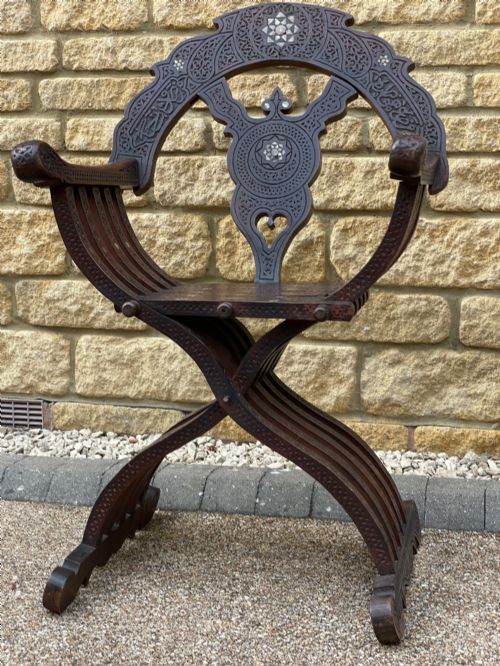
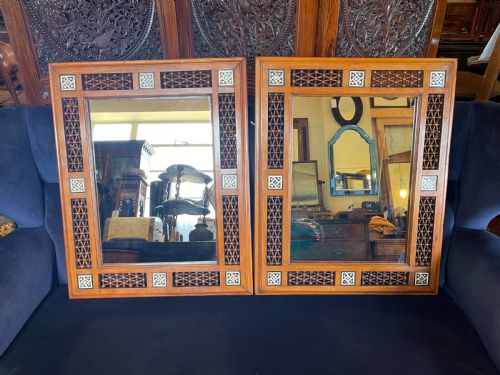
Seating spans from folding X-frame and Savonarola chairs to armchairs and settees, each displaying complex woodwork paired with contrasting inlay materials. Wall mirrors complete the domestic sphere, utilising carved frames and turned mashrabiya panels to frame reflective glass.
How they were made
Craftsmen built these pieces using hardwoods and walnut as a structural base, applying dense geometric arrangements of mother-of-pearl, bone, and nacre-shell to the surface. Individual pieces of inlay were meticulously cut and fitted into hand-carved recesses within the wooden substrate.
Assembly often relied on traditional joinery methods combined with intricate surface carving, turning, and micro-mosaic techniques such as khatamkari. Brass wire and glass elements occasionally supplemented the organic materials to accentuate the linear patterns and geometric borders.
Islamic Wood Inlay Retail Price Guide 2026
Typical asking prices for islamic wood inlay among the pieces listed under this phrase on Sellingantiques today, from the lower quarter to the upper quarter. They describe what is for sale here now, not the wider market.
Someone once inlaid an entire flintlock musket with mother-of-pearl, proving that even eighteenth-century weaponry needed a bit of interior design flair.
What varies in quality
The distinction between standard examples and exceptional pieces rests in the density and precision of the mosaic work and the complexity of the underlying woodwork. Superior items exhibit tight, unblemished fitting of mother-of-pearl and bone segments within deeply carved hardwood frames, where the geometry remains exact across complex polygonal surfaces.
Structural integrity and the preservation of delicate turned elements, such as mashrabiya panels, separate masterworks from simpler production pieces. The visual harmony between the grain of the walnut or hardwood and the luminous quality of the nacre-shell determines the overall aesthetic success of the object.
Liberty and Co
The Islamic Wood Inlay Glossary
- Moorish Revival
- An architectural and decorative style popular in the nineteenth century that reinterpreted traditional Moorish motifs, arches, and geometric ornamentation for Western interiors.
- Mashrabiya
- A type of projecting oriel window enclosed with carved wood lattice-work, also utilised in panels and screens to filter light and air within traditional domestic architecture.
- Nacre-shell
- The iridescent inner layer of mollusc shells, commonly known as mother-of-pearl, prized for its shimmering quality when integrated into wooden furniture surfaces.
- Khatamkari
- A Persian technique of micro-mosaic craftsmanship involving the precise geometric arrangement of triangular rods made of wood, bone, and metal to decorate surfaces.
- Savonarola chair
- A folding chair formed of multiple intersecting serpentine wooden slats, creating a portable X-frame structure often enhanced with elaborate carving and inlay.
Islamic Wood Inlay: Frequently Asked Questions
How do I clean islamic wood inlay?
Dust surfaces gently with a soft, dry cloth to prevent particulate accumulation within the intricate crevices of the inlay. Avoid liquid cleaners, moisture, and chemical polishes that can degrade the adhesive holding the bone and mother-of-pearl elements.
Maintain stable indoor humidity levels to protect the wooden substrate and prevent the natural materials from expanding, contracting, or loosening over time.
Where should I place an octagonal table?
Position these tables as central accents in living spaces, or utilise them as lamp tables beside seating arrangements where the geometric top remains visible. Their multi-sided forms allow them to fit comfortably into corners or function as freestanding display surfaces.
Keep pieces away from direct sunlight and heat sources to preserve the natural colour of the walnut, hardwood, and iridescent shell inlay.
Are these chairs comfortable for daily use?
Folding X-frame and Savonarola chairs were primarily designed for occasional seating, formal reception, or decorative impact within nineteenth-century interiors. Their rigid wooden construction and intricate armrests prioritize visual symmetry over ergonomic cushioning.
Utilise them as accent seating or decorative furniture pieces rather than primary daily loungers to preserve their historical joinery and delicate inlay.
How can I tell the period of a piece?
Examine the construction methods, wood types, and stylistic influences, noting that nineteenth-century items frequently exhibit regional Syrian, Ottoman, or Moorish Revival characteristics. The combination of bone and mother-of-pearl on walnut or hardwood typically points toward late Victorian manufacturing trends and Levantine workshops.
Look for signs of hand-carving and traditional joinery techniques that predate modern mass-production methods, helping to confirm a nineteenth or early twentieth-century origin.