


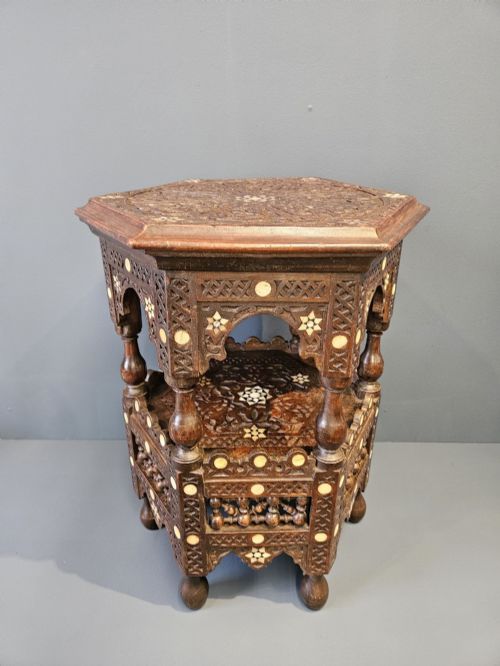


Islamic Style Furniture
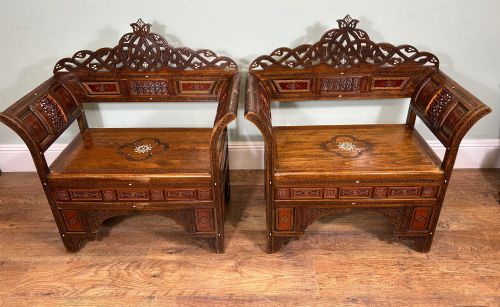
Islamic style furniture brings intricate inlaid geometric detail and rich carved hardwoods into domestic spaces, offering distinct seating and tables.
Islamic Style Furniture
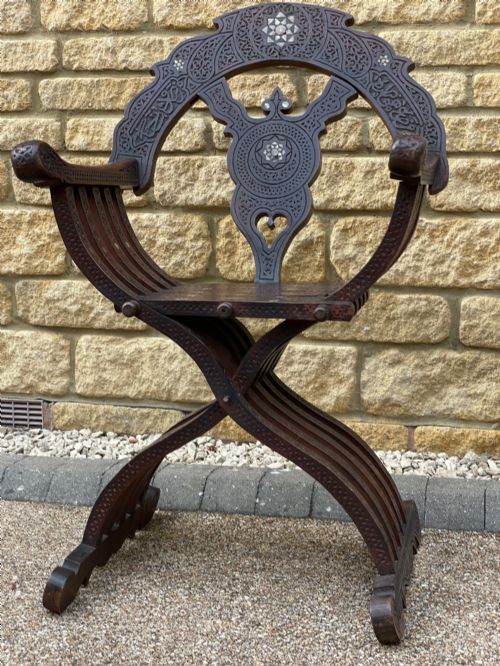
Islamic style furniture encompasses richly detailed seating, tables, and cabinetry drawing on regional design traditions. When you search for islamic style furniture, you encounter pieces designed with deep cultural motifs and geometric forms.
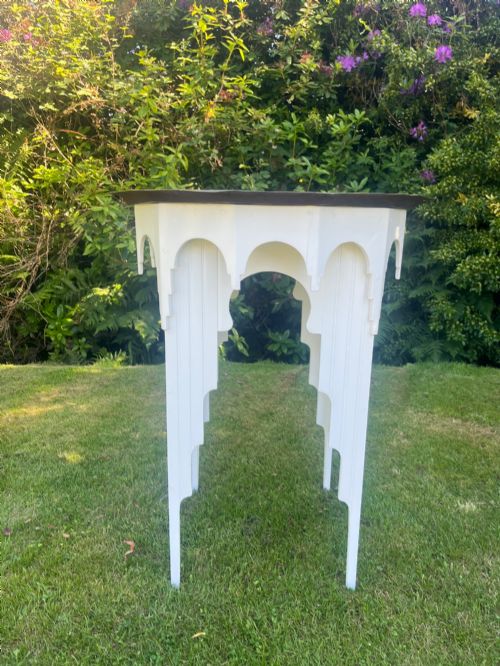
Regional influences span Moorish Revival, Syrian Ottoman, Mamluk Revival, and Moroccan aesthetics. Buyers frequently find tables featuring octagonal or hexagonal tops alongside matching seating suites.
Construction and Materials
Maker workshops utilised dense hardwoods and walnut as the foundational structure for chairs, cabinets, and tables. Carved elements often display deep relief work across structural frames and panels.
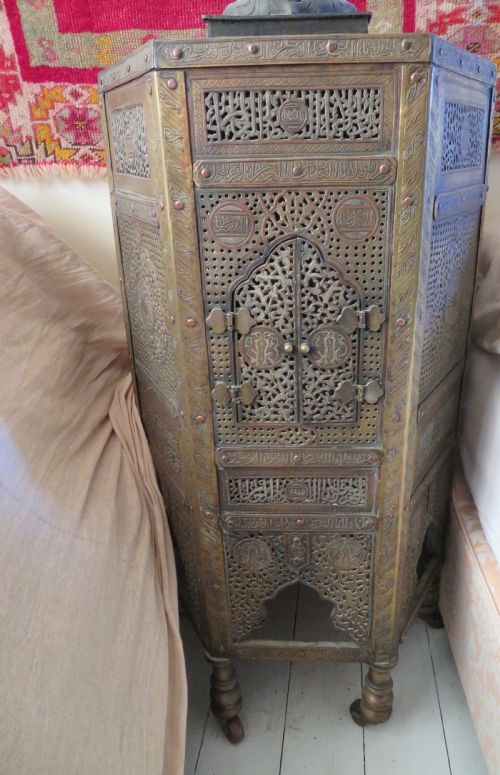
Decoration relies heavily on intricate inlay work utilising bone and mother-of-pearl to create geometric patterns. Metalwork also plays a major role, incorporating brass, copper, and white-metal inlays, notably in Cairo ware pieces.
Islamic Style Furniture Retail Price Guide 2026
Typical asking prices for islamic style furniture among the pieces listed under this phrase on Sellingantiques today, from the lower quarter to the upper quarter. They describe what is for sale here now, not the wider market.
Listings span from the 1880s through the 1930s, featuring walnut, hardwood, brass, and bone inlay.
Assessing Quality and Execution
Quality rests upon the precision of the inlay work and the depth of the carved woodwork. Pieces featuring dense, intact mother-of-pearl and bone sections display a higher degree of artisan skill.
Structural integrity of the hardwood frame and the complexity of the geometric patterns distinguish finer examples. The balance between metal inlay and wooden substrate dictates the overall refinement of the piece.
The Islamic Style Furniture Glossary
- Kursi
- A low hexagonal table or Quran stand originating from Cairo. These pieces often feature brass, copper, or silver inlays.
- Cairo ware
- Metalwork decorative items, including tables, characterised by intricate metallic inlays. This technique is prominent in nineteenth and early twentieth-century production.
- Moorish Revival
- An architectural and decorative style popular in the nineteenth century. It incorporates traditional Islamic arches, geometric patterns, and intricate woodwork into European domestic furnishings.
- Mother-of-pearl
- An iridescent inner layer of shells used extensively for decorative inlay. Artisans cut this material into geometric tiles to adorn chairs and tables.
Islamic Style Furniture: Frequently Asked Questions
How do I care for inlaid wooden tables?
Maintain the wood and inlay by dusting gently with a dry, soft cloth. Avoid placing items in direct sunlight or near heat sources to prevent the wood from warping and the inlay from loosening.
Condition the hardwood surfaces occasionally with appropriate furniture wax, taking care around delicate mother-of-pearl or bone sections.
Where were these pieces originally made?
Items reflect traditions from Syria, Egypt, Morocco, and broader North African regions. Many pieces were produced for export or created during European revival movements in the nineteenth and early twentieth centuries.
Workshops utilised local timbers combined with specialised inlay techniques handed down through generations of artisans.
Are hexagonal tables used as stands?
Hexagonal tables, often termed kursi, functioned traditionally as support surfaces for books, lamps, or decorative objects. Their distinct shape suits placement beside seating or in corners.
The geometry allows multiple sides to be viewed, showcasing the intricate carving and metal or shell inlay.
How do I distinguish Moorish Revival from Syrian pieces?
Moorish Revival items typically emphasise heavy carved woodwork and structural arches influenced by Spanish and North African architecture. Syrian pieces often showcase extensive mother-of-pearl and bone geometric inlay work.
Examining the primary decorative medium helps identify the specific regional aesthetic of the furniture.