



Iron Trinket Box
An iron trinket box is a sturdy receptacle for small valuables, bringing tactile history and dependable containment to any room.
Iron Trinket Box
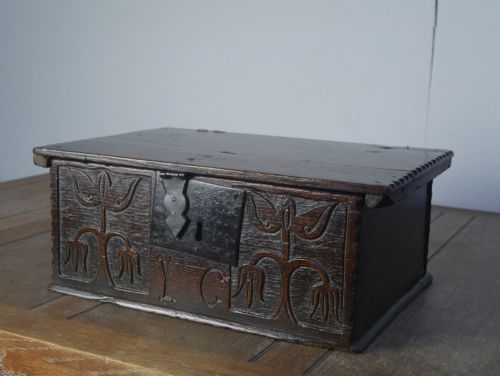
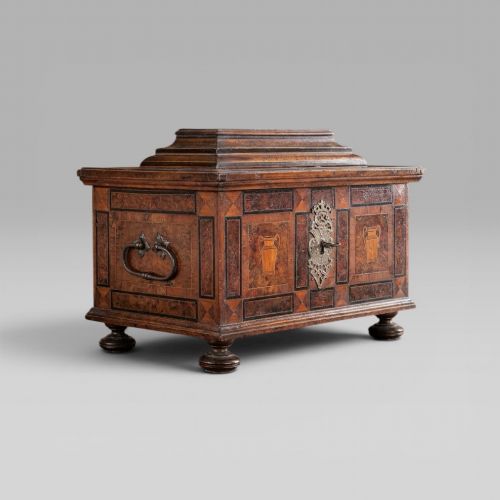
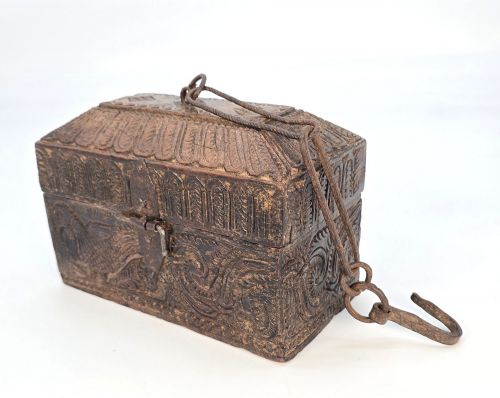
An iron trinket box covers heavy cast metal caskets and fitted containers, often styled after early coffer forms or domestic storage pieces. When searching for an iron trinket box, a buyer encounters a mix of European folk art painted woodwork, carved teak spice boxes, and robust steel caskets spanning several centuries.
The selection here ranges from late seventeenth century continental burr wood caskets with metal mounts to nineteenth century Swedish painted boxes and Victorian trunks. These utilitarian small chests served diverse functions across global traditions, from Indian spice storage to Scandinavian marriage tokens and European document holding.
How they were made
Makers utilised durable hardwoods like oak, pine, burr walnut, and teak, frequently combining timber structures with iron, wrought iron, or steel reinforcements, hinges, and hasps. These materials provided the necessary strength for protective storage, whether forged as solid metal caskets or built as timber boxes with heavy metallic banding.
Surface decoration involved carving, domed construction, and patinated original paint finishes, particularly seen in folk art traditions from Sweden and broader European regions. Techniques combined blacksmithing for the metal elements with traditional joinery and woodcarving for the main body.
Iron Trinket Box Retail Price Guide 2026
Typical asking prices for iron trinket box among the pieces listed under this phrase on Sellingantiques today, from the lower quarter to the upper quarter. They describe what is for sale here now, not the wider market.
One Swedish marriage box comes with centuries of domestic goodwill built right into its brightly painted panels.
What varies in quality
The distinction between standard examples and superior pieces rests on the integrity of the original surfaces, such as untouched paintwork or patinated metalwork, alongside the depth of hand-carved detailing. Surviving original hinges, locks, and structural mounts significantly elevate a piece above altered or later-assembled counterparts.
Proportion and material selection also dictate standing, with dense hardwoods like burr walnut or teak and finely forged steel caskets representing the more ambitious ends of period craftsmanship.
The Iron Trinket Box Glossary
- Casket
- A small decorative box or chest used for valuable items, documents, or jewellery. These often feature secure locking mechanisms and ornamented surfaces.
- Folk art
- Artistic work created within a traditional culture by self-taught or local artisans. These pieces exhibit regional styles and traditional functional designs.
- Patinated
- Showing a surface sheen or colour change developed naturally through age, use, and exposure to the elements. This characteristic indicates genuine historical handling.
- Wrought iron
- Iron that has been heated and hammered into shape by a blacksmith, showing distinctive textural marks from manual working. It provides robust structural support for boxes and trunks.
Iron Trinket Box: Frequently Asked Questions
What were iron trinket boxes used for?
These boxes primarily stored small valuables, precious trinkets, spices, or important personal documents. Their sturdy construction ensured contents remained secure during daily use or travel.
Over time, many transitioned from purely utilitarian storage to decorative display items within domestic interiors, retaining their protective qualities while showcasing period craftsmanship.
How do I date an iron trinket box?
Dating relies on examining the construction techniques of the timber and metal components, alongside the style of any painted decoration. Seventeenth and eighteenth-century examples often display hand-forged ironwork and traditional joinery.
Later nineteenth-century pieces may show industrial manufacturing methods or specific regional folk art motifs characteristic of that period.
Are these boxes made entirely of iron?
Many listings combine iron, wrought iron, or steel with various timbers such as oak, pine, teak, and burr walnut. Pure metal caskets exist alongside wooden boxes reinforced with iron bands and hinges.
The materials reflect the regional origins and intended function of the container, balancing weight and security.
How do I care for a painted wooden box?
Preserving these pieces requires keeping them away from direct sunlight and maintaining stable indoor humidity to protect fragile painted surfaces and aged timber. Gentle dusting with a dry cloth is sufficient for routine maintenance.
Avoid applying modern polishes or cleaning agents that might alter the historic patina or damage original painted finishes.