

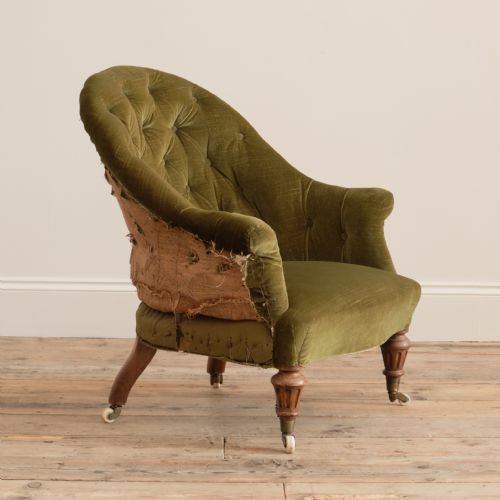
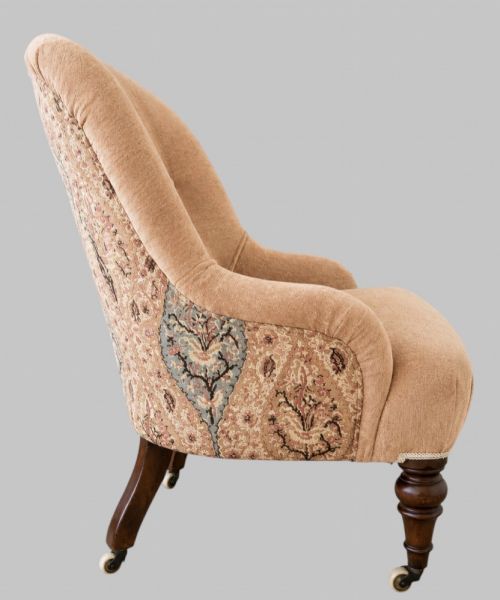


Iron Back Armchair
An iron back armchair offers robust structural support through metal framing, combining industrial strength with upholstered comfort for daily use.
Iron Back Armchair
When you search for an iron back armchair, you encounter seating designed around a rigid metal framework that provides enduring stability. These pieces span the nineteenth century through the early decades of the twentieth century, encompassing Victorian, Edwardian, and Art Deco sensibilities.
The most common form on this page is the nineteenth century iron back armchair, alongside specialised variants such as nursing chairs, desk chairs, and office chairs. These domestic and maritime seating options integrate iron or cast iron components with traditional timber and textile elements.
Makers of these chairs utilised metal framing to ensure long-term durability while maintaining the padded comfort expected of a parlour or study seat. Such construction methods yielded substantial seating that has survived generations of use in domestic and institutional settings.
How they were made
The construction relies heavily on iron, cast iron, and brass for the structural spine and framing, paired with solid oak or general timber for supporting members. This combination of heavy metal and dense wood gives each chair considerable weight and an unyielding structural foundation.
Upholstery techniques applied to these frames incorporate buttoning, velvet, and various decorative fabrics to soften the rigid metal and wood armature. Desk and office variants often integrate revolving mechanisms directly into the timber and iron assembly to allow practical movement.
Iron Back Armchair Retail Price Guide 2026
Typical asking prices for iron back armchair among the pieces listed under this phrase on Sellingantiques today, from the lower quarter to the upper quarter. They describe what is for sale here now, not the wider market.
Cast iron was trusted to hold up even the most enthusiastic Victorian reader.
What varies in quality
The distinction between standard examples and superior pieces rests on the intricacy of the metal casting and the quality of the timber carving. Chairs featuring polished oak and refined brass detailing demonstrate a higher level of workshop attention than plain utilitarian frames.
Upholstery finish also dictates overall refinement, where buttoned velvet and specific designer fabrics indicate a more ambitious original commission. The integration of mechanical elements in revolving office and desk chairs reveals the precision of the nineteenth and early twentieth century ironwork.
The Iron Back Armchair Glossary
- Cast iron
- A strong, hard iron-carbon alloy produced by casting in a mould, frequently utilised for the structural backs and frames of Victorian seating.
- Buttoned armchair
- An upholstered seat where depressions are formed in the padding by stitches or buttons pulled tight, securing the fabric to the internal stuffing.
- Nursing chair
- A low-seated armchair designed for comfort near a hearth or nursery, often featuring an iron or timber frame with soft textile upholstery.
- Revolving desk chair
- A swivelling office seat mounted on a central mechanism, allowing the user to rotate freely while seated at a desk or table.
Iron Back Armchair: Frequently Asked Questions
What is an iron back armchair?
An iron back armchair is a piece of seating furniture built with a metal or cast iron structural frame supporting an upholstered or wooden body. These chairs date primarily from the nineteenth and early twentieth centuries.
They combine the industrial resilience of metal framing with the comfort of traditional upholstery or carved wood seats. Various forms exist, including nursing chairs, desk chairs, and standard parlour seating.
How do I date an iron back armchair?
Dating these chairs involves examining the style of the ironwork, the timber used in the frame, and the upholstery methods. Pieces from the Victorian era often feature buttoned velvet, while later examples from the twentieth century lean towards Art Deco or simpler office designs.
Revolving mechanisms and the presence of brass or carved oak details also help place a chair within specific decades from the mid nineteenth century to the 1930s.
Where were these chairs used?
These chairs served in multiple environments, ranging from domestic parlours and nurseries to professional offices and maritime settings. Office and desk variants were built for sustained daily work.
Other variations, such as patio sets and garden furniture, utilised cast iron to withstand outdoor conditions while maintaining decorative appeal.
Are iron back armchairs comfortable?
Comfort depends largely on the padding and upholstery style, with buttoned velvet and fabric versions offering a soft surface despite the rigid metal frame. The iron backing provides firm postural support rather than cushioning.
Desk and office chairs prioritise functional movement and sturdy back support, while nursing chairs offer a lower seating position designed for relaxed tasks.