



Iron and Wood Stand
An iron and wood stand brings utilitarian strength and organic warmth into a room, joining two contrasting materials in furniture and display pieces.
Iron and Wood Stand
An iron and wood stand unites metal and timber elements to form practical furniture, display bases, and workshop tools. These pieces span utility objects like farrier's anvils, cobbler's legs, and hat stretchers alongside domestic items such as side tables and stick stands.
The versions most commonly met on this page range from Victorian industrial pieces to early twentieth-century rustic furniture. Makers combined heavy cast or wrought iron frames with hardwood and natural timber trunks to create durable objects.
Forms vary from life-size lay figures on stands to butcher's blocks, music stands, and mirrored coat racks. Each object displays the utilitarian history of its origin through the combination of metal supports and wooden tops or bases.
How they were made
Makers utilised cast iron, wrought iron, and steel for structural frames, brackets, and spikes, providing rigid support. Timber, hardwood, and fruitwood formed the bases, trunks, and display surfaces, often left in a natural state or shaped by hand.
Construction methods combined blacksmithing with carpentry, securing metal uprights into heavy wooden blocks or mounting wooden surfaces onto industrial metal stands. Fastenings and mounts relied on bolts and spikes designed for heavy trade use.
Iron and Wood Stand Retail Price Guide 2026
Typical asking prices for iron and wood stand among the pieces listed under this phrase on Sellingantiques today, from the lower quarter to the upper quarter. They describe what is for sale here now, not the wider market.
Object types range from industrial trade tools and milliner's hat sizers to stick stands, side tables, and artist mannequins.
What varies in quality
Quality rests in the proportional balance between the metal components and the timber base, as well as the integrity of the original industrial or trade mountings. Pieces that retain their genuine working patina show a clearer distinction between standard domestic items and heavy trade tools.
The choice of materials also divides the range, particularly where dense hardwoods or fruitwood trunks support substantial steel or cast iron. Finer examples display deliberate sculptural forms within purely functional objects, such as carved treen bases and mounted anvils.
The Iron and Wood Stand Glossary
- Farrier's anvil
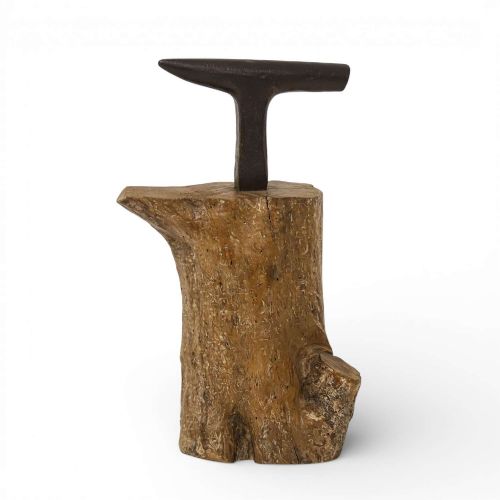
- A heavy metal block used for shoeing horses, frequently mounted on a tree trunk or wooden base for stability. This forms a sculptural vernacular piece.
- Lay figure
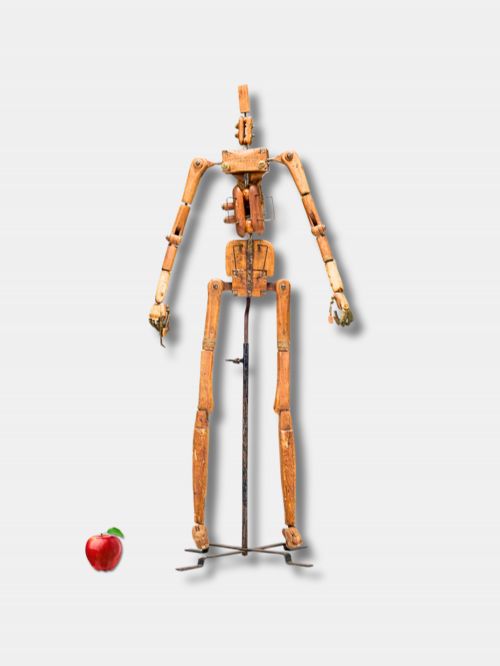
- An articulated wooden mannequin used by artists to study drapery and human form, usually supported on a heavy stand. These life-size figures display intricate wooden joints.
- Hat stretcher
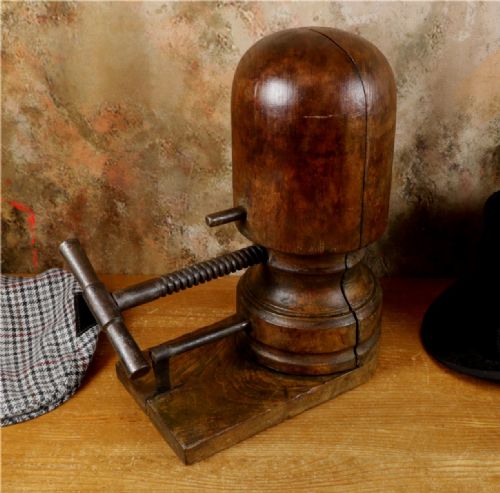
- A trade tool utilised by milliners to size and shape hats, combining wooden expanding mechanisms with metal screws and stands. They function today as decorative display objects.
- Treen
- Small handmade wooden domestic objects and wares. Bases carved from treen often accompany engraved metal curiosities.
- Haberdashery
- Fixtures and fittings originally used in shops for display and storage. Industrial examples often combine iron frameworks with timber shelving or surfaces.
Iron and Wood Stand: Frequently Asked Questions
What is an iron and wood stand used for?
These pieces serve dual purposes as functional furniture and sculptural display objects in contemporary interiors. Many originate as trade tools, workshop equipment, or domestic umbrella stands.
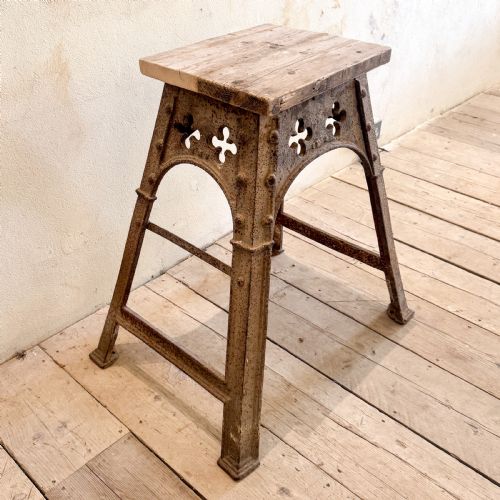
Today they function effectively as side tables, plant stands, or decorative focal points in a room. Their mixed-material construction suits both industrial and rustic interior schemes.
How do I date a wooden and iron stand?
Dating relies on examining the manufacturing techniques visible in both the metalwork and the timber. Cast iron, wrought iron, and steel display different casting marks and forge methods across the nineteenth and early twentieth centuries.
The type of wood, tool marks, and original fixings further indicate the period. Items connected to specific trades often carry design traits specific to Victorian or Edwardian workshops.
Where were these stands originally made?
The pieces originate from various workshops, farrier's shops, mills, and domestic settings across Britain and France. Many began life as working trade equipment rather than domestic furniture.
Makers adapted industrial materials for specific trades, such as hat sizing, cobbling, or falconry. This utilitarian background gives each piece its distinctive character.
How should I care for an iron and wood stand?
Maintenance involves preserving the original surface finish of both the metal and the timber without stripping away historical character. Regular dusting and occasional application of appropriate wax or oil protects dry wood.
Metal components benefit from light cleaning to prevent active corrosion while retaining their dark industrial patina. Keeping pieces away from excessive moisture and direct heat sources preserves the joinery.