




Interwar Landscape Art
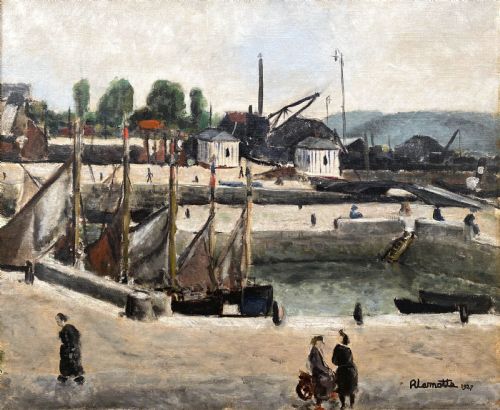
Interwar landscape art captures the shifting topography of the 1920s and 1930s through expressive brushwork, offering a direct window into the interwar period.
Interwar Landscape Art
Interwar landscape art encompasses paintings created during the 1920s and 1930s, capturing rural paths, rolling hills, and coastal scenes. These works reflect the artistic movements of the interwar years, including Modernism and Post-Impressionism.
Buyers will encounter watercolours and oil paintings on canvas or paper, ranging from intimate depictions of the Staffordshire countryside to expansive views of Provence. The selection also includes French Modernist interpretations and British regional scenes.
Most pieces date from the 1920s and 1930s, often framed in wood and glass, representing the diverse aesthetic responses to the landscape during this era.
Materials and methods
Artists during this period primarily utilised oil paint on canvas or board, alongside delicate watercolour on paper. These materials allowed for varied application, from the textured impasto of French Post-Impressionist canvases to the fluid washes of British watercolourists.
Works are frequently housed in their original wood frames, sometimes protected beneath glass in the case of watercolours. The combination of canvas, oil paint, and wood framing defines the physical structure of these surviving artworks.
Materials recorded in these artworks include canvas, paper, wood, glass, and oil paint.
Assessing quality
Quality in interwar landscape art rests on the artist's handling of light, composition, and the confidence of the brushwork. Works that successfully balance modernist abstraction with atmospheric depth stand apart from more conventional topographical recordings.
The integration of the medium also dictates distinction, where the harmony between the oil paint or watercolour and its paper or canvas support demonstrates the maker's technical capability.
Raymond Moritz·Samuel Timmins·Edith E Caswall·Fred Lawson·Jane Utley·Pierre Peltier
The Interwar Landscape Art Glossary
- Watercolour
- A paint consisting of pigment suspended in a water-based solution, typically applied to paper to create translucent washes of colour.
- Post-Impressionism
- An art movement extending Impressionism while rejecting its limitations, favouring a greater emphasis on symbolic content and formal order.
- Modernism
- A global movement in society and culture that sought to break with traditional forms of representation in art and writing.
- Oil on canvas
- A painting technique where pigmented oil paints are applied to a stretched fabric support, allowing for rich texture and blending.
Interwar Landscape Art: Frequently Asked Questions
What defines interwar landscape art?
Interwar landscape art consists of paintings produced between the First and Second World Wars, capturing rural and urban scenes through the lens of early twentieth-century movements.
These pieces reflect stylistic shifts such as Post-Impressionism and Modernism, setting them apart from nineteenth-century realism.
How should I display these watercolours?
Watercolours on paper require protection behind glass to prevent atmospheric damage and fading from direct sunlight.
Using acid-free mounts within a wooden frame helps preserve the paper and the integrity of the paint over time.
How do I identify a 1930s oil painting?
Stylistic cues such as simplified forms, flattened perspective, and a modern palette often indicate a 1930s origin.
Examining the canvas preparation, stretcher frames, and any signatures or dates on the reverse provides further historical context.
What is the difference between oil and watercolour here?
Oil paintings utilise viscous pigments on canvas or board, offering rich textures and deep colour layering. Watercolours employ water-soluble pigments on paper, yielding lighter, more translucent compositions.