



Inn Scene Painting
These inn scene painting works capture lively social hubs and roadside coaching stops across centuries of British artistry.
Inn Scene Painting
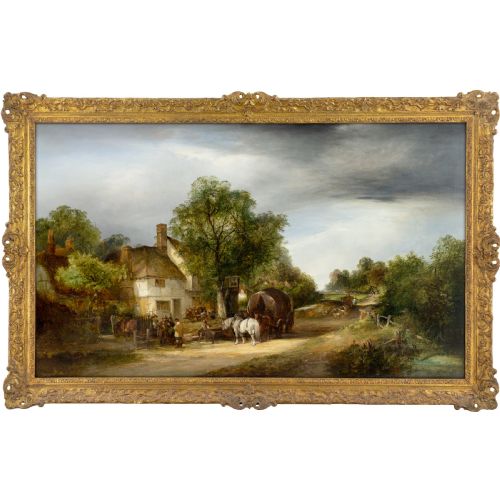
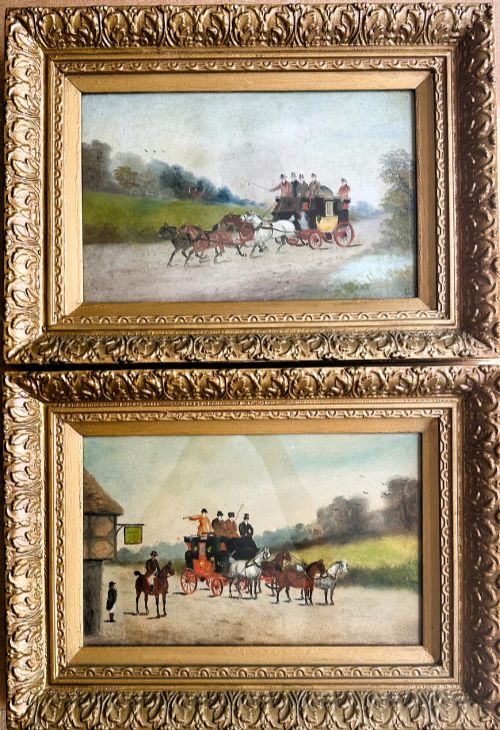
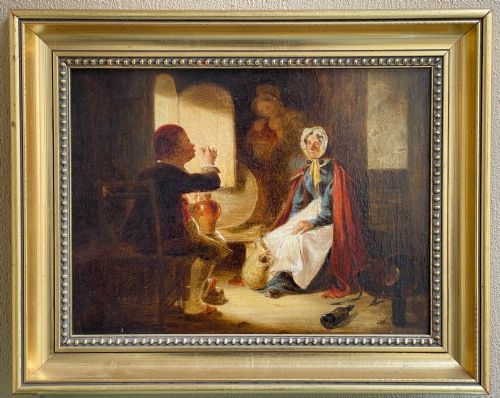
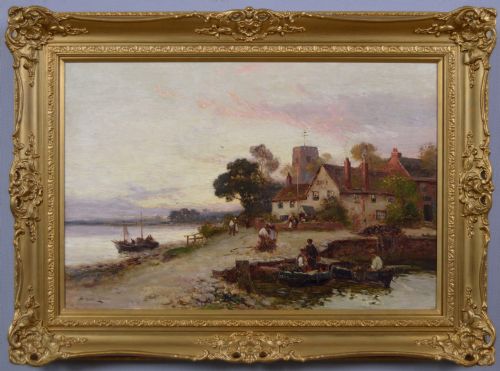
An inn scene painting depicts lively tavern interiors, coaching stops, and roadside hostelries populated by travellers, locals, and horses. Buyers seeking an inn scene painting will encounter works ranging from bustling 18th century compositions after Dutch masters to detailed Edwardian watercolours and Victorian oils.
The subjects span historical coaching halts, rural watering holes, and named establishments like the Mermaid Inn or the Old White Horse Inn. These works record social gathering spaces and landscape settings across the nineteenth and early twentieth centuries.
Materials and methods
Artists captured these subjects using oil paint on canvas or watercolour applied to paper, often mounted within giltwood or gilt wood frames. The handling ranges from the fluid washes of watercolour paper works to the rich pigment layers of traditional oil on canvas.
Framing typically employs giltwood to complement the domestic scale and tonal depth of the paintings. Canvases and paper supports preserve the varied palettes of nineteenth century genre painting and Edwardian fine art.
Inn Scene Painting Retail Price Guide 2026
Typical asking prices for inn scene painting among the pieces listed under this phrase on Sellingantiques today, from the lower quarter to the upper quarter. They describe what is for sale here now, not the wider market.
The listings here span watercolours on paper and oil paintings on canvas, framed in giltwood across the eighteenth, nineteenth, and early twentieth centuries.
Assessing quality
Quality rests upon the artist's ability to render architectural detail, atmospheric light, and animated figures interacting outside or inside the hostelry. Stronger pieces display confident brushwork in handling horses, carriages, and period attire rather than stiff or generic figures.
The choice of medium and condition of the pigment layer influence the visual impact, particularly where transparent watercolours retain their crisp paper grounds or oils maintain surface depth within their original frames.
Edward Charles Williams·William Shayer·Philip Rideout·David Woodlock·Annie L. Lee·Cuthbert Crossley·John Charles Maggs·Stuart Lloyd·John Atkinson·Alfred Leyman
The Inn Scene Painting Glossary
- Oil on Canvas
- Pigment mixed with drying oil applied to a stretched woven fabric support. This technique allows for rich colour blending and textured impasto work.
- Watercolour
- A paint consisting of water-soluble pigments suspended in a water-based solution applied to paper. It yields transparent washes and delicate linear detail.
- Giltwood
- Timber that has been coated with a thin layer of gold leaf or gesso finish. It provides a reflective decorative border for traditional paintings.
- Genre Painting
- The pictorial representation of scenes from everyday life, typically involving ordinary people in domestic or social settings. These works document historical social habits.
Inn Scene Painting: Frequently Asked Questions
What subjects appear in these paintings?
These works focus on roadside inns, coaching stops, and tavern interiors filled with travellers, horses, and locals.
Artists recorded specific historical hostelries alongside imagined genre scenes reflecting daily social life.
How do watercolours and oils differ here?
Watercolours on paper offer lighter, transparent washes suited to architectural and landscape detail.
Oils on canvas provide deeper tones and richer textures appropriate for interior tavern scenes and complex coaching compositions.
Where were these scenes typically set?
The settings range from Dutch-influenced tavern interiors to specific British locations in Devon, Somerset, and Yorkshire.
Many works document named coaching inns along historic travel routes.
How should these paintings be displayed?
These framed works suit domestic wall art placement away from direct sunlight to protect pigments on canvas and paper.
Original giltwood frames complement the historical period of the artwork.